Compliance & Policy
17 states sue CalRecycle to block California packaging recyclability law
Seventeen states and a wholesaler trade group sued CalRecycle to halt California's Plastic Pollution Prevention and Packaging Producer Responsibility Act, challenging its Jan. 1, 2032 recyclability mandate, the $500M producer surcharge, and the Circular Action Alliance's role.
Waypoints
Seventeen states and the National Association of Wholesaler-Distributors sued CalRecycle director Zoe Heller on Monday.
The act requires 100% of covered single-use packaging to be recyclable or compostable by Jan. 1, 2032.
PET bottles and jars were recycled at about 16% in California, against a separate state target of 40% by 2030.
The Circular Action Alliance can collect a $500 million annual "environmental mitigation surcharge" from producers.
The complaint raises 11 constitutional counts, including commerce clause, import-export clause, due process and First Amendment claims.
17 states sue CalRecycle over California's 2032 packaging recyclability mandate
Seventeen state attorneys general and the National Association of Wholesaler-Distributors filed suit Monday seeking to halt enforcement of California's Plastic Pollution Prevention and Packaging Producer Responsibility Act, the first multi-state legal challenge to a statute that will require producers to make every piece of covered single-use packaging recyclable or compostable by Jan. 1, 2032.
The complaint, lodged in federal court against Zoe Heller, director of the California Department of Resources Recycling and Recovery, names the Circular Action Alliance as a co-defendant and raises 11 constitutional claims, including alleged violations of the commerce clause, import-export clause, due process clause and First Amendment.
What does the act actually require?
The 2022 statute obliges producers to redesign single-use packaging and plastic food-service ware so that 100% of covered materials become recyclable or compostable inside roughly six years. It also shifts end-of-life costs from consumers and municipalities to brand owners through an extended producer responsibility framework administered by a producer responsibility organization.
California's Department of Resources Recycling and Recovery — commonly called CalRecycle — oversees implementation. CalRecycle did not respond to a request for comment before publication.
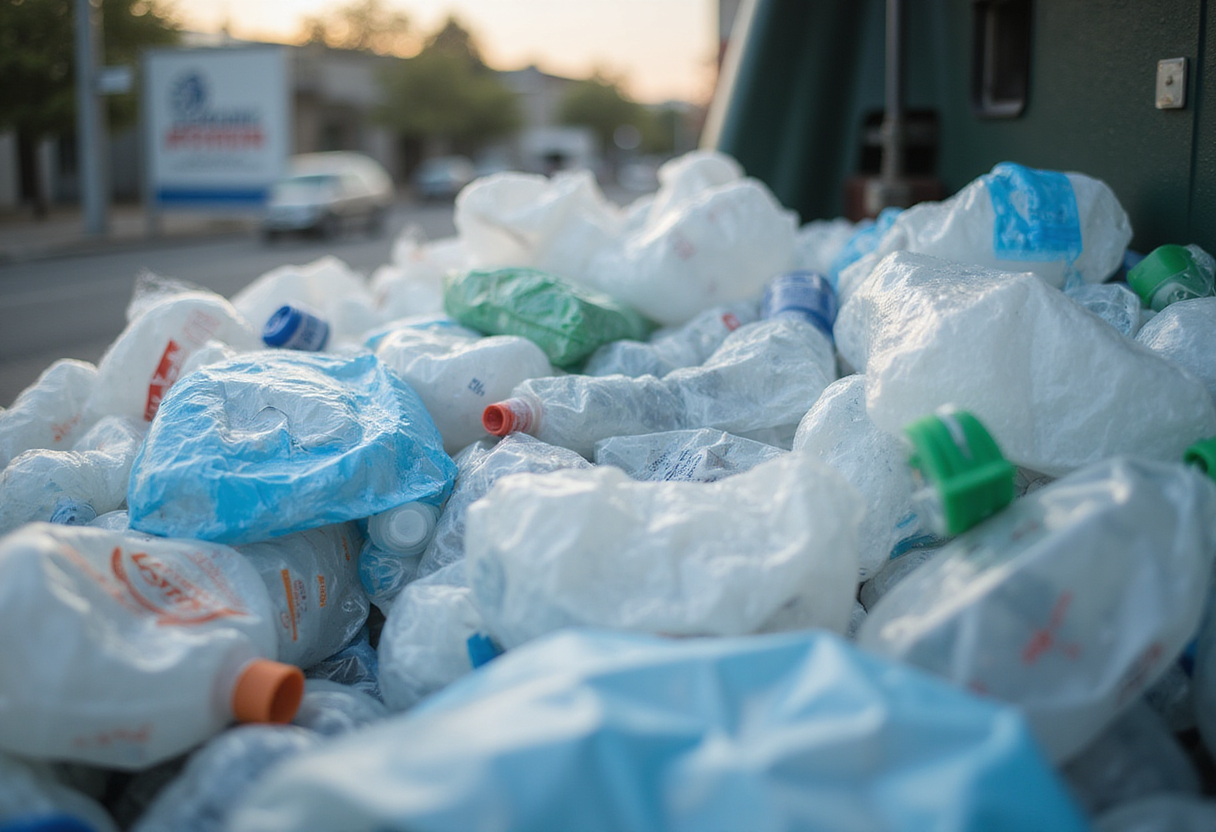
The current PET recycling rate highlights the gap producers must close. PET bottles and jars, two of the material categories the law covers, were recycled at about 16% in California in the most recent reporting period. The state's separate 2030 recycling target sits at 40%.
Plaintiff states argue that closing that gap forces a national redesign. "Compliance with the act's mandate that 100% of covered materials be recyclable will necessarily involve excluding a wide range of products from the California market entirely, and it will also necessitate dramatic and extremely expensive transformations of a wide range of products, business models, and logistics practices," the complaint states.
Who runs the program, and how is it funded?
The Circular Action Alliance — a producer responsibility organization created to administer the act — can collect state-mandated fees from producers. The largest line on that fee schedule is a $500 million annual "environmental mitigation surcharge" that flows into California accounts.
The complaint labels the alliance an "unaccountable private party" and a "willful participant" in the alleged constitutional violations, contending that delegating fee-collection and compliance authority to a private body without sufficient state oversight breaches due process.
What constitutional grounds are at stake?
Plaintiffs organize their 11 counts around four core theories:
- The statute burdens interstate commerce by effectively dictating packaging specifications for products shipped into California from other states.
- It triggers the import-export clause by regulating transactions that originate out of state.
- It restricts protected commercial and political speech, particularly a proposed receipt line item disclosing act-driven cost pass-throughs, which plaintiffs describe as compelled advocacy.
- It violates state sovereignty under Tenth Amendment analogues in the California Constitution, with an "offends state sovereignty" framing repeated throughout the complaint.
Several plaintiff states have asked for the line-item disclosure to itemize the impact of cost increases — a measure plaintiffs characterize as protected political speech and an impermissible content-based restriction.
Why are the states pushing back now?
"Once again, California is trying to enact a policy that negatively impacts the rest of the country," Nebraska Attorney General Mike Hilgers said in a statement. "If California goes unchecked, consumers will be forced to pay more for basic necessities."
The lawsuit frames the statute as an extraterritorial regulation that reaches into manufacturing and distribution decisions in Nebraska, Iowa, Texas and the other plaintiff states, rather than a strictly in-state environmental rule.
What happens next?
CalRecycle and the Circular Action Alliance must answer the complaint in the coming weeks. The court will then weigh a preliminary injunction that could pause enforcement while the litigation proceeds. Regardless of the court's ruling, producers face design and reporting milestones on the path to the Jan. 1, 2032, recyclability deadline. The state's 2030 recycling benchmark — 40% for PET containers against a current rate of about 16% — supplies the next measurable data point against which CalRecycle, producers and now the courts will measure progress.
via courthousenews.com (Original)