Compliance & Policy
California Ties $55 Million in Charging Incentives to Reliability Rules
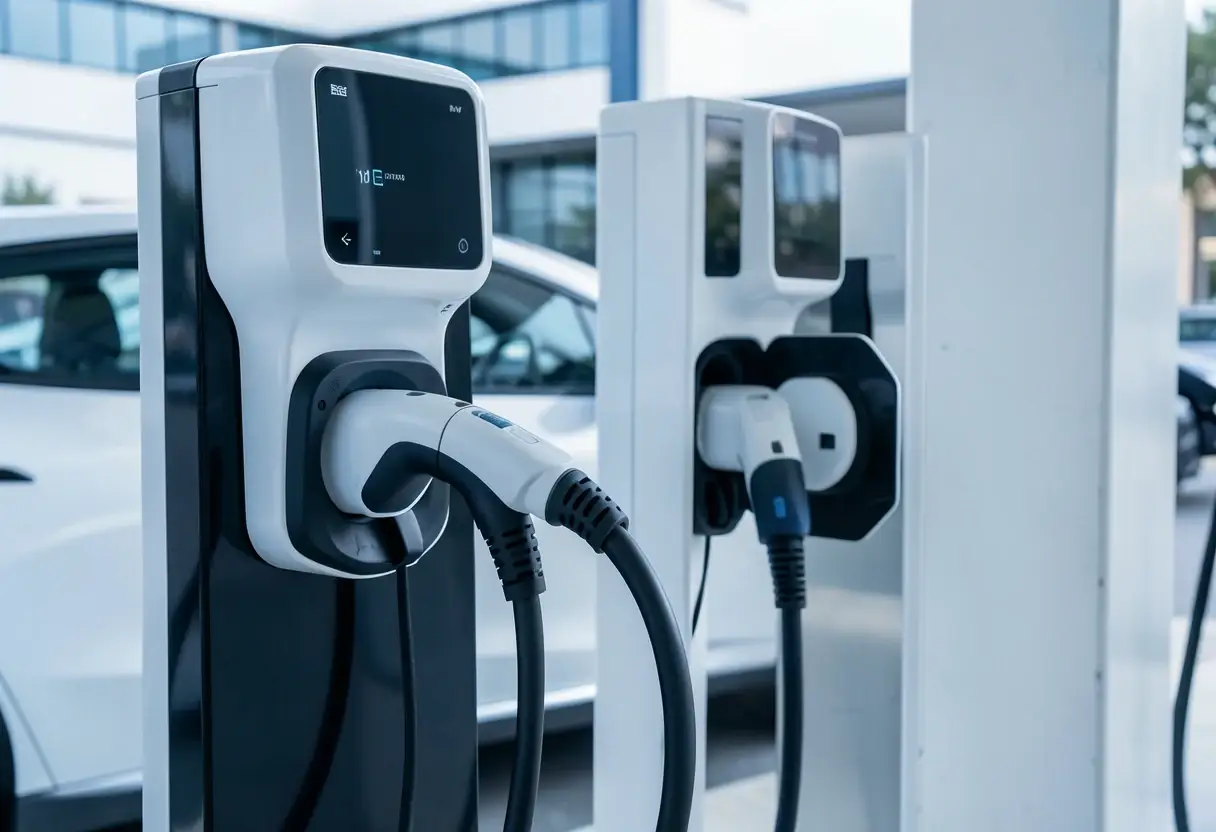
California now requires hourly performance data and OCPP 2.0.1 compliance for publicly funded fast chargers, tying $55 million in CALeVIP incentives to reliability rules after the Enel X Way collapse stranded 25,000 chargers.
Waypoints
CALeVIP now offers $55 million in incentives tied to CEC reliability and data-reporting rules.
Publicly funded DC fast chargers installed on or after Sept. 28 must support OCPP 2.0.1.
Enel X Way abandoned roughly 25,000 JuiceBox chargers in North America in 2024.
The CEC granted $4 million to the Capital Charge Yard testing lab in Sacramento, opened in August.
The CPUC's RIDE program offers up to $20,300 per driver starting next month toward a 2030 zero-emission ride-hail mandate.
Applicants for the $55 million now available through the California Electric Vehicle Infrastructure Project must meet exacting reliability requirements, including approved equipment and software providers and hourly performance data, under rules the California Energy Commission has finalized after years of delay.
The regulations stem from laws passed in 2022 and 2023 that ordered the CEC to enforce reliability and data-sharing standards for EV-charging installers that receive money from state agencies or regulated utilities. The Biden administration attached similar reliability requirements to its $5 billion federal charging program, but the Trump administration has retreated from federal leadership, leaving states to pick up the slack. California has more EVs than any other state and therefore the strongest interest in leading.
What do the new rules require?
One CEC requirement mandates that all publicly funded direct-current fast chargers installed on or after Sept. 28 support OCPP 2.0.1, the latest version of the Open Charge Point Protocol. The standard lets chargers and network management systems from different vendors communicate. The goal is to reduce the risk of chargers and drivers being stranded if manufacturers or network operators fail, according to Obrie Hostetter, director of fleet decarbonization programs at the Center for Sustainable Energy, the nonprofit that manages CALeVIP.
The problem is not hypothetical. In 2024, Enel X Way shuttered its North American charging business and abandoned roughly 25,000 JuiceBox commercial chargers running on nonstandard software. Michael Bakunin, CEO of EV-charging software vendor Epic Charging, worked with owners of some of those chargers to migrate them to his company's platform and keep them running. It was not easy, he said. Meeting the CEC's new OCPP rules was not easy either. "They have very strict requirements," Bakunin said. But he expects the regulations to ensure the next generation of chargers can swap software providers when necessary.
Why are networks pushing back?
Not everyone welcomes the CEC regime. An employee of a major charging network called the regulations "largely an onerous data-reporting exercise" that will not "move the needle on reliability." Hostetter said she understands the concern, but projects using public funds need to reliably serve the public, and collecting performance data is a vital way to verify that outcome.
Kameale Terry, CEO and co-founder of ChargerHelp, which repairs chargers across the country, said missing or incomplete data remains a major obstacle. ChargerHelp and other companies lobbied for the 2022 law that ordered the CEC to collect more of it. Repair crews still lack access to all the information needed to diagnose malfunctioning chargers, she said. No clear rules yet force hardware and software companies to manage the "handoffs" between charger diagnostics, EV communications, payment authorizations and the other failure points in a charging session.
Can testing close the gap?
Terry pointed to a $4 million CEC grant for the Capital Charge Yard, a Sacramento testing lab that opened in August with participation from EV and charging companies including ABB, ChargePoint, EVgo, Hubject, Rivian and Tesla. The nonprofit California Energy, Power, and Innovation Collaborative manages the facility and already hosts training for EV and charger technicians. As a CEC-funded lab, it can extend that work to "make sure that chargers work as they're expected, the first time that you plug them in," said Orville Thomas, the nonprofit's CEO.
What milestones come next?
The regulatory calendar is crowded. The CPUC's Rideshare Incentives for Driving Electric program launches next month, offering up to $20,300 toward the purchase or lease of a zero-emissions vehicle for income-qualified, high-volume drivers on Uber, Lyft or HopSkipDrive. That program serves a 2030 state mandate requiring ride-hailing fleets to be 90 percent EVs and zero carbon.
Separately, the Hybrid and Zero-Emission Truck and Bus Voucher Incentive Project, running for 17 years, continues under CARB scrutiny after a Los Angeles Times report found incentives paid for vehicles that broke down or were abandoned by defunct manufacturers. CARB said it discovered the violations itself. State Sen. Henry Stern, a nonvoting CARB board member, told the paper that policing manufacturers must be balanced against the reality that "we're in a race against time" to clean up heavy vehicle fleets.
The decisive test arrives with the Sept. 28 OCPP deadline and the first CALeVIP awards under the new rules: whether hourly performance data produces measurably higher uptime at publicly funded stations.
via npr.org (Original)
More from Rebecca Stone
Show full bio
News editor covering companies, deals and strategy in Circular economy and the environmental industry at Circular Wire.
456 articles