Industrial Decarbonization
Carbon Capture Targets Cement Sector's Process Emissions
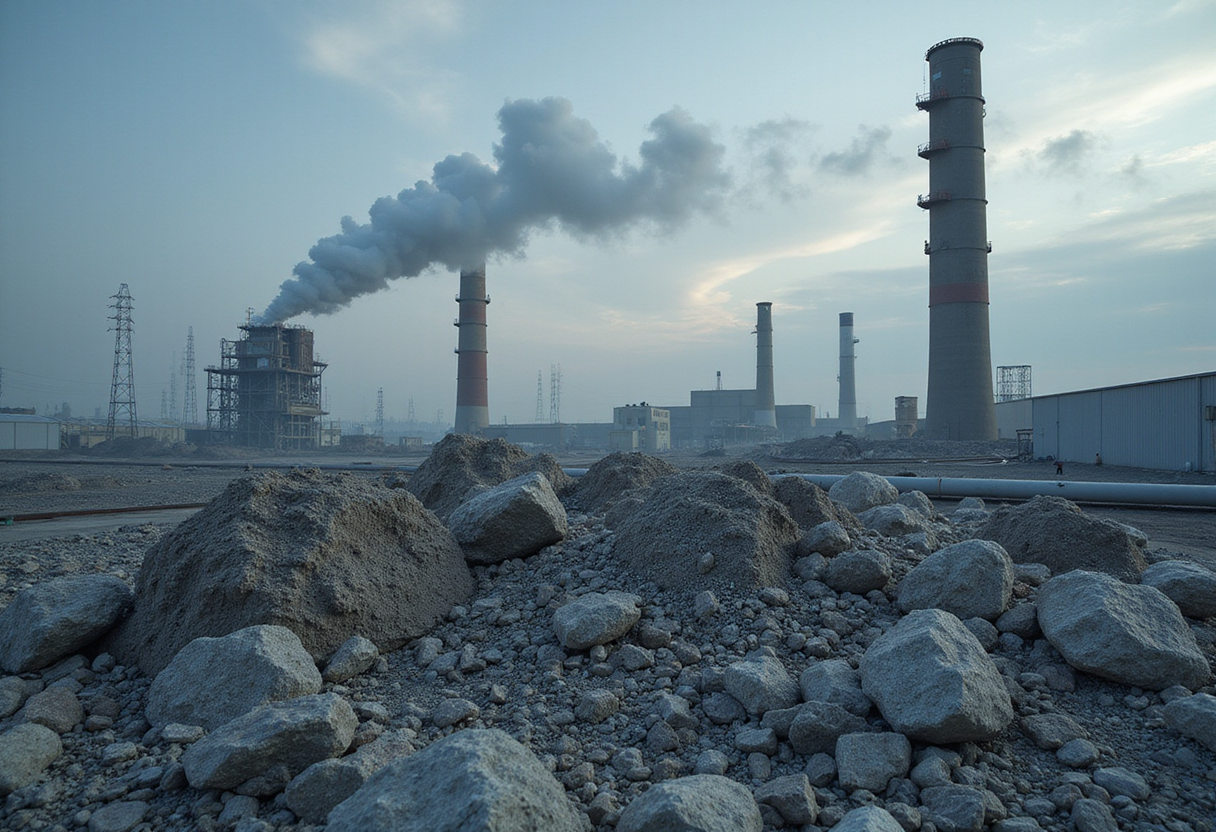
Carbon capture is moving into cement manufacturing, the next industrial sector to deploy stack-level CO2 removal at scale. First-of-a-kind clinker-kiln projects will set the cost reference for the sector.
Waypoints
Carbon capture projects are moving into cement manufacturing, the next industrial sector targeted for stack-level CO2 removal
Cement CO2 comes from two routes: kiln fuel combustion and the calcination reaction that drives CO2 out of limestone
First-of-a-kind cement capture projects will set the reference cost per tonne for the wider sector
Project timing depends on parallel investment in CO2 transport infrastructure and Class VI well permits in receiving jurisdictions
Carbon capture is moving into cement manufacturing, the next industrial sector to deploy stack-level CO2 removal at scale. Carbon Herald's reporting tracks a wave of project announcements aimed at capturing emissions from clinker kilns — the high-temperature units that convert limestone into the binding agent for concrete.
Why cement now?
Cement releases CO2 through two routes that fuel switching cannot eliminate. Kiln combustion produces one stream, but the calcination reaction that drives CO2 out of limestone is intrinsic to making clinker.
That chemistry keeps carbon capture, utilization, and storage (CCUS) at the center of industry roadmaps. Cement plants run large, continuous exhaust streams that suit post-combustion capture, but gas composition, temperature, and dust load differ from a coal-fired power station, requiring tailored solvent and contactor designs.
What do the projects have to prove?
First-of-a-kind cement capture plants will be judged on three operational questions:
- Capital cost per tonne of CO2 captured, and how it trends with subsequent units
- Operating cost relative to the prevailing carbon price, tax credit, or contract subsidy
- Logistics for moving captured CO2 to a sequestration site, pipeline hub, or utilization offtaker
The parasitic energy load of amine-based capture — the steam and electricity diverted from the host plant — is a particular concern for cement. Any efficiency loss directly raises clinker production cost, putting heat integration plans at the top of the engineering checklist.
How do permits and pipelines gate timing?
Capture hardware is only one half of a CCUS project. Cement facilities typically sit inland, away from the offshore reservoirs and dedicated CO2 pipelines that anchor many of the early industrial capture hubs.
Each project therefore depends on parallel investment in transport infrastructure: gathering lines, compression stations, and Class VI wells or equivalent storage permits in the receiving jurisdiction.
Who funds the first units?
Cement sector margins are tighter than oil and gas or petrochemicals, leaving public capital the dominant route for first-of-a-kind retrofits. National programs have become the default vehicle for underwriting the cost gap, with developers weighing stackable credits against policy durability.
What should the industry watch next?
The near-term test of cement capture will come from three milestones: the announced commissioning dates of the first clinker-kiln capture plants, the disclosed cost per tonne on each, and the offtake or storage contracts that close out project finance.
A successful first-of-a-kind sets the reference cost the rest of the sector benchmarks against. A significant cost overrun would redirect strategy toward clinker substitution, supplementary cementitious materials, and binder redesign as the faster decarbonization levers.
via Google News: Industrial decarbonization (Source)
More from Olivia Hart
Show full bio
Staff writer covering marketplaces and e-commerce at Circular Wire.
269 articles