Industrial Decarbonization
Construction Underway on Canada's Largest Carbon Capture Project
Construction has begun on Canada's largest carbon capture project, moving the country's flagship CCUS effort from announced capacity to built infrastructure with a trackable commissioning timeline.
Waypoints
Construction has started on Canada's largest carbon capture project
The project shifts from announced to built capacity, with a commissioning timeline now trackable
Its cost and schedule outcomes will set the benchmark for Canada's wider CCUS pipeline backed by the federal investment tax credit
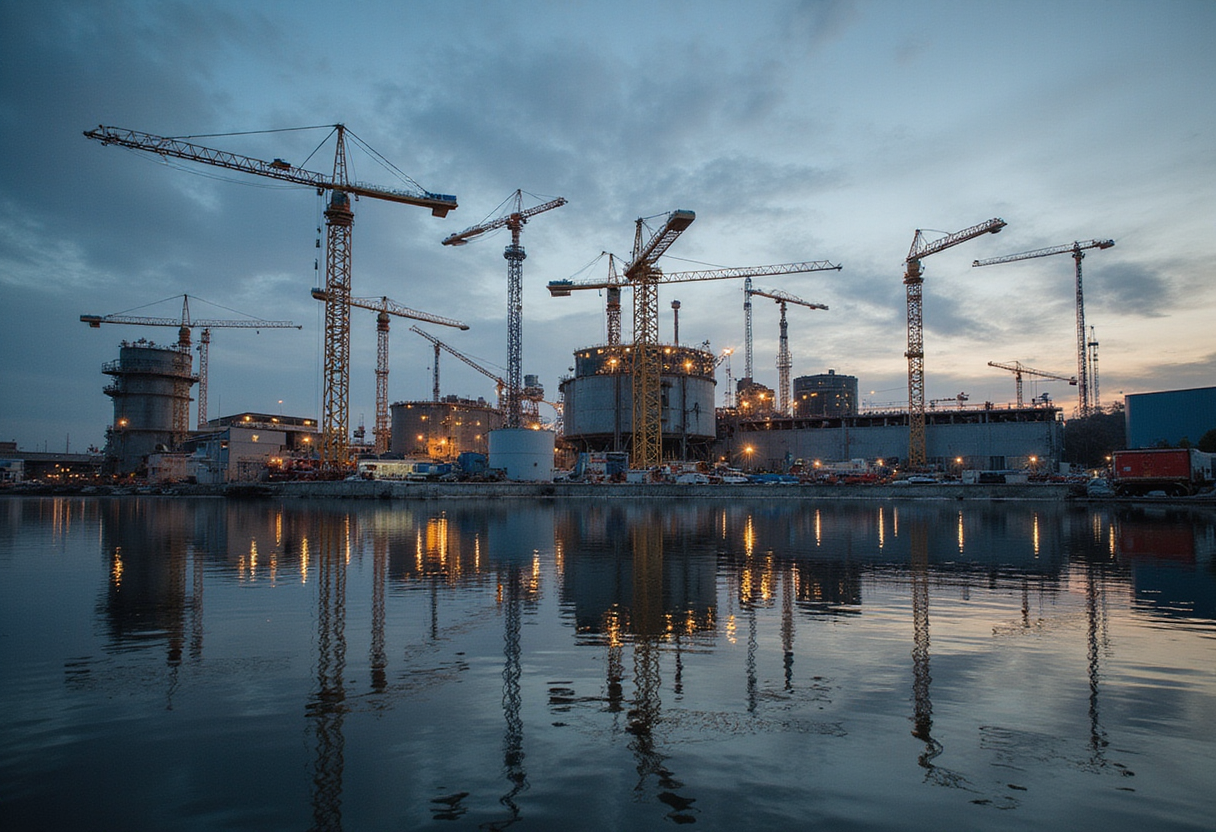
Construction has started on what is now Canada's largest carbon capture project, moving the country's biggest committed carbon capture, utilization and storage (CCUS) effort from the drawing board to the build phase.
The milestone matters for the circular economy beat for a simple reason: carbon capture projects of this scale are industrial infrastructure plays, not concepts. Until ground is broken, announced capacity is a number in a press release. Once steel goes into the ground, capital is committed, contractors are mobilized, and commissioning dates become trackable obligations. That is the distinction this site draws throughout its coverage — built capacity versus announced capacity — and this project has now crossed the line between the two.
The project holds the "largest in Canada" designation, which positions it as the reference case for subsequent CCUS deployments across the country's industrial corridors. For the emissions-intensive sectors that anchor Canadian exports — oil and gas, chemicals, cement, steel and fertilizer production — the first large-scale capture build functions as a de facto template. Engineering, procurement and construction choices made here, along with whatever cost and schedule outcomes the project delivers, will inform how lenders and regulators evaluate every capture proposal that follows.
Why the build phase is the story
Canada has no shortage of announced capture concepts. The country's CCUS project pipeline has grown steadily since the federal government introduced its investment tax credit for carbon capture, utilization and storage, a incentive structured to cover a substantial share of capital costs for qualifying capture equipment. Announcements, however, are cheap. Projects that secure sanction, close financing and begin physical construction are the subset that actually removes tonnes from the atmosphere or from flue-gas streams.
This project now belongs to that subset. Its claim to be the largest under construction in Canada makes it the single most consequential data point the domestic capture sector will produce over the coming build cycle. Watch three things: schedule adherence, capital cost per tonne of annual capture capacity, and the operator's stated commissioning window.
The investment backdrop
The Canadian government has made CCUS a pillar of its industrial decarbonization strategy. The federal CCUS investment tax credit, alongside provincial incentives in Alberta and Saskatchewan — where most of the country's storage geology and point-source emissions sit — has been designed to close the gap between capture costs and what emitters can justify spending.
Whether that policy architecture works at scale is precisely what a first-mover project of this magnitude will test. If the build lands on time and on budget, it de-risks the queue behind it. If it slips, every financing conversation for the next wave of Canadian capture projects gets harder. That is the pattern large first-of-a-kind infrastructure always sets.
What to track next
For readers tracking this project against circularity and decarbonization commitments, the operative deadlines are the ones the developer sets during construction: major equipment delivery windows, tie-in dates to source facilities or pipelines, injection-well licensing for storage, and the commissioning and start-up target.
Regulatory milestones will decide the pace as much as capital will. Capture projects in Canada move through a layered approval process involving environmental assessments, pore-space or subsurface tenure where CO2 is stored, and injection permits issued by the relevant provincial regulator. Each of those steps is a checkpoint that can confirm or delay the commissioning timeline the developer has announced.
The market signal to watch is equally concrete. Once the plant is operating, actual captured volumes — reported tonnage, verified and stored or utilized — become the metric that matters. Everything before start-up is capital deployed. Everything after is performance against the project's capture capacity, and that number will anchor Canada's claims about industrial-scale carbon management for years.
The next decisive milestone for this project is its commissioning date and first injection of captured CO2 — the point at which Canada's largest capture build either validates the federal incentive framework or forces a repricing of the entire CCUS pipeline behind it.
via Google News: Industrial decarbonization (Source)
More from Rebecca Stone
Show full bio
News editor covering consumer brands and retail at Circular Wire.
125 articles