Industrial Decarbonization
Eni completes offshore CO₂ platform install in Liverpool Bay
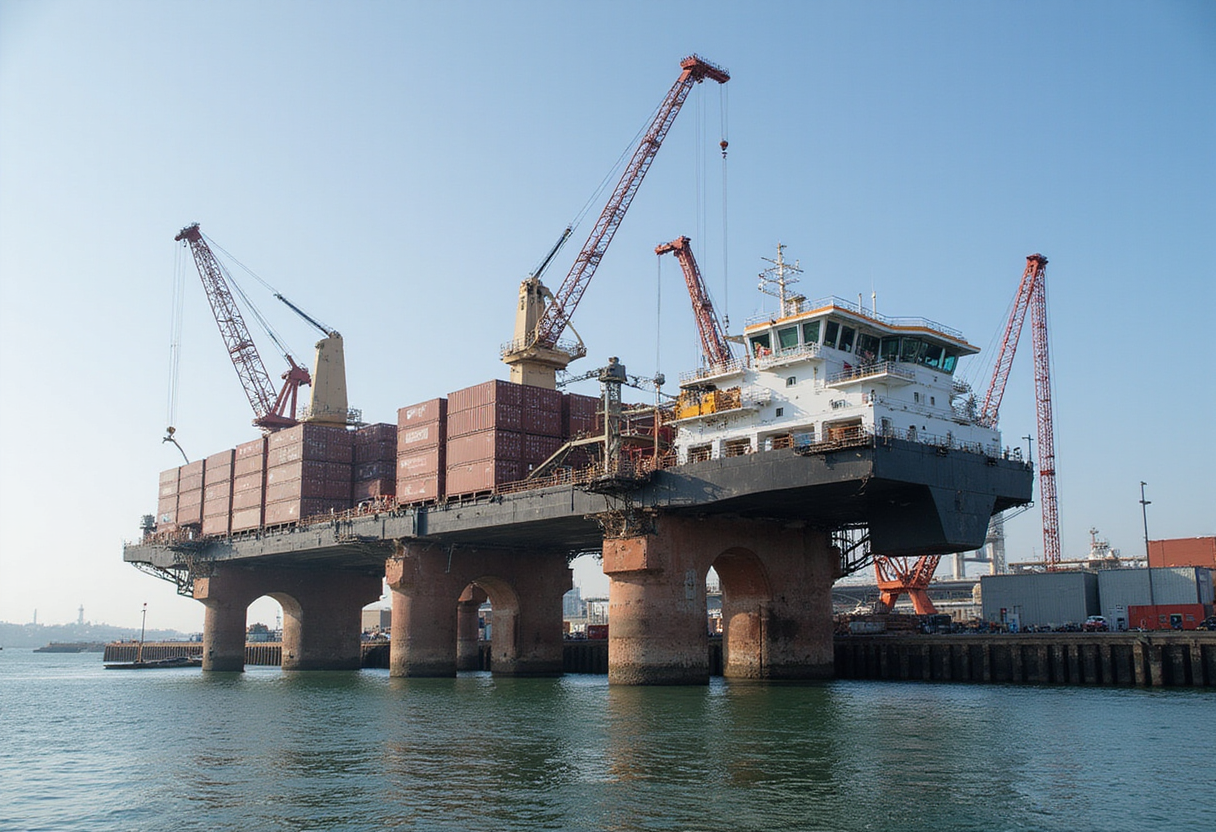
Eni has completed installation of its offshore CO₂ storage platform in Liverpool Bay, converting the UK's HyNet storage leg from design into built offshore infrastructure.
Waypoints
Eni has completed installation of an offshore CO₂ storage platform in Liverpool Bay, off the North Wales coast
The platform is part of Eni's transport and storage system serving the HyNet cluster in North West England and North Wales
The regulator for the storage licence is the North Sea Transition Authority; first injection remains the next milestone
The installed structure is built capacity that must still be commissioned and connected to subsea injection wells
Eni has completed installation of its offshore CO₂ storage platform in Liverpool Bay, a hardware milestone for one of the UK's most advanced carbon capture and storage (CCS) transport and storage buildouts.
The Italian operator confirmed the platform, positioned in the Irish Sea off the coast of North Wales, is now standing on its seabed foundations. For the emerging North West England and North Wales CCS cluster, the news marks the transition from consented design to physical, built infrastructure in the marine environment.
The platform is the offshore node of Eni's Liverpool Bay storage system, which the company is developing to receive CO₂ captured from industrial emitters in the region. Eni holds the CO₂ storage rights in Liverpool Bay after acquiring the portfolio from operatorship of legacy gas assets in the area, converting depleted hydrocarbon reservoirs and existing pipeline corridors to storage duty.
Why does an installed platform matter?
In CCS project economics, offshore installation is among the hardest capital milestones to hit. It signals that:
- Long-lead fabrication contracts have been executed and delivered;
- Marine installation windows have been met on schedule;
- The transport and storage operator has converted engineering design into fixed steel in the water.
For emitters weighing final investment decisions on capture plants, a completed offshore platform reduces delivery risk on the storage side of the chain. Capture projects across the UK have repeatedly stalled on the question of whether storage infrastructure would exist when their solvent scrubbers came online. Each completed installation narrows that gap.
How does this fit the UK CCS pipeline?
Eni's Liverpool Bay storage development sits within the UK government's cluster sequencing framework, which pairs industrial capture projects with designated transport and storage networks. The North West England and North Wales cluster, known as HyNet, links hydrogen production, industrial carbon capture and Eni's offshore storage into a single system.
The sequence that decides the cluster's trajectory now runs through several gating steps:
- Commissioning and hookup of the installed platform to subsea injection infrastructure;
- Completion of onshore pipeline and terminal works to move CO₂ from emitter sites to the coast;
- First injection into the depleted reservoirs, the point at which storage capacity converts from permitted to operational.
Until first injection, the Liverpool Bay system remains built capacity awaiting commissioning rather than operating throughput.
What comes next?
The decisive milestones are regulatory and commercial. Eni must complete well integrity verification and storage permit conditions with the North Sea Transition Authority, the UK regulator that licenses CO₂ storage. The company also needs capture projects on the HyNet cluster to reach financial close so that CO₂ volumes flow into the newly installed infrastructure.
The installed platform is the visible proof that the storage leg of the cluster is no longer a paper project. Whether it becomes operating storage capacity on schedule now depends on first-injection timing — the number the industry will watch next.
via Google News: Industrial decarbonization (Source)