Compliance & Policy
EPA Ends 20-Plus-Year Push on Factory Farm Air Pollution
The EPA has ended a 20-plus-year effort to build factory-farm emissions methods, ending CAFO safe harbor while leaving federal pollution permits without an enforcement methodology.
Waypoints
Nearly 12,700 U.S. deaths a year are linked to pollution from concentrated animal feeding operations.
The EPA announced on Oct. 30 that it would end its 20-plus-year effort to develop CAFO emissions methods.
The Air Consent Agreement took effect in 2005 and provided safe harbor for thousands of participating CAFOs.
A 2017 EPA Office of Inspector General report faulted the agency for moving slowly through the process.
The consent agreement did not cover methane, the largest methane source in the U.S. livestock industry.
By Rebecca Stone
Nearly 12,700 U.S. deaths a year are associated with pollution from concentrated animal feeding operations (CAFOs), as the Environmental Protection Agency announces the end of a 20-plus-year effort to develop emissions-monitoring methods for the facilities.
In an Oct. 30 announcement, the EPA said it would stop developing methods under the National Air Emissions Monitoring Study, a process built around the 2005 Air Consent Agreement. The decision closes the agency’s stop-and-start effort to create regulatory measurement tools.
The agency said many farms had modernized their barns and manure systems during the two decades since the study, leaving its data too old and limited to support dependable methods. The announcement came days before the midterm elections and was characterized as a long-awaited reprieve for farmers, a historically important constituency for Trump and the Republican Party.
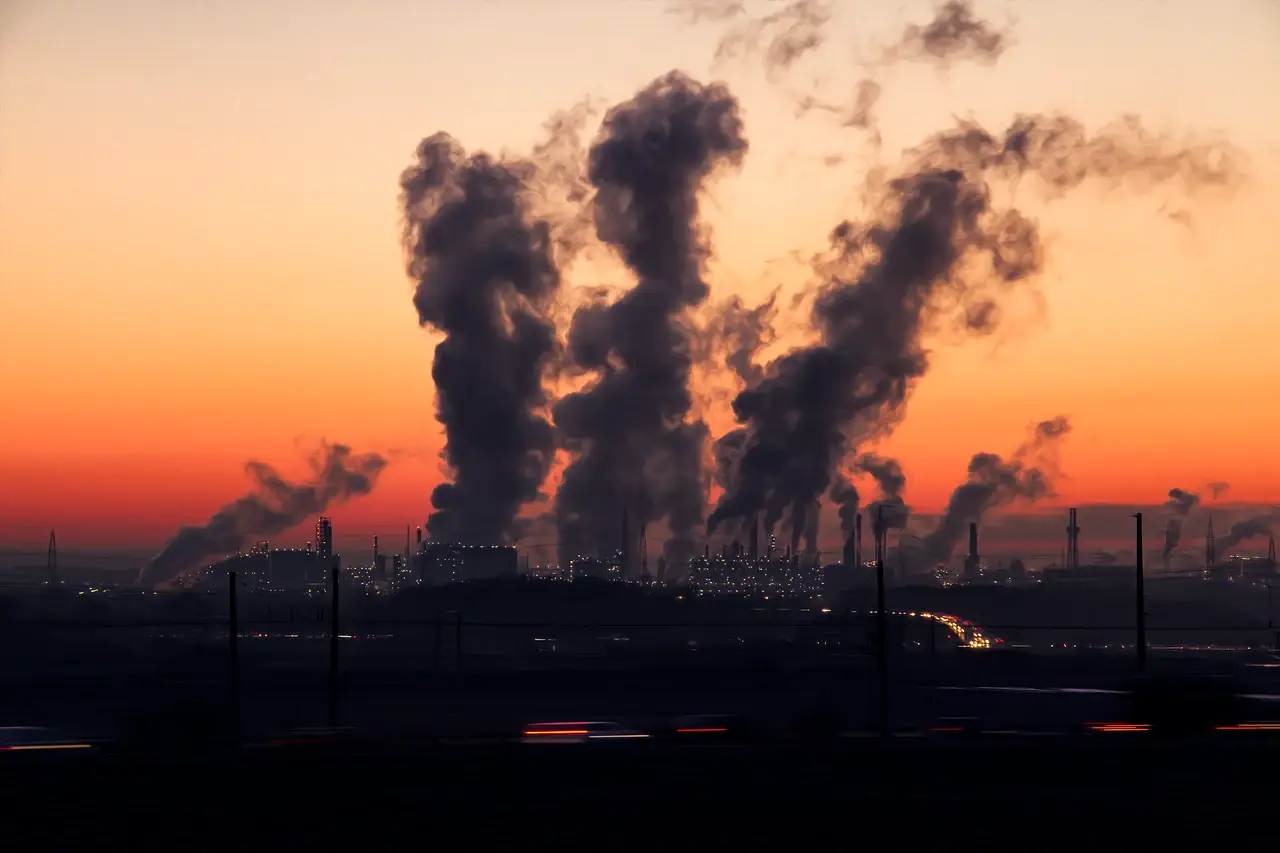
At sites holding tens of thousands of animals, waste leaves barns through ventilation fans or escapes from giant lagoons of liquid effluent. The facilities emit fine particulate matter, ammonia, nitrogen oxides, sulfur dioxide and volatile organic compounds, creating a toxic air mix.
How did the consent agreement work?
CAFOs must obtain permits under the Clean Air Act and report emissions under the Comprehensive Environmental Response, Compensation and Liability Act, also known as CERCLA or Superfund, and the Emergency Planning and Community Right-to-Know Act, or EPCRA.
In the early 2000s, the EPA attempted to prosecute CAFOs for exceeding limits on some pollutants. The livestock industry objected that no adequate measurement method existed, prompting the agency to work with industry groups on the Air Consent Agreement.
The agreement functioned like a legal shield: thousands of participating CAFOs received safe harbor from legal action in exchange for joining a study funded by the livestock industry.
The EPA said the study would develop models that could “determine whether they emit pollutants at levels that require them to apply for permits under the CAA or submit notifications under CERCLA or EPCRA” and “produce a scientifically sound basis for measuring and estimating air emissions from these facilities.”
After the agreement took effect in 2005, the EPA produced no air emissions-estimating methodologies. A 2017 report from its Office of Inspector General faulted the agency for moving slowly through the process.
The Trump administration and Congress also gutted factory-farm reporting requirements under CERCLA and EPCRA. Food & Water Watch, which tracked the proceedings and filed dozens of lawsuits seeking CAFO pollution controls, criticized the result.
“As EPA has been saying it’s proceeding with this plan, it’s been dismantling all of its own tools to regulate emissions,” said Tarah Heinzen, legal director for Food & Water Watch. “Now it has announced it has no intention, basically, of ever holding factory farms accountable under the Clean Air Act, either.”
Why did the EPA end the study?
Abigale Tardif, acting assistant administrator for the EPA’s Office of Air and Radiation, said: “Good science requires good data, and these data are too old and too limited to support methods that farms could rely on. We would rather tell farmers that plainly than issue numbers we cannot stand behind.”
Rob Brenneman, president of the National Pork Producers Council, which had long pressed for the decision, said: “This move confirms what farmers have long known: Every farm is different, and there is no one-size-fits-all model to apply to them.”
Does the Clean Air Act still apply?
The decision does not repeal the Clean Air Act. Facilities that exceed emissions thresholds still need permits, and the amnesty granted through the consent agreement has ended. Yet the EPA has no national methodology for estimating emissions, leaving regulators without a common federal calculation.
“There’s no EPA-issued methodology to estimate emissions,” Heinzen said. “That doesn’t mean that there aren’t good studies out there of emissions from different types of animal feeding operations that can be used.”
California already uses livestock-emissions models to enforce its own air regulations. “We just don’t have one set of national emissions factors from EPA,” Heinzen said. “That does not absolve these factory farms from their obligation to comply with federal law.”
Under the current administration, federal enforcement remains remote. “No one’s going to estimate anything,” Heinzen said. “As EPA said in its press release, we’re certainly not about to try to enforce the law.”
What happens to methane reporting?
The consent agreement never covered methane, even though the U.S. livestock industry is the country’s largest methane source. Congress has blocked livestock facilities from reporting methane emissions through annual spending bills.
The decisive regulatory milestone is whether the EPA replaces the terminated study with a national emissions-estimation methodology. The Oct. 30 notice set no replacement deadline and announced no enforcement campaign; without a federal method, the ended agreement leaves Clean Air Act permitting without its promised measurement tool, while California continues to use state models.
via Google News: Environmental compliance and EPA (Source)
More from Rebecca Stone
Show full bio
News editor covering companies, deals and strategy in Circular economy and the environmental industry at Circular Wire.
450 articles