Cleantech & Investment
Frontier Breaks Ground on 132 MW Waroona Solar-Battery Hybrid in WA
Frontier Energy starts major construction on a 132 MW solar and 81.5 MW / 6.9-hour battery hybrid south of Perth, with first generation slated for 2028.
Waypoints
Stage One comprises 132 MW solar and an 81.5 MW / 6.9-hour battery, first generation scheduled for 2028.
CEO Adam Kiley says Stage One will replace a third of Collie coal plant output ahead of its 2027 closure.
Project finance debt of up to AUD 280 million led by Natixis CIB and Sumitomo Mitsui Banking Corporation.
Reserve Capacity Mechanism credits secure circa AUD 160 million over a fixed five-year agreement.
Long-term ambition: ~1 GW solar and 660 MW battery at Waroona by 2031; Stage Two already has approval.
Construction has officially started on Frontier Energy's 132 MW Waroona solar facility paired with an 81.5 MW battery, with first generation from the Western Australian hybrid scheduled for 2028.
The Perth-based developer confirmed major works are underway on Stage One of its flagship Waroona Renewable Energy Project, located about 120 kilometres south of Perth in the state's southwest. The battery energy storage system carries an 81.5 MW rating with 6.9 hours of duration, and the DC-coupled design captures solar energy during the day to dispatch into the grid when demand — and value — peaks.
How much coal does it replace?
The project connects to WA's main electricity network, the South West Interconnected System, via the nearby 330 kV Landwehr Terminal. Frontier Chief Executive Officer Adam Kiley said Stage One is forecast to replace a third of the power generated by the coal-fired Collie power station, which is due to close in 2027.
"When energy generation commences in 2028, our Waroona project will become the largest solar and battery hybrid facility connected to WA's main electricity network and will be a major part in helping the state reach its target of 75% renewable energy by 2031," Kiley said.
He added that the company intends to develop Waroona into a multi-stage renewable energy hub. "Stage One is only the beginning for Frontier, as we aim to expand beyond Stage One and establish the Waroona project as a major renewable energy hub in the heart of southwest WA, bringing much-needed new generation onto the grid in an area that has been supported by coal for more than 60 years," he said.
In short, one project is positioned to fill a measurable slice of the hole Collie leaves behind.
What's built — and what's only announced?
Built capacity under construction now:
- Stage One: 132 MW solar plus 81.5 MW / 6.9-hour battery, fixed-price EPC contract awarded to Western Australian contractor Monford Group, first generation in 2028.
Announced projects, distinct from the shovel-ready stage:
- Stage Two: approximately 120 MW solar and 80 MW battery — development approval already secured, no construction date announced.
- Long-term ambition: roughly 1 GW of solar and 660 MW of battery storage by 2031, per the company's expansion strategy.
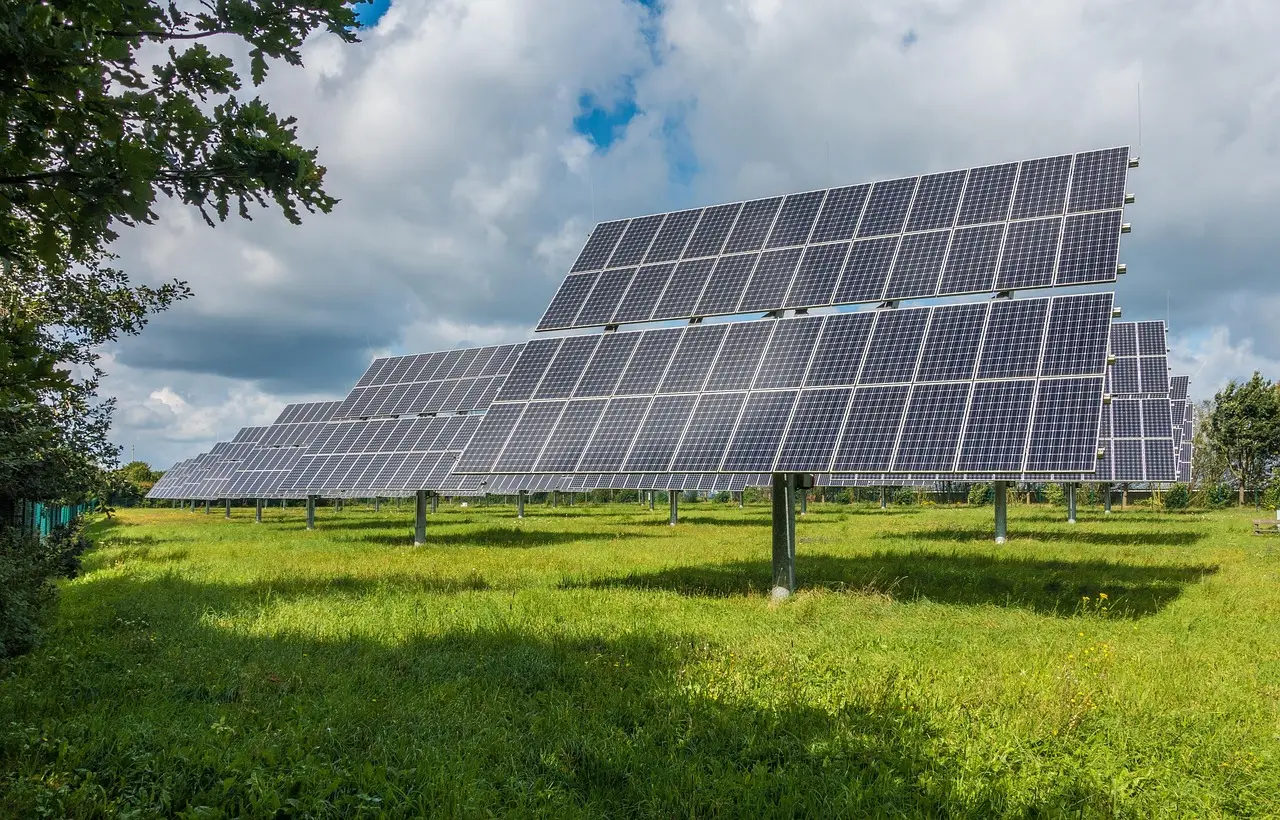
The supply chain for Stage One is locked in. Longi supplies the solar modules, Trina Storage the battery system, Nextpower the solar tracking equipment and SMA Australia the inverters. Field piling for the single-axis tracking system is underway; PV module installation and balance-of-plant construction for the solar facility are scheduled to commence in early 2027.
How is it financed?
The construction start follows Frontier's execution earlier this month of a syndicated facility agreement covering project finance debt of up to $280 million (USD 194 million), provided by international lenders led by France-headquartered investment bank Natixis CIB and Japan's Sumitomo Mitsui Banking Corporation.
Revenue support stacks in three layers:
- A Capacity Investment Scheme agreement with the Australian government guarantees a minimum revenue level through 2042.
- The Australian Energy Market Operator's Reserve Capacity Mechanism has assigned capacity credits for Stage One under a fixed five-year agreement worth circa $160 million.
- Merchant dispatch into high-value demand periods via the DC-coupled battery rounds out the model.
The debt syndicate, the CIS floor and the capacity credits together give the project contracted certainty out beyond a decade.
What happens next?
The near-term milestone is early 2027, when PV module installation and solar balance-of-plant works begin on site — the schedule test that determines whether first generation in 2028, and the partial backfill of Collie's retirement, stays on track.
via pv-magazine-australia.com (Source)
More from Daniel Okafor
Show full bio
Correspondent covering companies, deals and strategy in Circular economy and the environmental industry at Circular Wire.
528 articles