Circular Economy
Greywater from Jordan's Mosques: 35 Sites Reuse Ablution Flows
Jordan reuses 150m m³ of wastewater a year, but a mosque ablution-water programme has hit just 35 sites in 18 years. The bottleneck isn't treatment — it's maintenance ownership.
Waypoints
Jordan reuses ~150m cubic metres of wastewater annually, ~90% of it for irrigation, per a former irrigation minister
More than 35 mosques use ablution water for irrigation; JACA's programme reached 18 mosques and schools in 18 years since 2008
A 2025 study estimates 3.6m mosques worldwide consume 22.5m cubic metres of ablution water per year; Jordan has 7,600+ mosques
Jordan receives 61 cubic metres of renewable freshwater per person per year, versus the UN scarcity threshold of 500
Ministry training reached 1,200 muezzins, 750 female preachers, 110 imams and 28 technicians; 50+ mosques got rainwater harvesting in 2017–2024
Jordan reuses roughly 150 million cubic metres of wastewater annually — about 90% of it directed to irrigation — yet a programme to recycle ritual ablution water has reached only 35 mosques after nearly two decades of work.
The gap between those two figures is the story. Jordan ranks among the world's leaders in water reuse at the national scale, but the distributed, site-level stream — water from the taps where worshippers wash before prayer — has proven stubbornly hard to scale.
Consider the arithmetic of demand first. Jordan's 11.3 million people include nearly 11 million practising Muslims who perform wudu, the ritual washing of hands, face and feet, five times daily. A 2025 peer-reviewed study puts global ablution demand at 22.5 million cubic metres a year across 3.6 million mosques. Jordan's Ministry of Awqaf counts more than 7,600 mosques nationwide. The kingdom receives just 61 cubic metres of renewable freshwater per person per year — less than one-eighth of the UN's absolute scarcity threshold of 500 cubic metres.
What does the flagship site actually do?
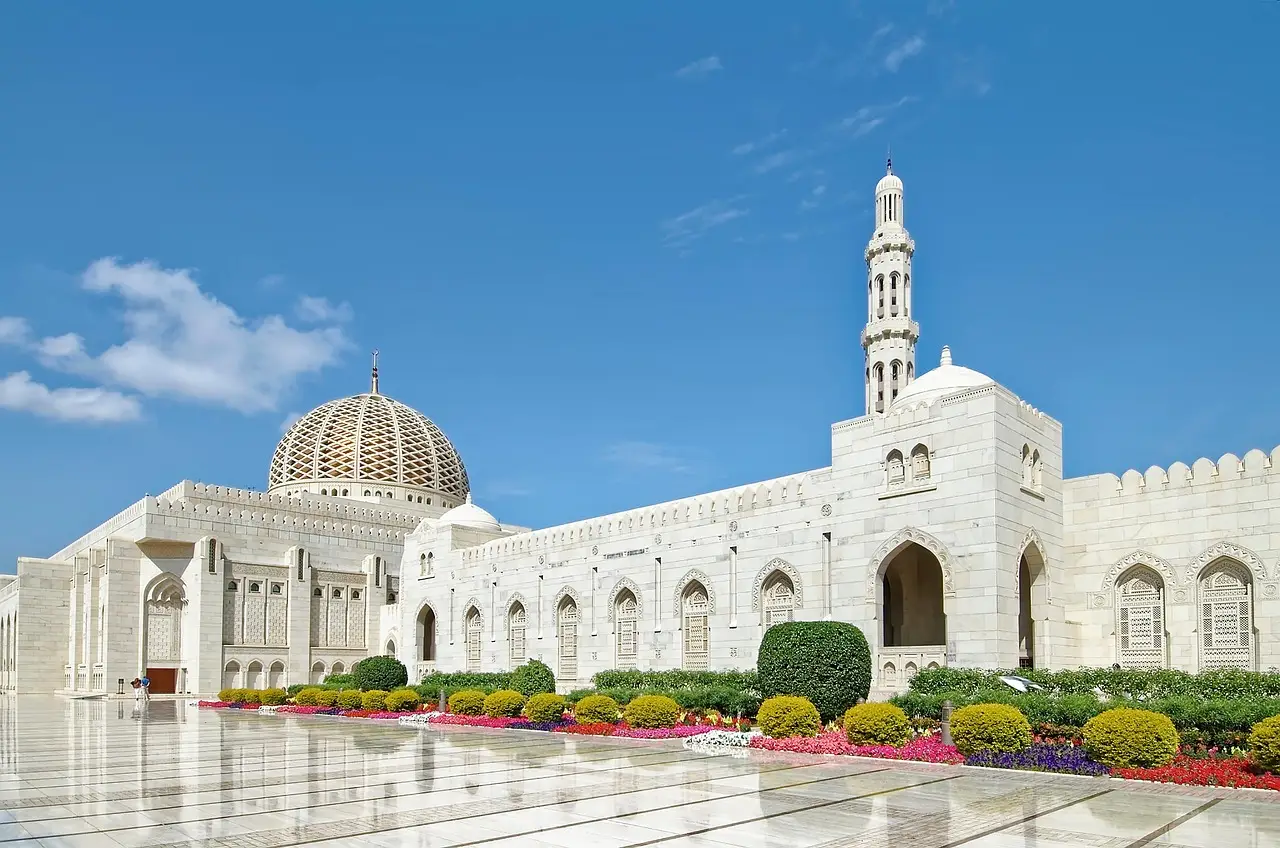
The Abu Obeida mosque in Deir Alla, Balqa, west of Amman, sits in one of the hottest stretches of the Jordan Valley. Its gardens — trees and flowerbeds on drip lines — are irrigated entirely with treated ablution water, not municipal supply. Pipes beneath the washing area carry flows to a treatment unit, then out to irrigation.
The process is deliberately simple. "Mosques do not use soap during wudu, so there are no chemicals to complicate treatment," says Ahmed al-Rawsan, founder of the Jordanian Aqua Conservation Association (JACA), which manages the system. The water passes through five layers of gravel and sand via natural sedimentation before being redirected to irrigation — no chemical dosing, no membrane stage, no energy-intensive polishing.
"People here understand water scarcity because they live it every day," al-Rawsan says. "What we wanted to show is that the mosque, which already teaches conservation as a religious value, can practise it too."
The Ministry of Awqaf's logo appears on the project sign at Abu Obeida — a signal of institutional backing that practitioners in this sector will recognise as the difference between a pilot and a programme.
Why has scaling taken 18 years?
JACA has worked on ablution reuse since 2008. In 18 years it has reached 18 mosques and schools. The bottleneck, al-Rawsan says, is not treatment technology — it's ownership.
"In every mosque, the same question arose: who would take responsibility for the system once it was installed? The imam or the caretaker?" he says. Both are ministry employees with different roles, and "without a clear assignment of responsibility, systems went without the maintenance they needed."
That's a familiar failure mode for anyone who has tracked small-scale reuse deployments anywhere: capital cost isn't the constraint; unassigned O&M responsibility is.
The ministry's parallel effort is broader. Spokesperson Mohammad al-Tawalbeh reports that training has reached 1,200 muezzins, 750 female preachers, 110 imams and 28 technicians. Between 2017 and 2024, the ministry implemented rainwater harvesting in more than 50 mosques, and more than 35 mosques now use ablution water for irrigation and cleaning.
How big is the prize, really?
Here the establishment pushes back. Mu'tasim Sa'idan, a former minister of irrigation, acknowledges Jordan's reuse leadership — the 150 million cubic metres reused annually, 90% to irrigation — but is blunt about ablution flows: "The quantities are not what we imagine."
Against 150 million cubic metres of municipal-scale reuse, even a few thousand mosques' worth of greywater is a rounding error. The counterargument is contextual: municipal water is rationed, delivered by pipe for as little as 12 hours a week in some areas, with households bridging gaps on rooftop tanks. In that regime, any litre kept off the strained network has outsized local value.
Behavioural leakage remains. Worshipper Abdullah Khaled has heard the sermons — imams now preach water conservation, following JACA's work with the ministry on Friday sermons and preacher seminars — but notes the message doesn't always stick: "A person may listen on Friday to a sermon about conserving water, then go home and leave his tank overflowing or the tap running."
What decides what happens next is whether the ministry formalises maintenance responsibility for installed systems — the single fix al-Rawsan identifies — and whether the 2017–2024 build rate of roughly six rainwater-harvesting installations a year can accelerate under a clearer O&M mandate.
via theguardian.com (Source)
More from Elena Vasquez
Show full bio
Senior reporter covering technology and product news in Circular economy and the environmental industry at Circular Wire.
491 articles