Cleantech & Investment
Hephae's 210℃ Drilling Tools Clock Commercial Hours at Fervo's Cape Station
Hephae's 210℃ MWD tool logged its first commercial runs at Fervo's 500-MW Cape Station, with a unit heading to Mazama Energy as the startup scales from six to 18 tools by Q2 2026.
Waypoints
Hephae completed the first commercial deployment of its 210℃-rated MWD tool at Fervo Energy's 500-MW Cape Station project in Utah earlier this year, with additional runs since.
Nonproductive cooling time costs geothermal operators roughly $500,000 to $1 million per well in idle rig rental, per Hephae CEO Steve Krase; drilling represents up to half of new geothermal plant costs.
Seven drilling-focused startups have raised $393 million since 2021 for geothermal drilling technology, including Hephae's ~$18 million July round and Quaise Energy's $134 million raise; Hephae plans to expand from six to 18 tools by Q2 2026 and launch above-300℃ systems by 2030.
Hephae Energy Technology has completed the first commercial runs of its high-temperature measurement-while-drilling (MWD) tool at Fervo Energy's 500-megawatt Cape Station project in southwest Utah, marking the entry of oil-and-gas-derived downhole electronics into the next-generation geothermal supply chain.
The Houston-based startup deployed the device commercially at Cape Station for the first time earlier this year and has since run it there additional times, CEO Steve Krase said. A second unit will ship shortly to Mazama Energy, which has begun drilling its commercial pilot facility near the Newberry Volcano in central Oregon.
The economics case is straightforward. Drilling accounts for as much as half the cost of building a new geothermal plant, and each well can require millions of dollars. Conventional MWD tools — standard kit in oil and gas for decades — are rated to roughly 175 degrees Celsius (347°F), the temperature range where hydrocarbon reserves sit. Geothermal developers are chasing hotter rock, because higher temperatures yield more energy per well. When downhole electronics overheat, operators must pause drilling to cool the fluid column. Krase puts the cost of that nonproductive time at roughly $500,000 to $1 million per well, largely from idle rig rental.
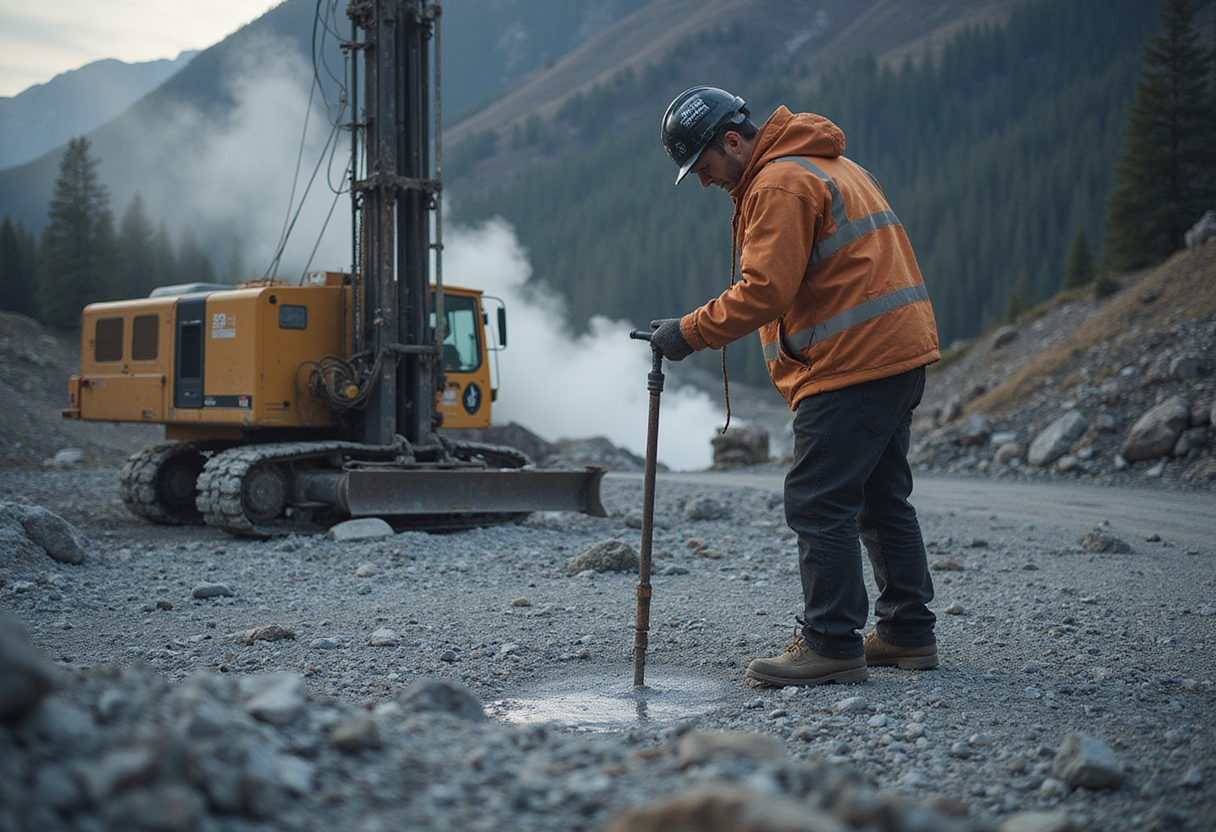
Hephae says its design withstands up to 210℃ by directing heat away from sensors and circuits during operation. The tool rides in a steel tube behind the drill bit; stacked rounded circuit boards gather subsurface data and transmit it to surface via pressure pulses, letting engineers steer the well in real time. Before the Cape Station deployment, the company qualified the hardware at an Oklahoma test facility and in a high-temperature gas well in Texas — a second potential market.
Krase co-founded the company with John Clegg in 2020 to adapt their fossil-fuel drilling expertise. "We realized that companies like Fervo need the same exact tools that we've been working on for the last 45 years," Krase said. "They just need to work a hell of a lot hotter."
In July, Hephae raised nearly $18 million in venture capital to build additional tools for rental to geothermal developers. The company plans to grow its fleet from six to 18 units by the second quarter of next year, and to as many as 40 by the end of 2027 as Fervo, Mazama and future partners advance their projects. A separate R&D program targets systems rated above 300℃, with a planned launch by 2030.
Hephae is one node in a broader capital flow into geothermal drilling hardware. Seven startups have secured $393 million in total venture investment since 2021 to develop drilling systems and components for geothermal power, according to Cleantech Group. That tally includes Quaise Energy's recent $134 million raise to advance its millimeter-wave rock-melting technology and build its first geothermal plant — also near Newberry Volcano.
Investors are using the supply chain to get geothermal exposure without first-of-a-kind project risk, said Stephanie Díaz, senior associate for technology and innovation at BloombergNEF. "Instead of having to figure out an entire power plant, you just need to figure out one component that is essential to creating the power plant," she said.
Fervo declined to comment for this story but pointed to a July statement from Elliot Howard, its director of drilling and completions. "Fervo is encouraged by the early progress of our collaboration with Hephae, whose novel high-temperature innovations have the potential to contribute positively to [enhanced-geothermal-system] economics, unlock higher-energy geothermal resources, and further cement the competitiveness of next-generation geothermal power," Howard said.
Fervo, which became the first next-gen geothermal firm to go public in May, expects Cape Station to be the largest project of its kind in the world when it comes fully online by 2028. The company has already cut drilling times and reached deeper resources at the Utah site. "Fervo has been really supportive, because they know their success depends on being able to get to the good rock," Krase said.
Zainab Gilani, an energy and power research associate at Cleantech Group, said Hephae's partnerships with Fervo and Mazama position it to scale with the sector. "Any way that you can get geothermal to be [cost] competitive with other sources of energy, like nuclear, solar, and wind … will be pretty crucial," she said.
The near-term milestones to watch: delivery of the Mazama unit at Newberry, fleet expansion to 18 tools by Q2 2026, and Cape Station's ramp toward full 500-MW output by 2028.
via einpresswire.com (Original)
More from Olivia Hart
Show full bio
Staff writer covering marketplaces and e-commerce at Circular Wire.
120 articles