Recycling Industry
How single-stream recycling's failures opened the door to AI sorting
Single-stream collection raised participation but degraded bale quality; after China's import ban stranded contaminated output, MRF operators turned to AI and robotic sorting to recover value downstream.
Waypoints
Single-stream collection raised household participation but structurally increased contamination in recovered paper and plastic bales.
China's 2018 National Sword import restrictions collapsed the main export market for contaminated US single-stream output.
AI and robotic sorting is being deployed mainly as retrofit capital in existing MRFs to lift bale purity rather than to reverse single-stream collection.
The single-stream recycling system that most US municipalities adopted over the past two decades is now widely acknowledged, in trade filings and operator disclosures alike, as a bargain that came due: higher participation rates in exchange for contaminated, low-quality bales. The industry's answer is not another collection redesign but retrofit capital — artificial intelligence and robotic sorting installed at the materials recovery facility (MRF) to fix downstream what commingling broke upstream.
That arc, from curbside convenience to machine-vision recovery, is the subject of a new analysis published by Quartz. It traces how single-stream's defining feature — one cart, all materials, no source separation — produced the contamination problem that now defines the economics of secondary commodities.
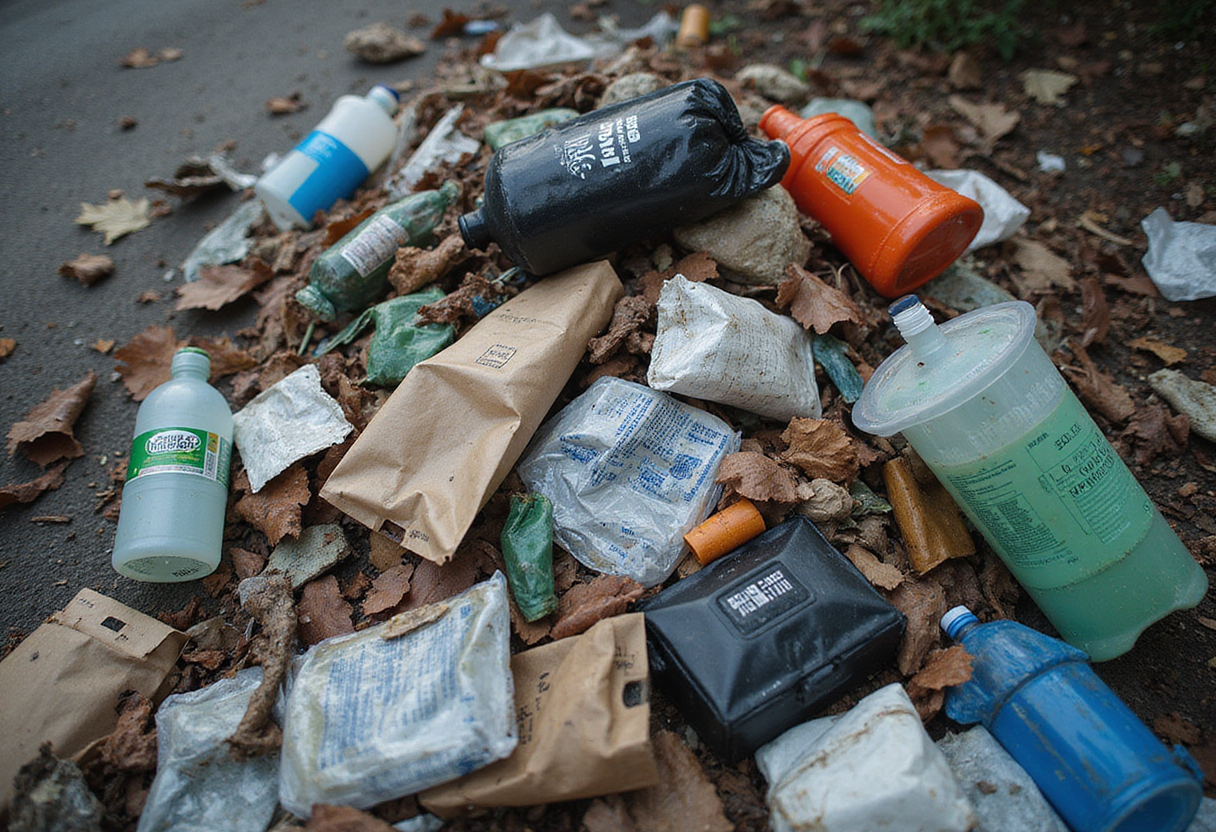
The mechanism is straightforward. When residents throw paper, containers and garbage into a single bin, glass shards embed in fiber, plastics carry liquid and food residue, and flexible film tangles the screens and disc screens that conventional MRFs rely on. Each contamination pathway degrades the quality of the finished bale, and bale quality is what buyers price. Recovered paper that once moved to Chinese mills at commodity-grade specifications began, after the commingling transition, to arrive with contamination levels that end users would not accept at posted prices.
The market enforced that verdict in 2018, when China's National Sword policy collapsed the export channel that had absorbed a large share of US single-stream output. Contaminated mixed paper and plastics that had shipped overseas were suddenly stranded, and municipal programs across the country faced rejected cargoes, downgraded specifications and, in many contracts, higher tipping fees passed through from MRF operators. The policy shock converted what had been a quiet quality problem into a balance-sheet problem for every jurisdiction locked into single-stream collection.
That is where sorting technology enters the story. Optical sorters, robotic pickers and AI-driven vision systems attack contamination at the point in the process where it can still be removed: the sorting line. Machine-vision systems identify material by type on a moving belt, and robotic arms or air jets eject target streams — or eject contaminants — at line speeds and accuracy levels human pickers cannot sustain across a full shift. The technology's commercial pitch rests on a single proposition: it can recover quality, and therefore price, from a feedstock that single-stream collection structurally degrades.
The deployment pattern matters for how the next phase of the sector develops. AI sorting is overwhelmingly a retrofit technology in North America — capital installed into existing single-stream MRFs to lift purity rates, meet tightened buyer specifications and reduce dependence on manual picking labor. It is not, at this stage, a reversal of single-stream itself. No major municipal system of scale has moved back to dual-stream or source-separated collection as a response to contamination; the fixed cost of carts, trucks and resident behavior makes collection redesign politically and financially difficult. The industry has chosen to engineer its way out on the processing side rather than renegotiate the collection side.
That choice carries its own economics. Robotic and AI sorting cells represent significant per-line capital, and operators justify the spend against avoided contamination penalties, higher-value bale specifications and labor stability. The bet only pays if the recovered streams can clear increasingly strict end-user thresholds — thresholds set largely by domestic mills and reprocessors that replaced export buyers after National Sword.
The unresolved question is whether AI sorting can genuinely substitute for cleaner feedstock, or whether it simply shifts cost from collection programs to processing capital. Fiber buyers in particular have continued to push specification tightening, and plastics reclaimers have demanded food-grade input streams that even high-throughput AI lines struggle to guarantee from commingled residential feedstock. If end-market specifications tighten faster than sorting technology improves, the retrofit strategy hits a ceiling and the pressure returns to the cart.
For now, the direction of capital is clear. The failure mode of single-stream — contaminated bales, rejected loads, contaminated residuals — has created the commercial case that AI sorting vendors are now monetizing across the MRF fleet. The next milestone to watch is regulatory: whether states and provinces move to mandate contamination limits or recycled-content standards that force quality regardless of sorting technology, or leave quality to be arbitrated between MRF operators and their buyers, contract by contract.
via Google News: Recycling industry (Source)
More from Olivia Hart
Show full bio
Staff writer covering marketplaces and e-commerce at Circular Wire.
120 articles