Recycling Industry
Igers Opens Textile Recycling Plant in Italy
Igers has commissioned a textile recycling plant in Italy, with Stadler supplying the sorting technology behind its patented process. No capacity figures disclosed yet.
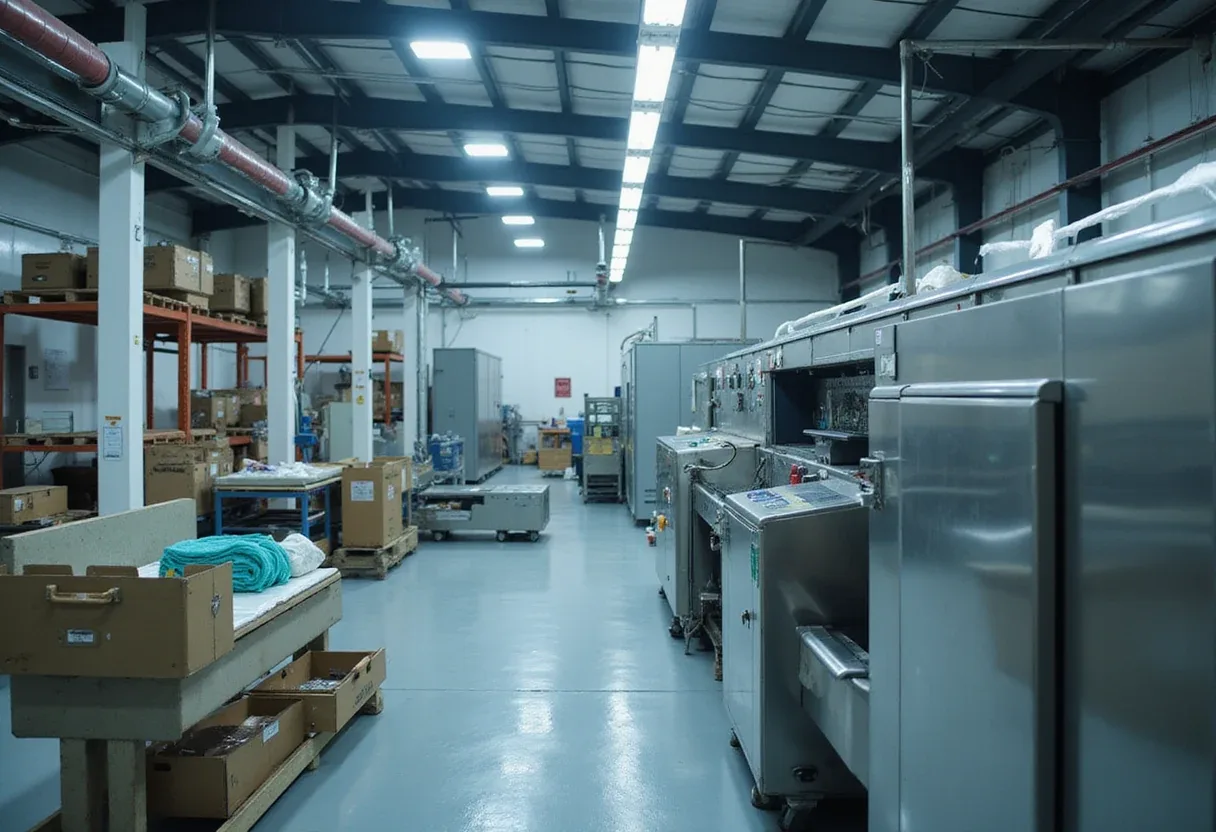
Waypoints
Igers has opened a textile recycling plant in Italy.
The plant deploys Igers' patented textile recycling process.
Stadler supplied the sorting technology, taking the process 'from vision to reality'.
No throughput, capacity or investment figures were disclosed in the announcement.
Igers has opened a textile recycling plant in Italy, and Stadler built the sorting side of it. That, in its entirety, is the announcement. In a sector that habitually promises fifty-thousand-tonne capacity and delivers a press release, a plant that actually exists counts for something.
The facility marks the first industrial deployment of Igers' patented textile recycling process. The company describes the process as its own development; Stadler's role was to turn that concept into operating hardware. Stadler, a German plant engineering firm with a long record in mixed-waste and packaging sorting lines, supplied the technology that took the process, in its own words, "from vision to reality."
No tonnage figure, throughput rate or investment amount appears in the announcement. Readers should treat this as built capacity rather than a projected one — the plant is open — but its scale remains unverified by any number in the public statement.
Why does a sorting firm matter to textile recycling?
Textile recycling has a sorting problem before it has a chemistry problem. Mixed post-consumer textiles arrive as a bale of everything: fibre types, blends, colours, contaminants. Any downstream recycling process, patented or otherwise, lives or dies on the quality of its input fractions.
Stadler's contribution sits precisely at that chokepoint. Its sorting systems separate the incoming textile stream into fractions clean enough for Igers' process to work on. In effect, the German engineer provides the gatekeeper; Igers provides the conversion technology behind it.
The takeaway in plain words: the plant pairs a sorting specialist with a process owner, which is the standard architecture for a working recycling line.
What separates this from an announcement?
The distinction matters. The recycling trade routinely carries two categories of news: a company says it will build something, or a company has built something. This item belongs to the second category. The plant is open and operating in Italy.
What it is operating at, and toward what offtake, the statement does not say. The absence of a capacity figure is notable for a sector where investors now expect tonnage per year in the first paragraph. Igers has not published one, and this report will not invent one.
The takeaway: this is commissioned infrastructure, not a pledge — but its commercial scale is undocumented.
Who claims what?
Each claim in this story traces to a named party:
- Igers claims the recycling process as patented and its own.
- Stadler claims the engineering role, stating it took the process "from vision to reality."
- The plant's location is stated as Italy; no specific site, region or permit reference accompanies it.
Nothing in the announcement cites a regulator, a grant programme or a compliance deadline. The project stands on its own capital, as far as the released information goes.
The takeaway: two companies, two claims, no third-party numbers yet.
What happens next?
For a facility of undisclosed size, the milestones that will decide its significance are conventional ones: published throughput, a disclosed offtake agreement for the recycled output, and evidence that the patented process performs at industrial scale rather than pilot scale.
Italy's textile sector, one of Europe's largest, gives the plant a dense catchment of mill waste and post-industrial fibre. Whether Igers converts that advantage into volumes worth reporting is the question. The plant has opened; the numbers have not.
via Recycling Today (Source)
More from Olivia Hart
Show full bio
Staff writer covering regulation, policy and their impact on Circular economy and the environmental industry at Circular Wire.
375 articles