Waste Management Business
Incineration beats recycling on price, and SDU study says that is the problem
An SDU study finds Danish firms want to recycle but incineration is cheaper, contracts lock in old solutions, and competition keeps new recycling models private. An agent-based model comes next.
Waypoints
Over half of waste delivered to Fjernvarme Fyn in 2024 came from businesses
Study accepted by the Journal of Business & Industrial Marketing, led by SDU PhD student Rasmus Paulsen Holm
Researchers identify three tensions blocking circularity: economics, contracts and legacy waste practices
Competition can keep new recycling solutions, such as an insulation materials partnership, exclusive rather than replicated
An agent-based model is under development to test how economic and regulatory changes shift waste flows
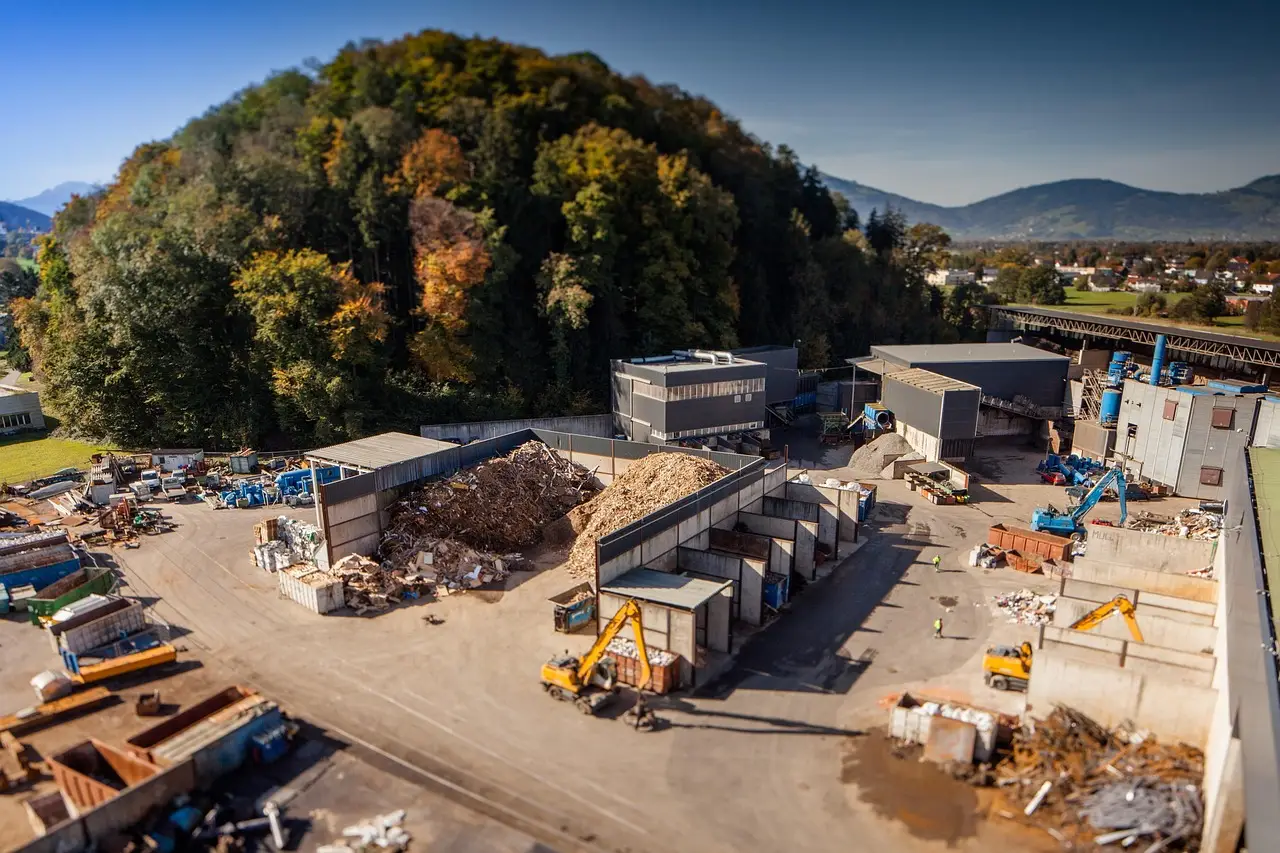
More than half the waste delivered to Fjernvarme Fyn, the Funen district heating company, comes from businesses — and a new University of Southern Denmark (SDU) study argues a simple price gap decides where most of it ends up.
The scenario the researchers describe is blunt. A company holds a material that a recycling facility in Jutland could process. Transport costs money. The incineration plant next door accepts the same material at a much lower price. The material burns. That decision, repeated across the sector, explains why Denmark's circular transition is slower than its stated ambitions, according to the study, accepted for publication in the Journal of Business & Industrial Marketing.
The verdict on intent is unambiguous. The problem is not a lack of will.
What did the researchers actually find?
Rasmus Paulsen Holm, a PhD student at SDU's Department of Green Technology and lead author, conducted the work with Associate Professor Ciprian Cimpan of SDU Life Cycle Engineering and Professor Kristin B. Munksgaard, who is also Pro-Rector at Roskilde University.
The team studied a regional Danish waste management network, interviewing key stakeholders from the sector and the wider network, and supplementing those interviews with network meetings and company data.
"Companies genuinely want to recycle more. But when it comes to making actual decisions, they encounter a number of conflicting pressures. Recycling may be more expensive, their contracts may be designed around existing solutions, or their business partners may operate in ways that make it difficult to change anything," Paulsen Holm said.
The study identifies three fundamental tensions:
- Green ambitions clash with economic realities.
- Shared goals do not translate into collective action.
- The desire for a circular economy runs up against working practices built for a traditional waste management system.
The takeaway in plain words: companies are willing, but the network around them is not.
Why does business waste resist regulation?
Danish households have received a growing number of sorting bins in recent years, but a substantial proportion of the country's waste still originates from businesses. The Fjernvarme Fyn figure for 2024 shows the imbalance.
"We have focused heavily on household waste because it is relatively easy to regulate. But commercial and industrial waste is far more complicated because so many economic interests and different stakeholders are involved," Paulsen Holm explained.
Household waste was the easy half. Commercial waste is where the money and the contracts live.
When a recycling solution stays private
The study describes a partnership focused on recycling insulation materials, in which a waste management company built a collaboration that returns those materials to the circular economy. On its face, a success. In practice, the model does not spread.
A company that has invested time and money in a new solution has a financial interest in keeping the partnership exclusive as a competitive advantage. "What is interesting is that competition can both drive the development of new recycling solutions and limit their wider adoption. This shows why we need to understand not only the actions of individual companies, but also the relationships between them," Paulsen Holm said.
One firm can close a loop. Competition can keep it closed to everyone else.
Can the construction sector take the material?
Even where sorting and recycling succeed, someone must buy the output. The researchers single out construction. Contractors and consultants impose requirements on material properties, documentation and availability that recycled feedstock struggles to meet against virgin material — the right quality, the right quantity, the right delivery time.
"We may be able to find a company that can recycle a particular material. But if no one is willing to use it afterwards, we cannot move forward. That is why we need to look at the entire value chain. There is little point in changing waste collection practices if the rest of the system continues to operate as before," Paulsen Holm said.
Recycling capacity without demand is capacity going nowhere.
What happens next?
The researchers are now building an agent-based model to test how company decisions, inter-firm relationships, and changes in economic and regulatory conditions affect waste flows and the development of circular solutions. The stated aim is to give companies and policymakers a better basis for assessing which changes would actually divert material away from incineration and back into circulation.
Legislation alone, they caution, cannot carry the transition, because companies must keep their operations financially viable. Contracts, partnerships and economic incentives across the sector have to move too. "We need to look beyond what individual companies are doing. We need to understand how the entire network operates and how companies assess the value of their activities. Otherwise, we risk a situation where green ambitions remain just that, while everyday business decisions continue as before," Paulsen Holm said.
The milestone to watch is the model: the first test of whether the pricing and contract structures that currently route material to incineration can be re-engineered, or merely described.
via waste-management-world.com (Source)
Filed underCommercial And Industrial WasteWaste IncinerationRecycling EconomicsCircular EconomyDenmark
More from Olivia Hart
Show full bio
Staff writer covering regulation, policy and their impact on Circular economy and the environmental industry at Circular Wire.
578 articles