Compliance & Policy
Interior Moves to Rescind Permit on Active Revolution Wind Farm
Interior asked a federal court Oct. 9 to remand its 2023 construction approval for Revolution Wind, a $6.2 billion, 704-MW offshore facility that began commercial operation off Connecticut and Rhode Island last March.
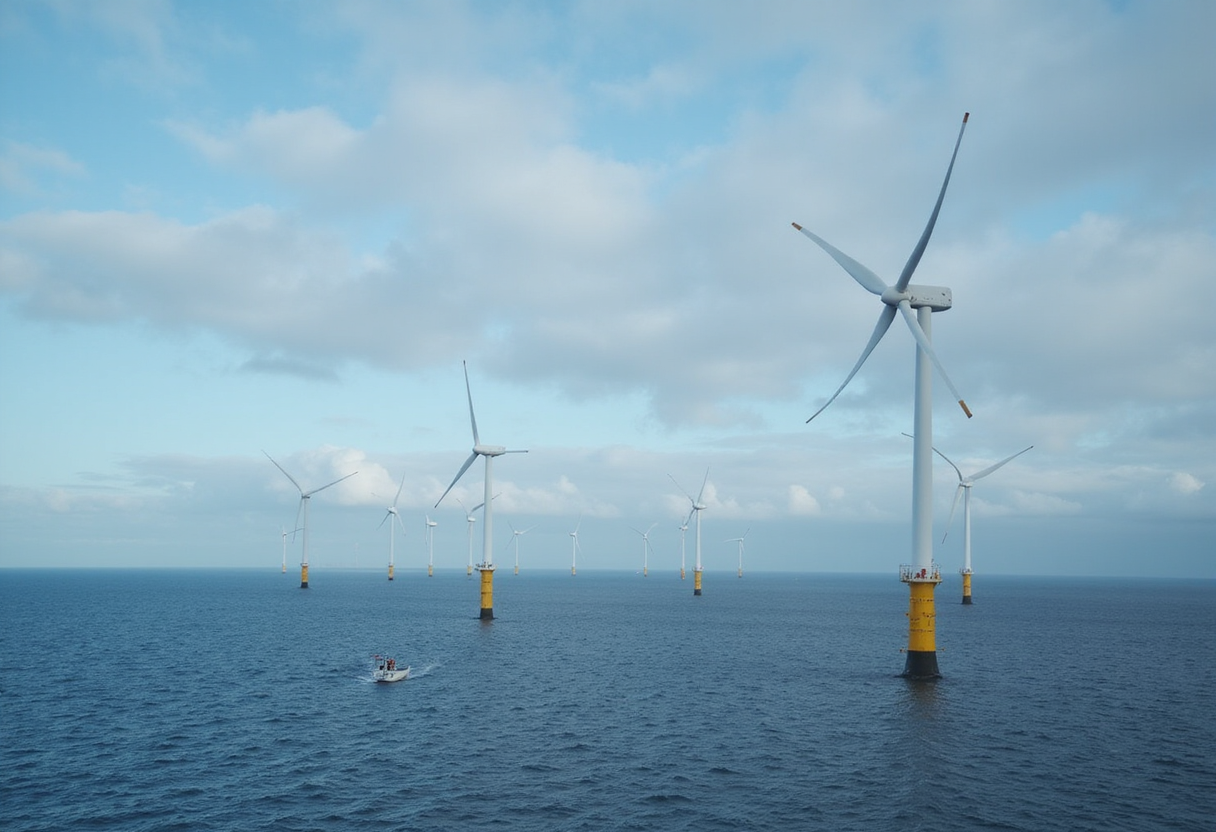
Waypoints
Interior filed Oct. 9 to remand its 2023 construction approval for the 704-MW Revolution Wind facility, a $6.2 billion Ørsted project operating off Connecticut and Rhode Island.
Ørsted installed the 65th and final turbine in September; the wind farm began commercial generation in March.
At full output the project supplies power to more than 350,000 Northeast homes.
Judge Royce Lamberth of the U.S. District Court for D.C. — who last year sided with offshore wind developers facing stop-work orders — is overseeing the case.
Rhode Island-based group Green Oceans filed the underlying permit challenge in January 2024, alleging procedural and environmental review violations.
The U.S. Interior Department has asked a federal court to remand its 2023 construction approval for the 704-MW Revolution Wind project, a $6.2 billion offshore facility already generating electricity off the Connecticut and Rhode Island coasts.
In an Oct. 9 filing, Interior asked the U.S. District Court for the District of Columbia to reopen the agency's approval of the wind farm's construction and operations plan. The facility began commercial generation in March; operator Ørsted installed the 65th and final turbine in September.
What does the remand filing change?
The motion does not immediately halt operations, according to experts familiar with offshore wind permitting. The filing launches a longer legal process that could run into early 2026.
Revolution Wind cleared federal and state permitting only after a review spanning more than nine years and multiple agencies. The case sits before Judge Royce Lamberth, who last year sided with offshore wind developers forced to pause construction under Trump-era stop-work orders.
Who is challenging the approval?
Green Oceans, a Rhode Island-based group that describes itself as a grassroots organization dedicated to preserving ocean health, filed the underlying lawsuit in January 2024.
The complaint targets Interior's final approvals for both Revolution Wind and Ørsted's South Fork Wind, which came online in early 2024. Green Oceans alleges the federal government shortcut regulatory procedures and violated environmental protection statutes during the permitting process.
Interior's Oct. 9 filing effectively agrees with the group's core claim and asks Lamberth to dismiss the case against the agency.
Hillary Bright, executive director of the offshore wind advocacy group Turn Forward, said in an emailed statement that the remand "injects uncertainty into a nearly completed offshore wind project that electricity planners and consumers in the Northeast are counting on."
What is at stake for the region?
At full output Revolution Wind supplies power to more than 350,000 homes. The project is expected to play a role in reducing grid stress during heat waves and winter cold spells across the densely populated Northeast corridor.
Revolution Wind is Ørsted's second U.S. offshore wind project to reach commercial operation. South Fork Wind, the developer's first U.S. facility, came online in early 2024.
Why is the administration acting now?
The motion follows earlier 2025 administration actions halting construction on other East Coast offshore projects and canceling leases for sites not yet under construction. The pattern has produced a partial freeze across the U.S. offshore wind sector and chilled capital commitments from competing developers.
Pasha Feinberg, an offshore wind strategist at the Natural Resources Defense Council, framed the remand inside that broader arc.
"From its very first day, the Trump administration has waged a war on clean energy, and especially offshore wind," Feinberg said. As utility bills climb across the region, she added, "Why the administration would even consider revoking its permit makes no sense."
What happens next?
The docket turns on Lamberth's ruling on Interior's remand motion and the agency's subsequent timeline for re-evaluating the 2023 record of decision. A pause in operations would remove roughly 704 MW from the regional supply stack and trigger contract remedies between Ørsted and its offtake buyers in Connecticut and Rhode Island.
The next scheduled action is the court's response to Interior's filing. That order will determine whether Revolution Wind keeps generating through winter or enters a second permitting review that could push full commissioning past the contracted in-service date.
via drive.google.com (Original)
More from Rebecca Stone
Show full bio
News editor covering companies, deals and strategy in Circular economy and the environmental industry at Circular Wire.
338 articles