E-Scrap & Battery Recycling
Moss Landing fires again as Vistra finishes module teardown
Friday's blaze at Vistra's 1,200 MWh Moss Landing plant marks the second major fire since January 2025. Crews have pulled 34,000 modules for recycling or disposal; 5,000 remain.
Waypoints
Fire broke out Friday at Vistra's 300 MW/1,200 MWh Moss Landing battery plant in Northern California, the second major blaze since January 2025
Crews had extracted 34,000 of roughly 39,000 battery modules for recycling or disposal; ~5,000 with residual charge remained inside
PG&E plans to restart its adjacent Elkhorn battery plant on July 1, 2027 after taking it offline following the 2025 Moss Landing fire
The plant used NMC lithium-ion chemistry; the stationary storage industry has largely moved to lithium ferrous phosphate
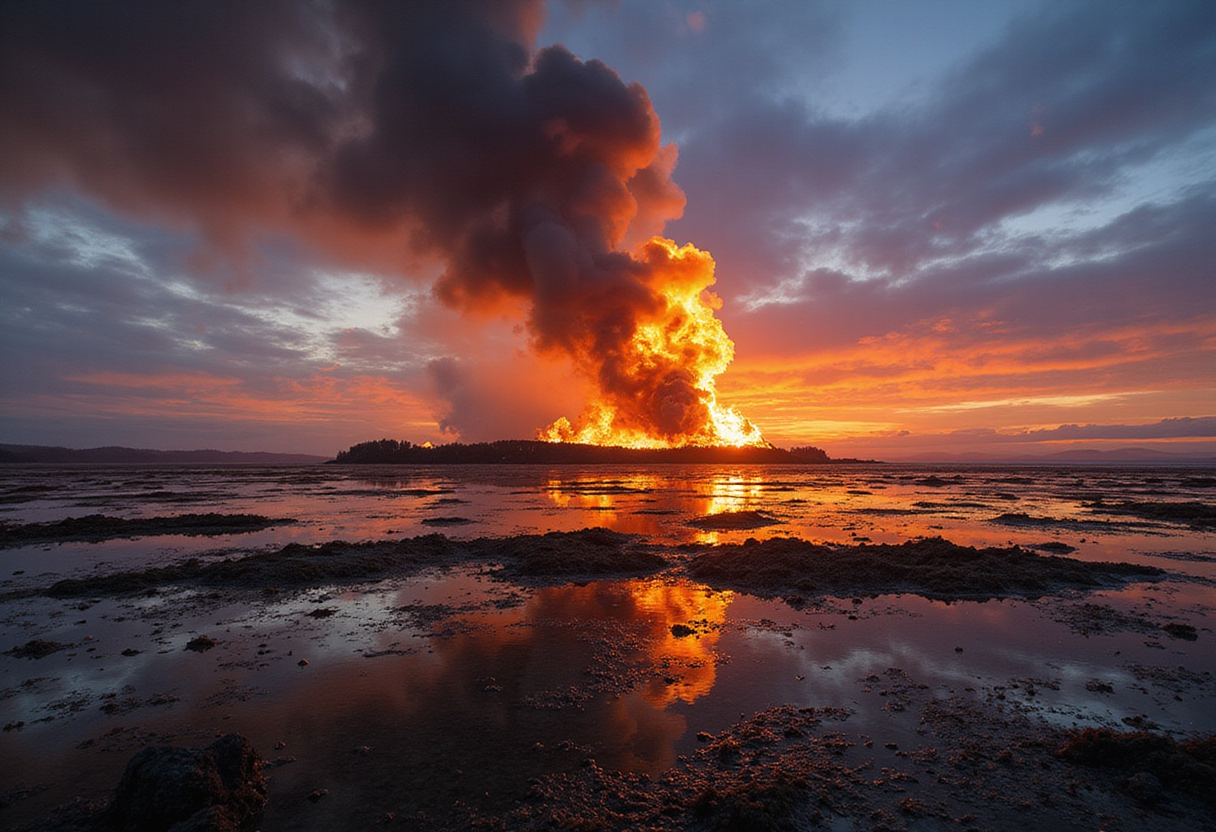
A fire broke out Friday morning at Vistra's 300 MW/1,200 MWh Moss Landing battery plant in Northern California — the second major blaze to hit the grid storage facility since a January 2025 fire destroyed much of the installation.
The Moss Landing site sits on Monterey Bay, south of Santa Cruz, supplying capacity to the greater Silicon Valley region from a former gas turbine hall Vistra repurposed for storage. Decommissioning crews had pulled 34,000 battery modules for recycling or disposal, with roughly 5,000 still inside the building.
What does Monterey County say about the new fire?
County officials said the new blaze "involves batteries that were previously damaged" in the January 2025 event. The county characterized the incident as "not comparable" in size to last year's conflagration and anticipated the fire would burn out "over the next 24 hours."
Vistra did not respond immediately to requests for comment. Authorities issued shelter-in-place orders for surrounding communities along the bay — a stretch that gives way to strawberry fields and farmland farther inland.
How is the teardown progressing?
Vistra's decommissioning crew has lifted 34,000 modules from the structure and aimed to finish the remaining 5,000 by year-end. Those final batteries may still carry residual charge, which is why each unit must be de-energized on site before shipping for recycling or disposal.
The slow pace reflects the plant's origin. Vistra bought the property to repurpose a former gas turbine hall, packing dense battery racks into an existing structure. That configuration diverges from current energy-storage practice, which favors modular containers placed across open ground with spacing that keeps a single failing unit from setting fire to its neighbors.
Why did the original fire spread?
The Moss Landing plant used nickel-manganese-cobalt (NMC) chemistry, inherited from electric-vehicle manufacturing. Since the plant came online in 2020, the stationary storage market has become a large enough buyer that manufacturers have built dedicated factory lines for stationary cells, and developers have largely moved to lithium ferrous phosphate (LFP), which trades energy density for thermal stability.
Modern installations are designed to fail safely. Should a single container ignite, the spacing prevents propagation. Moss Landing, by contrast, behaved as a single fuel load once the first module ignited.
What is the adjacent operator's status?
Pacific Gas & Electric runs grid infrastructure next door. A PG&E spokesperson confirmed the fire did not start on, or spread to, utility property. PG&E took its adjacent Elkhorn battery plant offline after the 2025 Moss Landing fire to assess damage and plans to resume service on July 1, 2027.
That restart date sits inside the California Independent System Operator's procurement timeline, removing dispatchable capacity the operator had been counting on during evening net-peak periods.
What does this mean for end-of-life battery work?
The Moss Landing teardown is becoming an early stress test for grid battery decommissioning. With California and Texas adding storage capacity at the fastest pace in the country, recovery contractors are beginning to set terms for installations whose chemistry and layout predate current safety codes.
Local resident David Robinson, watching the smoke from his boat in Moss Landing Harbor, summarized the mood: "It seemed like once a year there'd be some smoldering going on. Then of course the big fire last year pretty much shut everything down. … Now it's like, man, when is this going to end?"
The next milestones to watch: Vistra's handling of the residual-charge 5,000 modules by year-end, and whether Monterey County's review of the teardown timeline produces new permitting conditions for similar retrofit installations at other retired peaker-plant sites along the coast.
via hub.vistracorp.com (Original)