Waste Management Business
Panama City rivers carry crisis: interceptors target 800,000 kg of waste
Panama City has deployed three of seven planned river interceptors targeting 800,000 kg of waste a year, as a December government intervention addresses San Miguelito's collapsed collection system.
Waypoints
Three of seven planned river interceptors are deployed; the latest entered the Matías Hernández River in May.
The Siete Cuencas project targets 800,000 kg of waste kept from the Pacific annually.
A 2021 Science Advances study found about 1,000 rivers account for 80% of river plastic emissions to the ocean.
President Mulino announced an urgent sanitation intervention in San Miguelito in December.
Marea Verde's education centre has logged about 14,000 visitors in two years.
Panama's capital region loses an estimated 800,000 kg of waste to the Pacific each year through seven urban rivers, and the government has started an urgent intervention to stop it. President José Raúl Mulino announced the measure in December for San Miguelito, the densely populated district less than 6 miles from Panama City's banking towers, warning it was "experiencing a sanitation crisis that could lead to a health crisis."
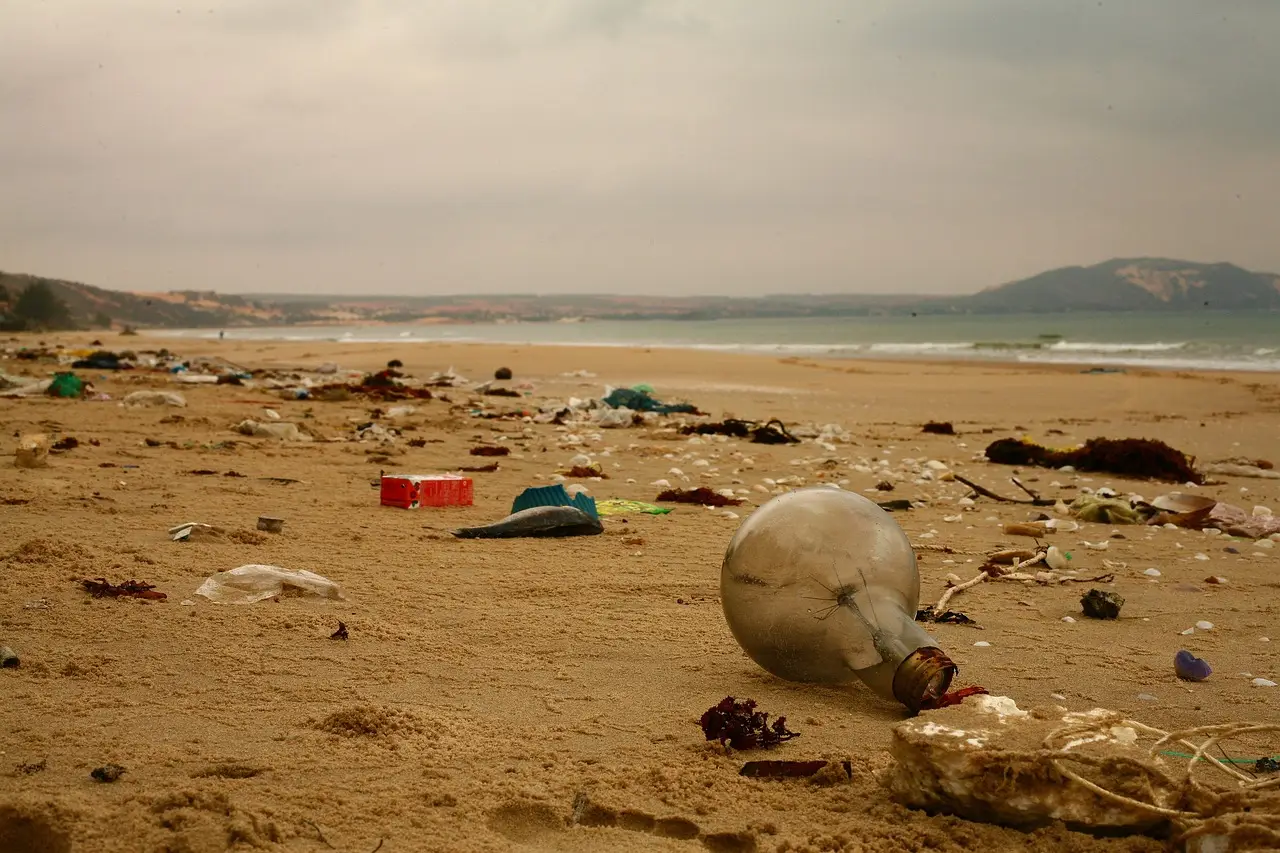
The material stream is uncontrolled. Decades of growth without collection, transport or disposal infrastructure left informal settlements dumping refuse into waterways, with heaps in San Miguelito large enough to register on satellite images. The Juan Díaz River carries the load downstream to beaches and mangroves at Panamá Viejo, where plastic bottles, fridges and toys accumulate before the remainder flows into the Bay of Panama and the Pacific.
What is the government doing?
Environment minister Juan Carlos Navarro conceded the state has failed. "We are trying to bring it under control," he said. "If you don't find a way to adequately collect and dispose of waste, you can't have a healthy city. We have wasted decades without addressing pollution in our rivers."
The government has pledged funding, but much of the operational work has fallen to environmental organisations. Adrián Benedetti, executive director of NGO Ancon, called the situation a "critical level," citing no recycling programme and inconsistent collection in upper-watershed areas that generate most of the river trash. "There's an element of neglect by city officials, to the point where public health and the environment are at risk," he said.
At the municipal level, San Miguelito mayor Irma Hernández has established new rubbish collection routes and schedules and converted a decades-old illegal dumping ground next to the river into a park.
How much capacity do the interceptors represent?
Three floating barriers have been deployed so far under the Siete Cuencas project, run by local NGO Marea Verde with the Ocean Cleanup. The target is one barrier on each of the city's seven rivers. The latest interceptor went into the Matías Hernández River in May.
The design target is 800,000 kg of waste kept out of the Pacific annually. The Ocean Cleanup shifted its strategy after a 2021 study in Science Advances found roughly 1,000 rivers account for 80% of the plastic rivers emit into the ocean each year. "If we clean up all the legacy trash in the oceans but continue to pollute, we're just replacing old trash with new trash," said James Patterson, the organisation's Panama project manager. "We're trying to turn off that tap into the oceans."
The barriers already show measured results on flooding. In Puente del Rey, where the Abajo River used to burst its banks with every downpour, resident Liska reported no floods since a barrier was installed last year.
Patterson framed the hardware as partial. "This is a Band-Aid," he said. "There is much more that needs to be done within government, community and education to really create a complete solution."
Can behaviour and collection catch up?
Marea Verde runs education programmes at La Casa de Wanda above the Juan Díaz River, which has received about 14,000 visitors in two years, mostly schoolchildren, covering plastic pollution, recycling and the circular economy. Mirei Endara de Heras, the NGO's president, co-founder and a former environment minister, noted a survey found rubbish ranked among the top three things capital citizens are ashamed of, yet dumping has become normalised.
At Santa Librada school in San Miguelito, an in-school recycling programme and a green football league report growing participation. "We don't have a recycling culture in Panama. But we see kids bringing in cardboard and plastic, and each year interest is growing," said English teacher Ràmses Córdoba.
Behaviour lags infrastructure. Minutes after Córdoba described the new collection schedule, a resident emptied a bag of rubbish beside the road with a shrug. After decades of patchy or nonexistent collection, trust in the service remains tenuous.
What decides what happens next?
The milestone to track is completion of all seven interceptors against the 800,000 kg annual target, alongside delivery of the government's pledged funding and consistent collection in the upper watershed. Without a formal recycling programme and reliable collection routes in San Miguelito, the barriers intercept a symptom while the waste stream continues upstream.
via theguardian.com (Source)
More from Rebecca Stone
Show full bio
News editor covering companies, deals and strategy in Circular economy and the environmental industry at Circular Wire.
488 articles