Survey
Plastic Film-to-Diesel Catalyst Moves Closer to Market via DOE Program
An Iowa State and Ames Lab team has patented a single-step catalytic process turning plastic films into diesel, with a startup formed and commercialization now underway.
Waypoints
Iowa State and Ames National Laboratory researchers hold a patent on a single-step catalytic process converting plastic films into diesel.
Project lead Aaron Sadow developed the technology with professor Wenyu Huang and graduate Dr. Akalanka Tennakoon.
The team completed DOE's Energy I-Corps program after starting in NSF's I-Corps program.
A startup company has been formed and is ready to market the process, according to Sadow.
A single-step catalytic conversion process that turns plastic films into diesel fuel has cleared a key commercialization stage, after an Iowa State University and Ames National Laboratory team completed the U.S. Department of Energy's Energy I-Corps program.
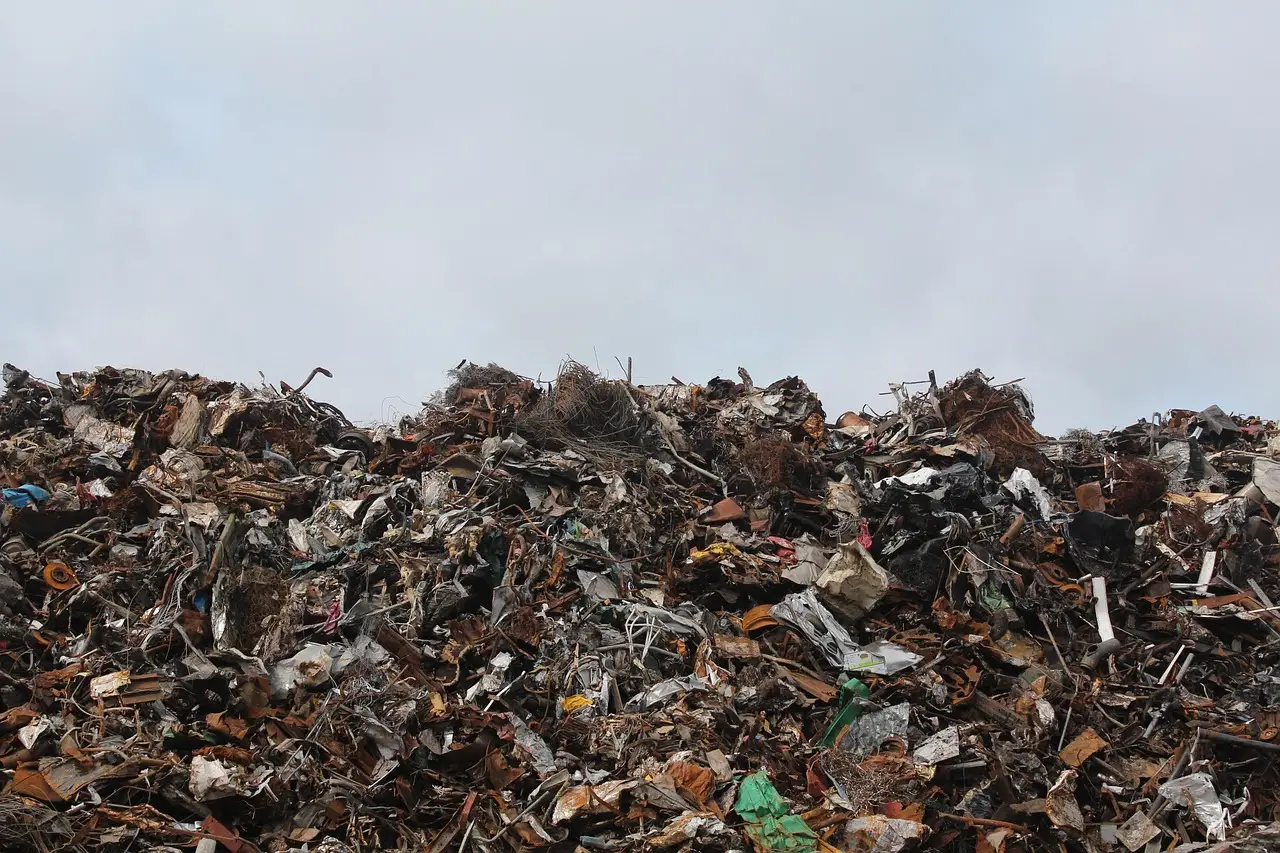
The target material stream is one that conventional recycling cannot touch: plastic films such as grocery bags and shrink wrap. These films cannot be processed through standard recycling systems, and they pose an operational cost of their own. When films enter recycling facilities improperly disposed of, they gum up sorting machinery, raising processing costs and pushing material toward landfill.
The research team proposes a different destination for that stream. Their patented technology converts the films into diesel in one catalytic step, recovering value from a fraction of the waste stream that most facilities currently pay to discard.
Who is behind the technology?
Project lead Aaron Sadow, a chemistry professor at Iowa State University and senior scientist at Ames National Laboratory, developed the process with fellow professor Wenyu Huang and Iowa State graduate Dr. Akalanka Tennakoon. The work began in the National Science Foundation's I-Corps program, where the group ran customer discovery interviews to map market opportunities and identify potential pain points for customers.
The team then joined DOE's Energy I-Corps, a program designed to help national laboratory and university researchers close the technological and commercialization gaps that keep promising energy technologies out of the market. For this group, the timing was deliberate. Much of the strategic groundwork had already been laid.
"By the time we had joined DOE's Energy I-Corps, we had revised our hypothesis of how to commercialize, changed targets, rethought what a company could look like, and had a startup company ready to market this process," Sadow said.
In short, the technology arrived at DOE's program not as a concept but as a near-ready venture seeking a route past adoption barriers. The takeaway is that a startup vehicle now exists to carry the process to market.
What does the conversion actually recover?
The economics of the idea rest on double avoidance: avoiding disposal costs on one end and producing a salable fuel on the other. Sadow framed the value proposition in terms of the energy embedded in the original material.
"The plastic waste we can address in this process represents extra disposal costs and pollution," Sadow said. "This is doing something better than just putting the waste in the landfill — we are recovering the energy in the petroleum originally used to make it."
That framing matters for the waste and recycling trade. Films are a chronic cost center for material recovery facilities, and a conversion outlet that pays for, or at least accepts, that baled fraction would change the arithmetic of film collection. Whether the diesel product meets fuel specifications at competitive cost remains the commercial question the startup must answer. The plain point is that the process treats landfilled film as misplaced energy rather than waste.
What happens next?
The technology has moved from laboratory development through two federal commercialization programs, and a startup company stands ready to market it. What the public record does not yet show is a scaled demonstration: throughput figures, plant capacity, offtake agreements or a permit timeline. Those are the numbers the waste sector will want before counting this as built capacity rather than an announced project.
The milestone to watch is the first commercial-scale deployment — its tonnage, its location and the quality of the diesel it produces. Until then, this remains a promising conversion route with a startup attached, not yet an operating outlet for the film stream.
via wasteadvantagemag.com (Source)
More from Olivia Hart
Show full bio
Staff writer covering regulation, policy and their impact on Circular economy and the environmental industry at Circular Wire.
493 articles