Cleantech & Investment
Qcells' $2.5B Georgia plant rides out US solar policy whiplash
Qcells' $2.5B Cartersville plant has gone fully vertical as Trump-era tariffs on polysilicon replace IRA tax credits, testing U.S. solar manufacturing's footing.
Waypoints
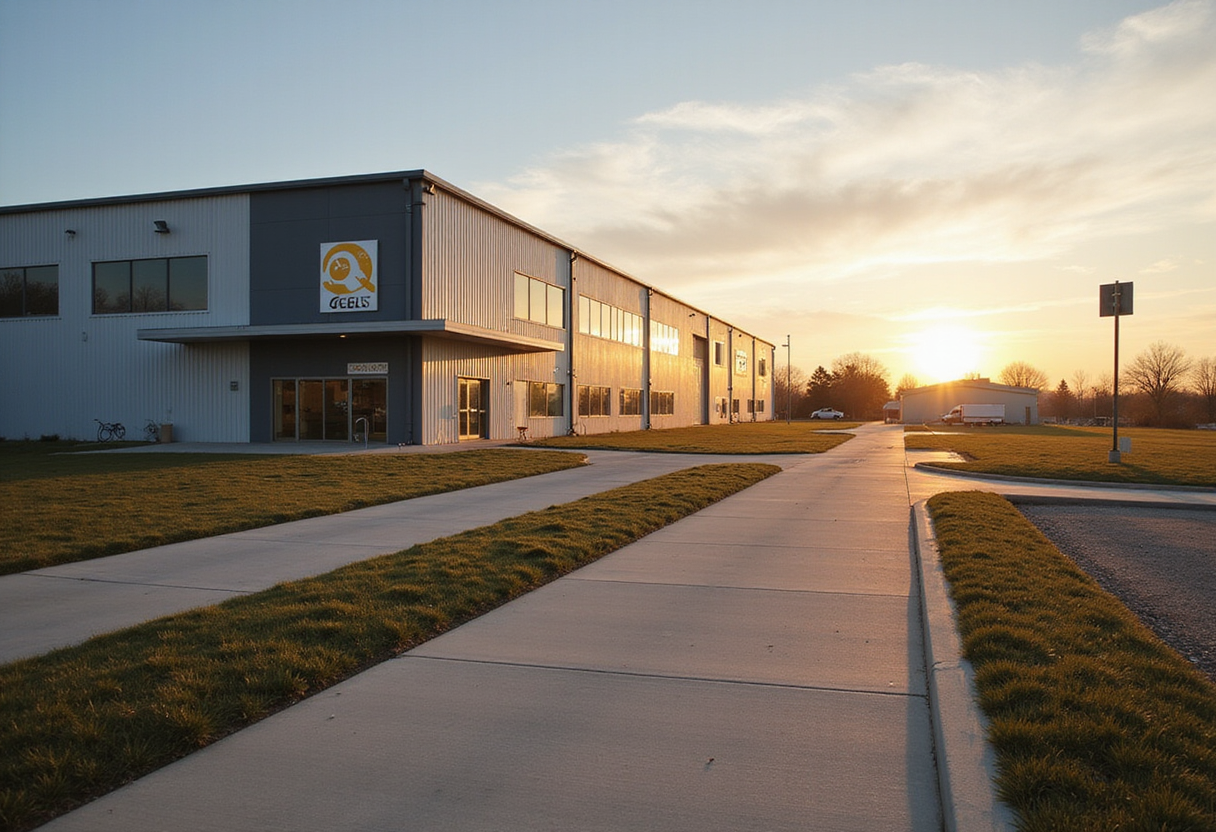
Qcells' $2.5 billion Cartersville, Georgia plant began full vertical integration — ingot-to-module production under one roof — in June.
New U.S. tariffs and minimum import prices on polysilicon take effect in December; the OBBBA revoked most IRA solar tax credits.
Q1 tracking by E2 showed nearly $13 billion in abandoned clean energy investments against $18 billion in new project announcements; solar plus storage made up 90% of new U.S. grid capacity.
The number that anchors Qcells' Cartersville, Georgia operation is $2.5 billion — the capital committed to a plant that consumes 3.5 million gallons of water, draws 90 megawatts of power and holds 60 tons of chemicals on-site. That infrastructure exists to produce one thing: paper-thin polysilicon solar cells, the basic building block of a panel.
"The $2.5 billion, the 3.5 million gallons of water, the 90 megawatts of power, the 60 tons of chemicals on-site, and all of the football fields' worth of infrastructure you've seen is to arrive at this," said Scott Bell of Qcells, holding up one of the blue cells.
In June, the plant — roughly an hour northwest of Atlanta — began its expansion from assembling major panel components to running the entire production process under one roof. The shift marks a milestone for U.S. solar manufacturing, an industry China has dominated since the 2010s by flooding the global market with panels no one else could match on price. The United States, citing national security, labor practices and job creation, is now trying to rebuild that production base domestically.
Two administrations, two instruments
The policy environment behind that rebuild has swung hard. The Biden administration's 2022 Inflation Reduction Act offered tax credit bonuses for solar projects using U.S.-made panels — incentives Qcells, a South Korean firm, cited as a major reason for building Cartersville.
The Trump administration has flipped to the stick. Last year's One Big Beautiful Bill Act (OBBBA) revoked most of those tax credits, but it also made solar equipment from certain countries — including China — ineligible for the credits that remain. On top of that, new tariffs and minimum import prices on polysilicon, the key ingredient for solar cells, take effect in December.
"Having the full supply chain is critical," said Ben Damiani, chief technology officer at Atlanta-based solar developer Cherry Street Energy. But moving that supply chain to the U.S., he said, hasn't been smooth. "Probably the biggest hindrance has been the constant change of our own policies."
Coco Zhang, a researcher at banking and investment firm ING, sees both approaches pursuing the same ultimate goal — but the back-and-forth has produced whiplash for companies. Following the latest executive actions, Qcells is still likely to find a path to success, she said. The company, however, already sunk a multibillion-dollar investment into a facility that took more than three years to come online. For firms with less capital and poorer timing, supply-side incentives may not suffice — especially when the rules could change again.
The OBBBA also closed the IRA loophole that had allowed China-based solar companies to set up U.S. operations, a move Zhang said could go further toward rooting out Chinese competition. She is optimistic the U.S. industry can complete its shift to domestic production in the long run. But because the foreign-ownership restrictions cut deep into the supply chain, they could make navigation harder in the short term.
Demand side under pressure
Buyers face their own complications. The phaseout of federal clean energy tax credits removed a major incentive for new solar development, and the administration has moved to cancel federal clean energy funding and add hurdles for solar and wind on federal land. Courts have blocked or reversed some of those actions, but the delays add cost and uncertainty even to projects that ultimately proceed.
The investment numbers reflect the turbulence. In the first quarter of this year, clean energy advocacy group E2 tracked nearly $13 billion in abandoned investments across solar, wind and battery projects. Over the same period, companies announced some $18 billion in new projects as they raced to beat the expiring tax credit deadline.
The new polysilicon tariffs and price controls cut both ways, Zhang noted. They could help U.S. manufacturers compete for the solar demand that remains — but they could also raise developers' costs. "Limited U.S. supply means many will still depend on imports and face higher costs," she said.
The buildout continues
Industry experts maintain solar deployment is not in question. It remains one of the cheapest sources of electricity at a time of fast-growing demand, and panels are readily available while gas turbines are backordered for years. Solar and storage accounted for 90% of new capacity added to the U.S. grid in the first quarter, according to the Solar Energy Industries Association.
"We absolutely should make solar, right? Like it is the fastest deployed, lowest cost foreseeable," said Damiani. "Solar will be, for the next hundred years, a good portion of our energy."
The open questions, experts agreed, are not whether solar development continues but how fast it proceeds, what it costs, and who — and where — manufactures the panels.
For Cartersville, the near-term test arrives in December, when the polysilicon tariffs and minimum import prices take effect and reveal whether the stick approach can hold the domestic supply chain the carrot approach built.
via go.grist.org (Original)
More from Rebecca Stone
Show full bio
News editor covering consumer brands and retail at Circular Wire.
125 articles