Waste Management Business
Quartr Profiles WM: The Steady Business of Waste and What It Signals for Recyclers
Quartr's corporate history of WM traces the landfill incumbent's shift into recycling capacity, anchored in route density, permits and long municipal contracts.
Waypoints
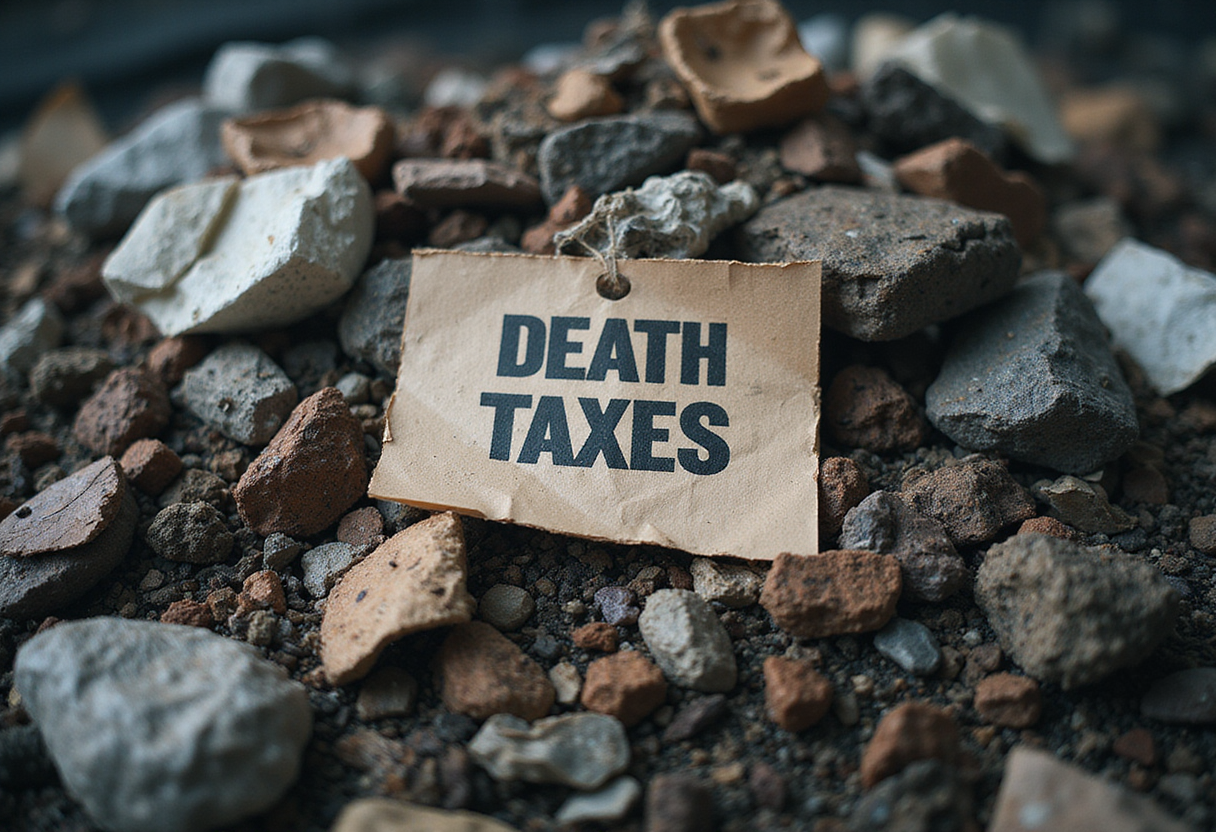
Quartr published a corporate profile titled "Death, Taxes, and Garbage: The Story of WM," covering the waste and recycling company formerly known as Waste Management.
The account traces WM's path from postwar US hauling consolidation through the USA Waste merger, the 2020 rebrand to WM, and its investments in recycling and landfill-gas-derived renewable natural gas.
The profile argues WM's durability rests on route density, landfill ownership and the regulatory moat around permitted disposal capacity, not commodity upside.
Quartr, the Stockholm-based financial research platform, has published a company profile titled "Death, Taxes, and Garbage: The Story of WM," examining the long-term operating record of WM — the Houston-headquartered waste and recycling giant formerly known as Waste Management.
The framing is blunt. The piece positions WM alongside death and taxes: a business whose demand base does not disappear in downturns. For readers tracking the secondary materials stream, that framing matters. Collection, landfill disposal and recycled-commodity processing are volume businesses, and the profile's core argument is that WM's scale in those volumes — not any single commodity cycle — has defined the company's trajectory.
The profile spans WM's evolution from its origins in the postwar consolidation of US hauling through the 1990s merger with USA Waste, the 2008 rebranding-era identity and the 2020 decision to shorten the corporate name to WM. That renaming coincided with the company's public pivot toward sustainability-branded operations, including investments in recycling infrastructure and renewable natural gas drawn from landfill gas.
For the circular-materials trade, the relevant thread in Quartr's account is timing. WM's recycling push accelerated when contracted processors and municipal counterparties were questioning the economics of single-stream material recovery facilities after China's National Sword import restrictions collapsed export outlets for mixed paper and contaminated plastics. The company responded by leaning into ownership of upgraded sorting capacity and long-term municipal contracts, a shift Quartr treats as characteristic: WM historically scales into the parts of the value chain where volume risk is lowest and contract duration is longest.
The profile does not present WM as a technology story. Its durability, in Quartr's telling, rests on route density, landfill ownership and the regulatory moat around permitted disposal capacity. Permitted landfill space in the United States is finite and increasingly difficult to expand through siting and permitting, and incumbent operators hold it. That asset base, rather than commodity upside, is what Quartr identifies as the foundation of the company's cash-flow consistency across economic cycles.
That reading carries implications for recycled-commodity markets. When a disposal incumbent with landfill-dominated cash flows invests in materials recovery, the investment tends to be sequenced, contract-backed and concentrated in high-throughput facilities serving dense urban collection routes — not speculative. Suppliers of sorted fiber and plastics should read WM's infrastructure commitments as long-horizon capacity decisions anchored to municipal tonnage, with revenue supported by processing fees and offtake agreements rather than spot commodity prices alone.
Quartr's account also functions as a reminder of how concentrated the North American waste and recycling collection market has become. Decades of acquisition — Waste Management's own history of consolidation, capped by the USA Waste merger — left a small number of national players controlling the majority of collection and disposal tonnage. Municipalities negotiating recycling processing and disposal contracts negotiate with that structure, not with a fragmented vendor base.
The profile is a narrative corporate history rather than a filing, and readers should treat it accordingly: Quartr builds the story from the company's public record, and the piece carries no new operating figures, guidance or permit developments. Its value for the trade is the consolidated arc — from hauling consolidator to landfill owner to rebranded sustainability investor — laid out in one account.
What decides what happens next sits outside the profile itself: WM's next round of reported recycling throughput and renewable-fuel volumes, the pace of its announced facility buildout against its stated deadlines, and the municipal contract renewals that determine how much of the recovered-material stream flows through company-owned capacity. Those are the milestones worth tracking.
via Google News: Waste management companies (Source)