Waste Management Business
Rhode Island weighs $77M options to recover $35M in lost commodities
Rhode Island's draft needs assessment values lost commodity value at $35.5M a year and models five diversion scenarios, from a 20% bottle bill to 47% under EPR Plus.
Waypoints
Rhode Island disposes an estimated 673,869 tons annually, losing about $35.5 million in gross commodity value
Public comments on the draft needs assessment close Nov. 16; final version due to lawmakers by Dec. 1, 2026
Five scenarios modeled: 13% as-is, 20% bottle bill, 29% EPR, 33% combined EPR/DRS, 47% EPR Plus (up to $77M)
EPR scenarios assume producer funding, saving municipalities about $200 per ton on curbside services
RIRRC's Central Landfill has about 20 years of remaining capacity
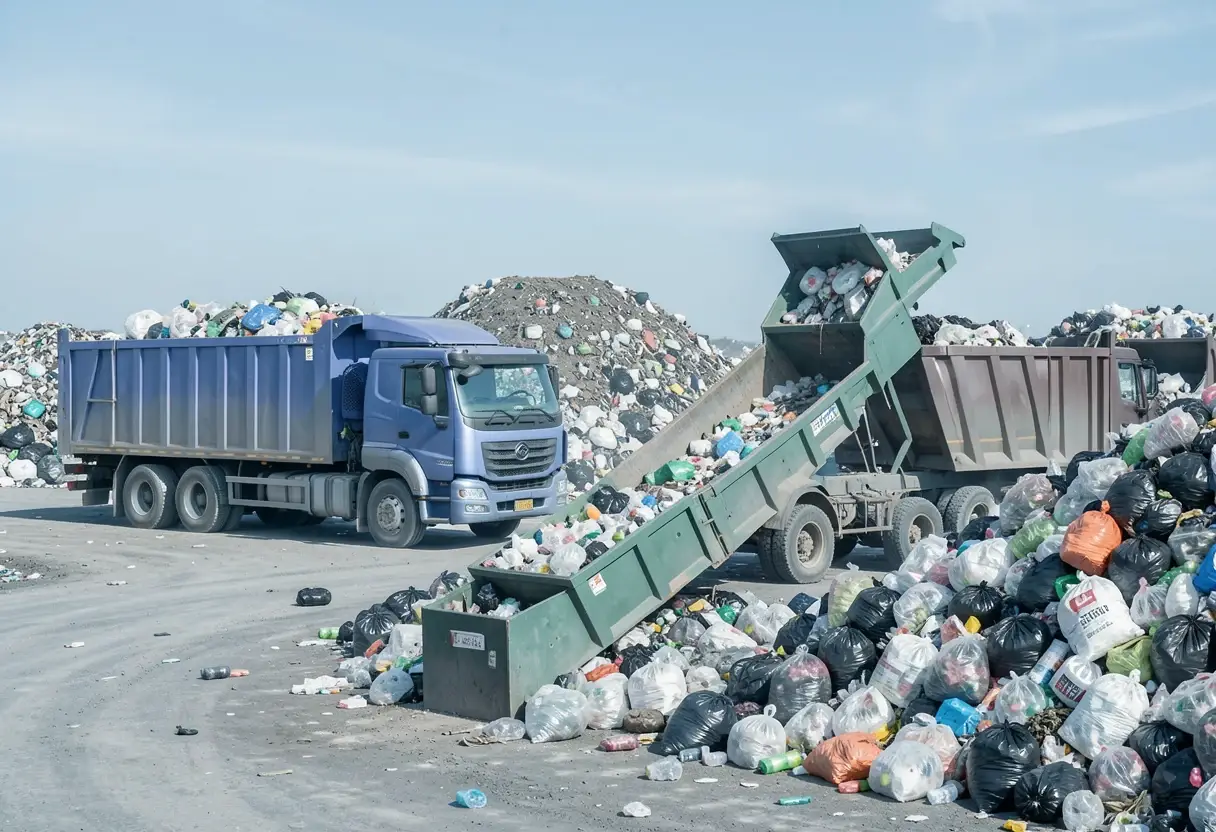
Rhode Island buries an estimated 673,869 tons of material every year — and forfeits about $35.5 million in gross commodity value doing it, according to a draft needs assessment now open for public comment until Nov. 16.
The Rhode Island Department of Environmental Management commissioned the study, prepared by consultancy RRS, after state lawmakers stripped a 2025 bill of its bottle bill and packaging EPR provisions at the last minute. The final version of the assessment goes to state lawmakers by Dec. 1, 2026.
RRS co-CEO Resa Dimino said during a recent webinar that the report deliberately casts a wide net, centered on paper and plastic packaging — roughly 45% of Rhode Island's waste stream.
Why a study instead of a law?
The original 2025 bill would have put a 10-cent deposit on certain beverage containers, created a packaging EPR system and set recycling and return targets. A late overhaul removed nearly every mention of bottle bills and EPR, replacing them with a mandate to study the question first.
The fight behind that rewrite was sharp. Environmental groups pitched the combined bottle bill and EPR system as a way to lift recycling rates and ease pressure on local landfills. A coalition led by the American Beverage Association countered that the bill would create new costs for small businesses and raise prices for consumers.
The compromise study bill required Rhode Island DEM and the Rhode Island Resource Recovery Corp. to hire an independent third party. That party was RRS.
What are the five options on the table?
RRS builds every scenario from the state's current 13% diversion rate. Each plan carries its own cost and its own ceiling:
- As-is: No action. Diversion stays near 13%, with a net cost of about $13.2 million.
- Deposit return only: A standalone bottle bill, at roughly $22 million, hitting an estimated 20% diversion.
- Packaging EPR only: Producer-funded program reaching 29% diversion.
- Combined EPR plus deposit return: The original 2025 framework. RRS estimates 33% diversion if producers fully fund it.
- EPR Plus: Modeled partly on Oregon and California programs, adding reuse initiatives and single-use plastics measures. Top modeled outcome — around 47% diversion — at a cost of up to $77 million.
Dimino said the as-is scenario is "unlikely to move dramatically towards the state's diversion targets," citing "fairly low" recovery rates and notable contamination issues.
The stakes are physical, not abstract. The Central Landfill, operated by RIRRC, has about 20 years of remaining capacity.
Who pays under each plan?
The cost spread is wide — from $13.2 million for doing nothing to $77 million for the most ambitious option. But RRS notes that every scenario with an EPR component assumes producers foot the bill, including curbside services. That shifts costs off local governments and could save municipalities about $200 per ton.
The price tags aren't directly comparable, either. The as-is plan's $13.2 million is a net cost the state and municipalities absorb. The $77 million EPR Plus figure is largely an obligated-producer spend, not a taxpayer outlay.
Rhode Island's working targets are a 35% recycling rate and a 50% diversion rate. Only the EPR Plus scenario, at roughly 47%, comes close.
What happens next?
Public comments run until Nov. 16. RRS says the data and estimates could feed future bottle bills, EPR programs or other diversion plans once lawmakers receive the final document.
The Dec. 1, 2026 delivery date to the General Assembly is the milestone that decides what becomes of the $35.5 million in buried commodity value — everything before that is modeling.
via Waste Dive (Source)
More from Daniel Okafor
Show full bio
Correspondent covering companies, deals and strategy in Circular economy and the environmental industry at Circular Wire.
467 articles