Recycling Industry
Westchester County adds Nespresso aluminum capsules to curbside pickup
Westchester County residents can now recycle Nespresso capsules at the curb under a program backed by Nespresso, the county and the Glass Packaging Institute.
Waypoints
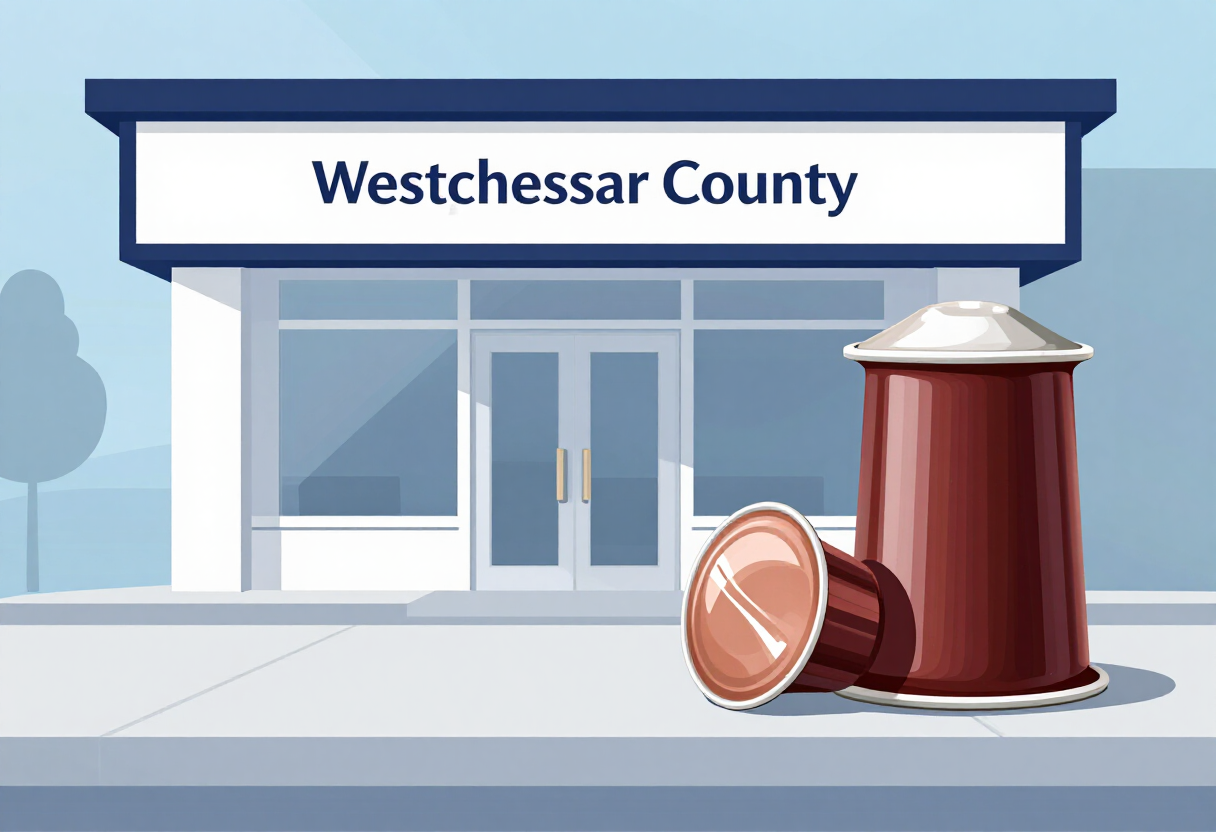
Westchester County, NY residents can now place Nespresso capsules and other small aluminum packaging in curbside recycling bins.
The program is a collaboration among Nespresso, Westchester County and the Glass Packaging Institute.
Small-format aluminum has traditionally been excluded from curbside programs due to sorting and contamination challenges.
Westchester County, New York, residents can now toss Nespresso capsules into their curbside recycling bins. The change comes through a collaboration among Nespresso, the county government and the Glass Packaging Institute, and it moves small aluminum packaging — a stream that most material recovery facilities have historically rejected at the curb — into an established collection channel.
The scope of the shift is narrow but material. Small-format aluminum, the category that covers single-serve coffee capsules, has long sat outside typical curbside acceptance lists because the pieces fall through sorting screens and contaminate glass or fiber bales. Programs that do recover capsules generally ask residents to separate them, bag them or return them to brand-run take-back channels. Westchester's approach instead folds them into the bin residents already use, which removes a step that suppresses participation wherever it exists.
Three parties signed on. Nespresso brings the packaging design and the brand-side interest in keeping its aluminum in circulation — the company has long positioned its capsules as recyclable, but actual recovery depends on local infrastructure accepting the format. The Glass Packaging Institute represents an industry with a direct stake in how small aluminum behaves inside collection streams, since capsized capsules and other small metal pieces routinely end up in glass cullet, degrading its quality. The county controls the collection program itself, and its decision to amend accepted-materials rules is the operative regulatory act that makes the program real for residents.
The material logic is straightforward. Aluminum is a permanently recyclable commodity, and capsule bodies are aluminum. The obstacle has never been the metallurgy; it has been the sorting economics and the format. Any program that accepts small aluminum at the curb is effectively betting that downstream sorting can capture material it was not designed to capture, or that processors will adapt equipment and protocols to a stream that arrives mixed with containers, paper and glass.
That bet is what makes the Glass Packaging Institute's involvement more than ceremonial. When a program adds small aluminum to curbside tons, MRF operators and glass processors inherit the consequences — either as added residue to manage or as recovered metal to sell. An industry group for glass packaging participating in the design of the program signals that cross-commodity contamination was part of the conversation from the outset, rather than a problem left for processors to discover after launch.
For Nespresso, the county-level route is the operative strategy. Capsule take-back in the U.S. has run largely through mail-back and brand drop-off schemes, which capture only a fraction of the material sold. Curbside acceptance, where a county grants it, reaches every household on the route with no added consumer logistics. Each additional jurisdiction that amends its accepted-materials list expands the recoverable base — and each jurisdiction makes its own call.
The announced program is now live for Westchester residents, who can add small aluminum packaging to existing bins. What remains to be tracked is execution: whether the county's processing chain actually captures capsule-format aluminum at acceptable yield, whether contamination in adjacent streams rises or holds, and whether the MRF-level economics justify the change. Those operational results, not the announcement, will determine whether other counties follow.
The milestone to watch is the next accepted-materials decision. If neighboring jurisdictions in the New York metro region replicate Westchester's amendment — or if a state-level rule on small-format packaging emerges — small aluminum moves from a patchwork of county-level exceptions toward a recognized curbside stream. Until then, Westchester is a single-county test of whether the curbside bin can profitably absorb what it has spent decades turning away.
via Recycling Today (Source)
More from Olivia Hart
Show full bio
Staff writer covering marketplaces and e-commerce at Circular Wire.
120 articles