E-Scrap & Battery Recycling
Accurec Quadruples Krefeld Lithium Recovery in EUR5.5M Push
Accurec is investing EUR5.5M to lift Krefeld processing to 20,000 t/yr and reach 80% lithium recovery by Q1 2027 using its water-based CLIMA process.
Waypoints
EUR5.5 million expansion aims to raise Accurec's Krefeld capacity from about 5,000 to 20,000 tonnes of batteries per year
CLIMA process recovers lithium with water instead of aggressive chemicals, cutting energy use by nearly 50% and CO2 per tonne of lithium carbonate by over 59%
Plant operational since December 2025 recovers 50% of lithium now; target is 80%+ by Q1 2027; MoU signed with AMG Lithium in Bitterfeld pending interface fixes
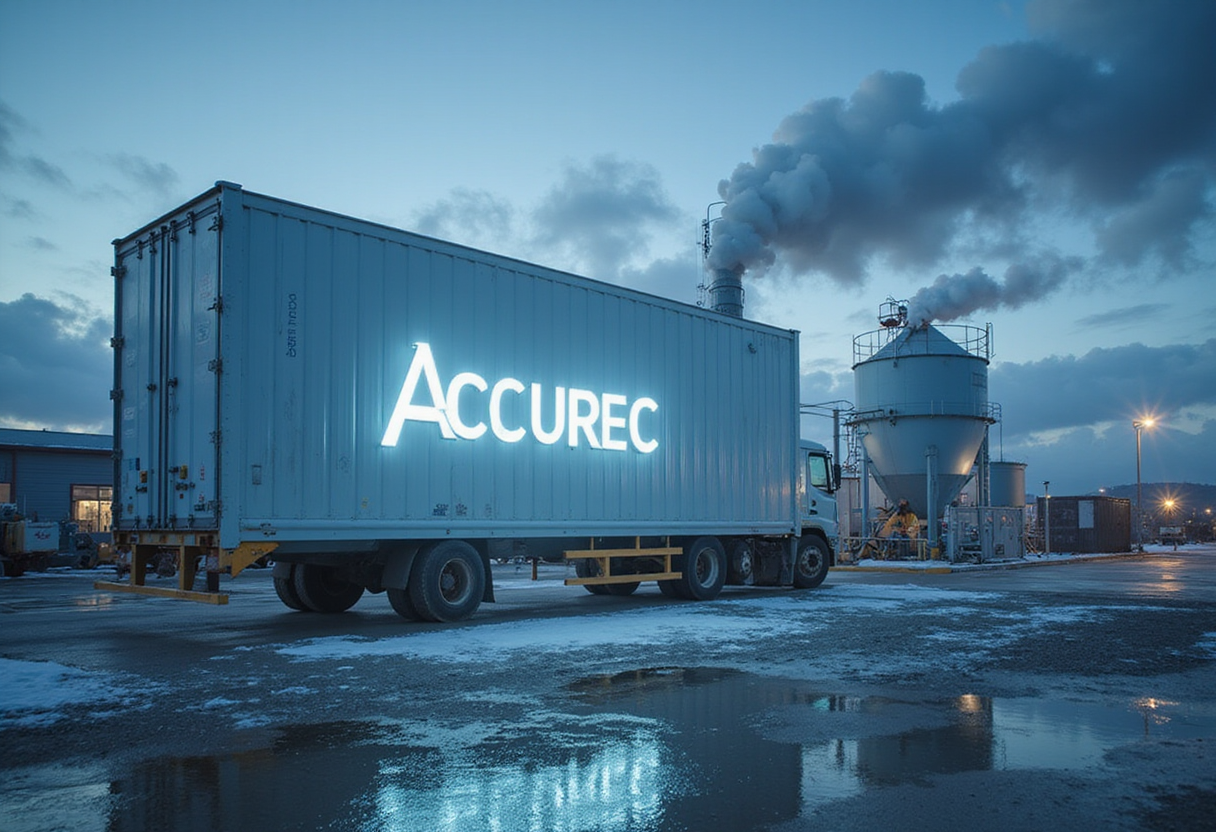
Accurec Recycling GmbH is investing EUR5.5 million to double the operating area of its Krefeld battery recycling site, targeting a jump from roughly 5,000 tonnes of processed batteries per year to as much as 20,000 tonnes — quadruple current volume.
The family-run company, which employs about 85 people and runs a second plant in Mulheim an der Ruhr, has spent roughly a decade building lithium-ion recycling capacity in Krefeld. Founded in 1995, Accurec started with nickel-cadmium and nickel-metal hydride chemistries before lithium-ion displaced them across smartphones, power tools and electric vehicles.
The new lithium recovery facility, operational since December 2025, initially recovers half of the lithium in the batteries it processes. That satisfies the EU's 2027 recovery requirement. Simon Bremer, the company's head of development, said expansion work has been under way for roughly a month to raise both capacity and yield, with the target of recovering 80 percent or more of lithium by the first quarter of 2027.
Water instead of aggressive chemicals
At the core of the plant is Accurec's CLIMA process. Batteries are sorted and, in the case of larger items such as EV packs, dismantled. Pyrolysis then decomposes organic components at high temperatures — and, critically, converts lithium into a water-soluble chemical form. Everything else in the battery remains insoluble.
Bremer likens the extraction step to brewing filter coffee: water poured over the grounds rinses out the soluble compounds while the insoluble material stays behind.
The process also captures heat from pyrolysis and reuses it to recrystallise the lithium salt, cutting additional energy demand. Accurec says the technology lowers energy consumption by nearly 50 percent and cuts CO2 emissions per tonne of lithium carbonate by more than 59 percent.
Why it matters for European supply
Bremer puts battery-grade lithium chemicals from Chinese production at roughly 65 to 70 percent of the market. China has previously restricted exports of strategic materials including rare earths and germanium, underlining the supply risk for European manufacturers. Accurec does not claim its technology alone can solve Europe's raw materials problem, but sees domestic recycling as a way to retain valuable material on the continent rather than shipping it out.
A structural weakness compounds the problem. Most European recycling plants produce black mass — the intermediate containing lithium, nickel and cobalt — but few can separate it into raw materials. A large share of that black mass goes to Asia for further processing, mainly to China and partly to Korea, according to Bremer.
Pricing compounds the bottleneck. Bremer argues Asian buyers pay such high prices for European black mass that local firms struggle to build commercially viable refining operations. Asian battery makers, he says, can absorb the premium because they earn revenue further down the chain on finished cells — a dynamic that makes it harder for a rival processing industry to take root in Europe.
A thin domestic customer base
Accurec's options for processing recovered lithium inside Europe remain limited. AMG Lithium in Bitterfeld, Germany, which refines lithium for battery manufacturing, is one of the few notable prospective customers. The two firms have signed a memorandum of understanding, but interface issues must be resolved before feed-in deliveries can begin.
Until the partnership is running, part of Accurec's recovered lithium goes to other uses or is sold in Asia through partners. The company's long-term goal is a closed European loop in which lithium from spent batteries feeds new batteries made in Europe.
Regulatory stakes
Bremer welcomes the EU's classification of black mass as hazardous waste, in force since December 2025, as a means of tightening export controls and keeping material in Europe. But he argues the rule only works if customs and supervisory bodies have the resources to enforce it.
He also flags a gap in the EU's mandatory recycled-content rules for new batteries, which take effect from 2031. The rules set minimum proportions of recycled material but do not require manufacturers to source it from Europe. Bremer wants an additional European-sourced share, noting that public procurement contracts already apply similar regional conditions.
More broadly, he criticises the absence of a coordinated European strategy across the full battery value chain, pointing to the insolvency of Northvolt as evidence that flagship projects fail without the supplier and customer networks around them.
The milestone to watch: whether Accurec hits 80 percent lithium recovery by Q1 2027 on its expanded Krefeld line — and whether the AMG Lithium feed-in agreement turns contracted tonnage into actual European-refined output.
via indexbox.io (Original)