Cleantech & Investment
Britain backs 200MW windfarm in Ukraine to rebuild shattered grid
The UK will put £9.5m into a 200MW Ukrainian windfarm by Elementum Energy, powering 300,000 homes, as Russian strikes have wiped out over 80% of prewar generation capacity.
Waypoints
UK invests £9.5m in a 200MW windfarm to power 300,000 Ukrainian households.
Russian strikes have destroyed or damaged more than 80% of Ukraine's prewar power generation capacity.
UK has offered over £770m to rebuild Ukraine's power system, including renewables and nuclear.
Ukraine has installed more than 3GW of renewable capacity since 2022, about a third from wind.
DTEK's Tyligulska windfarm phase two is initially scheduled for completion by end of 2026.
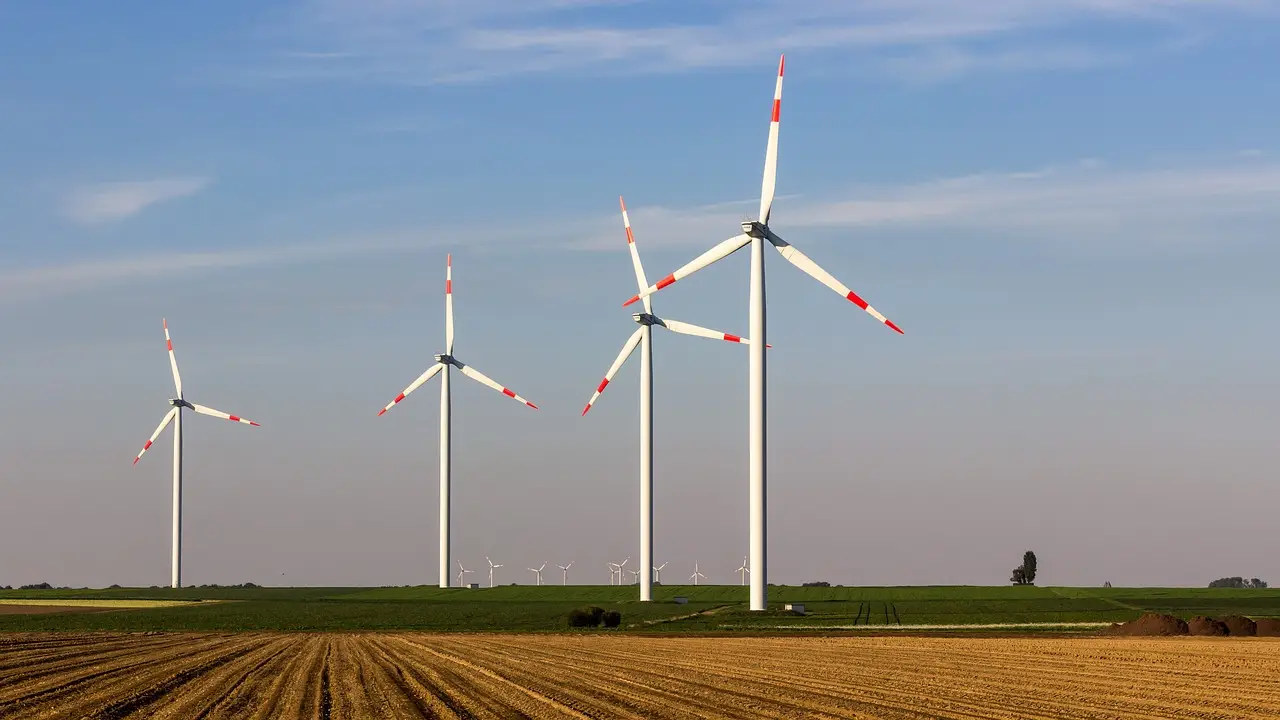
The UK will invest £9.5 million in a 200 megawatt windfarm in Ukraine, a plant designed to supply electricity to 300,000 households in a country that has lost more than 80% of its prewar power generation to Russian strikes.
Foreign Secretary Ed Miliband announced the commitment as Kyiv approaches the fifth year of the full-scale war. The location of the project remains undisclosed, which at this point in the conflict is less an administrative detail than an operational requirement. The plant will be built and operated by Elementum Energy, a company registered in the UK with offices in London, Kyiv and Odesa.
How bad is the damage?
Kyiv estimates that Moscow's strikes have destroyed or damaged more than 80% of Ukraine's prewar generation capacity, a system that ran mostly on gas imported from Russia. The dependency was structural, and it was expensive in both money and leverage. That vulnerability is now the organising principle of Ukrainian energy policy.
The attacks have not stopped. On Wednesday, Russian strikes on a thermal power plant near Odesa cut power, heating and water to parts of the city. DTEK, Ukraine's largest private energy investor, said that attack was the third massive strike against its power plants in November alone, as winter temperatures fall. Darkness, as a strategy, has a schedule.
What has the UK actually committed?
The £9.5 million for the Elementum project sits inside a larger envelope. The UK government has offered more than £770 million to rebuild Ukraine's power system, mixing emergency support with long-term investment in renewables and nuclear generation. The stated purpose is to cut the country's reliance on gas.
Miliband framed the latest tranche as both infrastructure and diplomacy. The money, he said, would help deliver "major new renewable generation, strengthen Ukraine's energy independence and support its recovery, while deepening the economic partnership between our two countries". He added: "While Russia seeks to plunge Ukrainians into darkness, the UK is helping Ukraine build the secure and resilient energy system it needs for the future."
Two quotes, one policy: generation capacity as a form of sovereignty.
What exists on the ground already?
Announcements are one thing; installed megawatts are another. Ukraine has added more than 3GW of renewable capacity since the 2022 full-scale invasion, roughly 20% of the country's installed generation base. About a third of that is wind.
The benchmark project is DTEK's Tyligulska windfarm in Mykolaiv, roughly 60 miles from the frontline. Its first phase, completed in early 2023, made DTEK the first company to build a windfarm in an active war zone, generating enough power for about 200,000 homes. The second phase was initially scheduled for completion by the end of 2026, a deadline now competing with a strike campaign that has hit DTEK's plants three times in a single month.
The takeaway is plain: Ukraine is rebuilding generation faster than most European markets are permitting it, under conditions those markets do not have to imagine.
What decides what happens next?
The Elementum plant now carries two deadlines of different kinds. The first is construction and grid connection, tracked against a wartime winter. The second is the UK's broader £770 million rebuild programme, which turns energy pledges from both governments into commitments with dates attached.
Watch the Tyligulska second phase. If a 2026 completion survives a third war winter, the 200MW at the undisclosed site becomes an expansion of a proven model. If it slips, the £9.5 million becomes a test of what foreign capital will tolerate. Either way, the megawatts, not the communiqué, will settle the argument.
via theguardian.com (Source)
More from Olivia Hart
Show full bio
Staff writer covering regulation, policy and their impact on Circular economy and the environmental industry at Circular Wire.
578 articles