Recycling Industry
Demolition Is Over 90% of U.S. C&D Debris — And That's Where the Margin Sits
Demolition drives over 90% of the 600 million tons of U.S. C&D debris, EPA data shows. Prefab cuts job-site waste 52% — the money sits in concrete aggregate, not new buildings.
Waypoints
Demolition represents over 90% of U.S. C&D debris; construction under 10% (EPA, 2018 data, 600 million tons total)
Prefabrication cuts construction wastage by about 52% on average (Jaillon, Poon, Chiang study)
Cherry Companies: recycled aggregate = 80% of $127 million revenue in 2015, moving 10,000+ tons daily
CALGreen requires 65% C&D diversion; EU Waste Framework Directive targets 70% recovery
Federal Buy Clean executive order revoked in January 2025
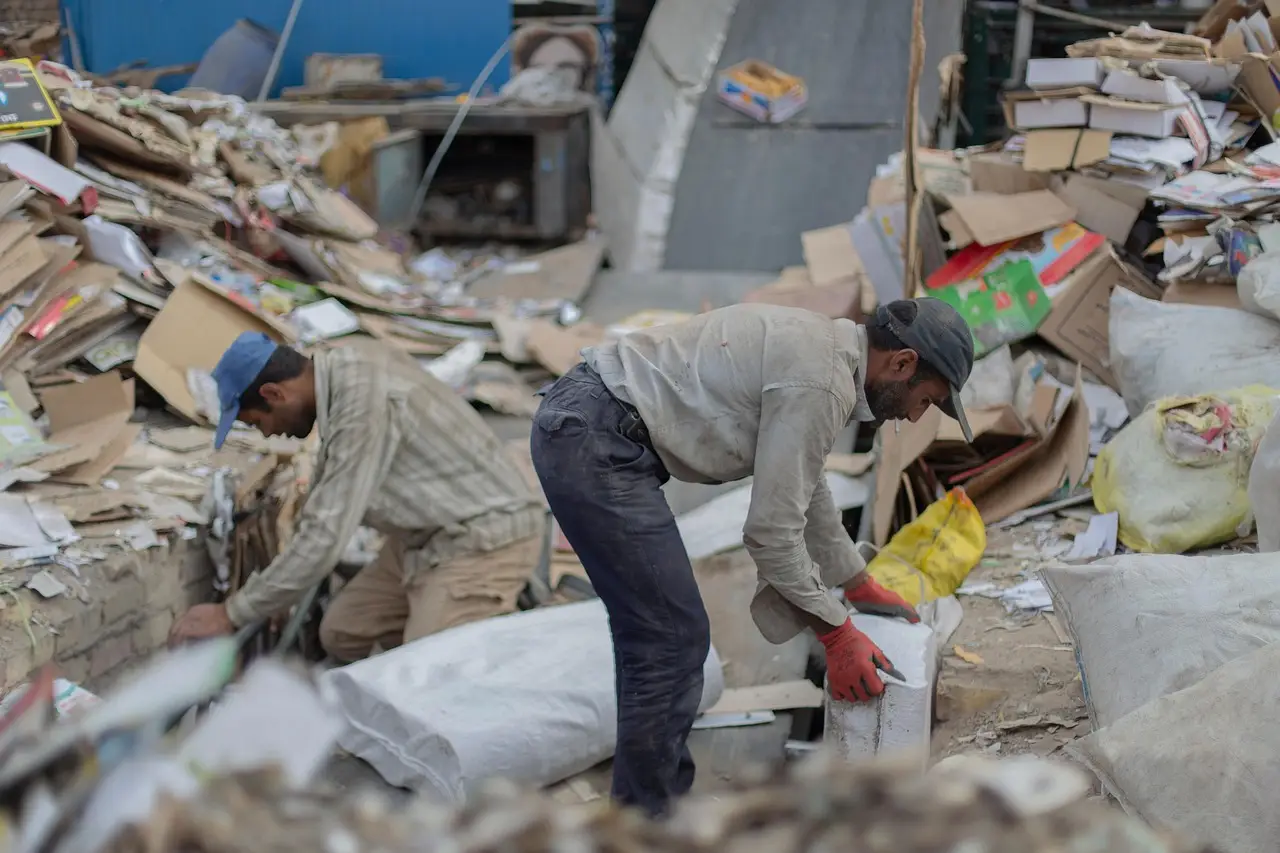
Demolition accounts for more than 90 percent of the 600 million tons of construction and demolition debris the U.S. generated in 2018, according to EPA estimates — and that single line of data upends most of what the industry says about profiting from Construction 4.0.
The EPA figures show just over 455 million tons of that C&D stream went to a "next use," with just under 145 million tons landfilled, and the dominant next use was aggregate. For scale, total C&D tonnage ran more than twice the municipal solid waste the entire country produced that year. The takeaway is simple: the money is in buildings coming down, not going up.
What does the European picture look like?
Eurostat data for 2022 put construction as the single largest waste source in the EU-27, at roughly 38 percent of all waste generated — a figure that includes excavated soil, a large share of the tonnage. The often-quoted claim that construction produces "about 40 percent of global solid waste" has no reliable global dataset behind it, even if the regional numbers are strong on their own.
Does prefab construction grow waste volumes?
No — it shrinks them. A peer-reviewed Hong Kong study by Jaillon, Poon and Chiang (2009) found prefabrication cut wastage by about 52 percent on average versus conventional construction. Waste management strategist Samuele Barrili, author of "The Zero Waste Lie," puts the operational consequence bluntly: offsite construction does not create more waste to handle, it relocates it.
- Job site volumes shrink: fewer roll-offs, fewer pulls.
- Offcuts of timber, gypsum, steel and packaging move into the factory.
- The stream becomes cleaner, scheduled and contractual — an industrial account, not a construction account.
The winner of a prefab factory contract arrives with a stream analysis, a segregation plan, guaranteed outlets per fraction, and pricing tied to downstream value. That is a materials contract, not a hauling contract.
Where does the real C&D money sit?
In aggregate. Federal Highway Administration reviews found 38 states using recycled concrete aggregate as aggregate base, but only 11 putting it back into new Portland cement concrete. Minnesota DOT reported using nearly 100 percent of the concrete removed from its pavements as dense-graded aggregate base, with performance similar to virgin material. The volume market — road base — is open across most of the country; the premium market, structural concrete, remains largely closed.
Cherry Companies of Houston proves the model. The firm was shipping more than 10,000 tons of concrete daily across greater Houston, and recycled aggregate — including stabilized aggregate — made up 80 percent of its $127 million revenue in 2015. The telling detail: its own demolition jobs could not feed demand, so it opened a road removal division and then started paying independent truckers and contractors to bring in concrete.
Why does the model fail elsewhere?
Three variables decide it.
- Geology: Greater Houston has no quarries within 100 miles, so freight makes virgin aggregate expensive. Near quarries, recycled stone loses on price.
- Tipping fees: A quoted engineer contrasted South Florida, with tipping fees above $45 per ton, against Oklahoma City, where landfilling in the low $20s per ton made recycling hard to justify — 2016 figures, but the logic holds.
- Engineer perception: Spec compliance is the entry ticket; trust is the sale.
What about regulation?
The federal tailwind is gone. In January 2025, the executive order that created the federal Buy Clean program — which favored lower-embodied-carbon concrete, asphalt, steel and glass in federal purchasing — was revoked. The durable drivers sit at state level. California's CALGreen code requires new construction and demolition projects to divert at least 65 percent of nonhazardous C&D materials, and compliance can run through a waste company providing verifiable 65-percent diversion documentation. In Europe, the Waste Framework Directive sets a 70 percent recovery target for non-hazardous C&D waste. Documented recovery, in both markets, is a sellable product.
Barrili also warns against overselling "circular" materials: structural steel already flows through a mature scrap market, mixed treated timber often carries little value, and no job site is truly zero waste. His five-move playbook for operators: run the aggregate math first (quarry distance, tipping fees, DOT specs); sell to the spec, not the story; package diversion compliance as a product; lock in demolition inputs — possibly by paying for clean concrete; and pitch prefab factories multi-year materials agreements.
The market milestone to watch: whether more state DOTs open structural-concrete specifications to recycled aggregate — that gap between 38 states and 11 is where the next margin moves.
via wasteadvantagemag.com (Source)
More from Daniel Okafor
Show full bio
Correspondent covering companies, deals and strategy in Circular economy and the environmental industry at Circular Wire.
540 articles