E-Scrap & Battery Recycling
Flash Joule Heating Turns Toxic E-Waste Plastic Into Antimony Supply
Lab-reported flash Joule heating process recovers antimony from flame-retarded e-waste plastics, turning a hazardous residue stream into a critical-minerals feedstock — if it scales.
Waypoints
Flash Joule heating recovers antimony from toxic e-waste plastics, per Bioengineer.org reporting.
Antimony trioxide in flame retardants makes e-waste housings a rich urban source of the metal.
Antimony is listed as a critical mineral in the US and Europe.
The result is laboratory-scale; no tonnage, throughput or plant capacity has been announced.
Antimony supply is concentrated in a handful of producing countries.
Flash Joule heating — a process that dumps electricity through carbon-rich waste in milliseconds — can pull antimony out of toxic e-waste plastics, according to research reported by Bioengineer.org. For an industry that has long treated brominated and antimony-laden plastic housings as a disposal problem rather than a feedstock, that reframing matters.
The development centers on the plastic fraction of electronic waste: casings, connectors and insulation that carry flame retardants and antimony trioxide, a synergist added to slow ignition. That chemistry makes the stream awkward for conventional mechanical recyclers. It contaminates outputs, complicates permits and pushes much of the material toward incineration or export.
The reported route treats that liability as an ore body.
What does the process actually do?
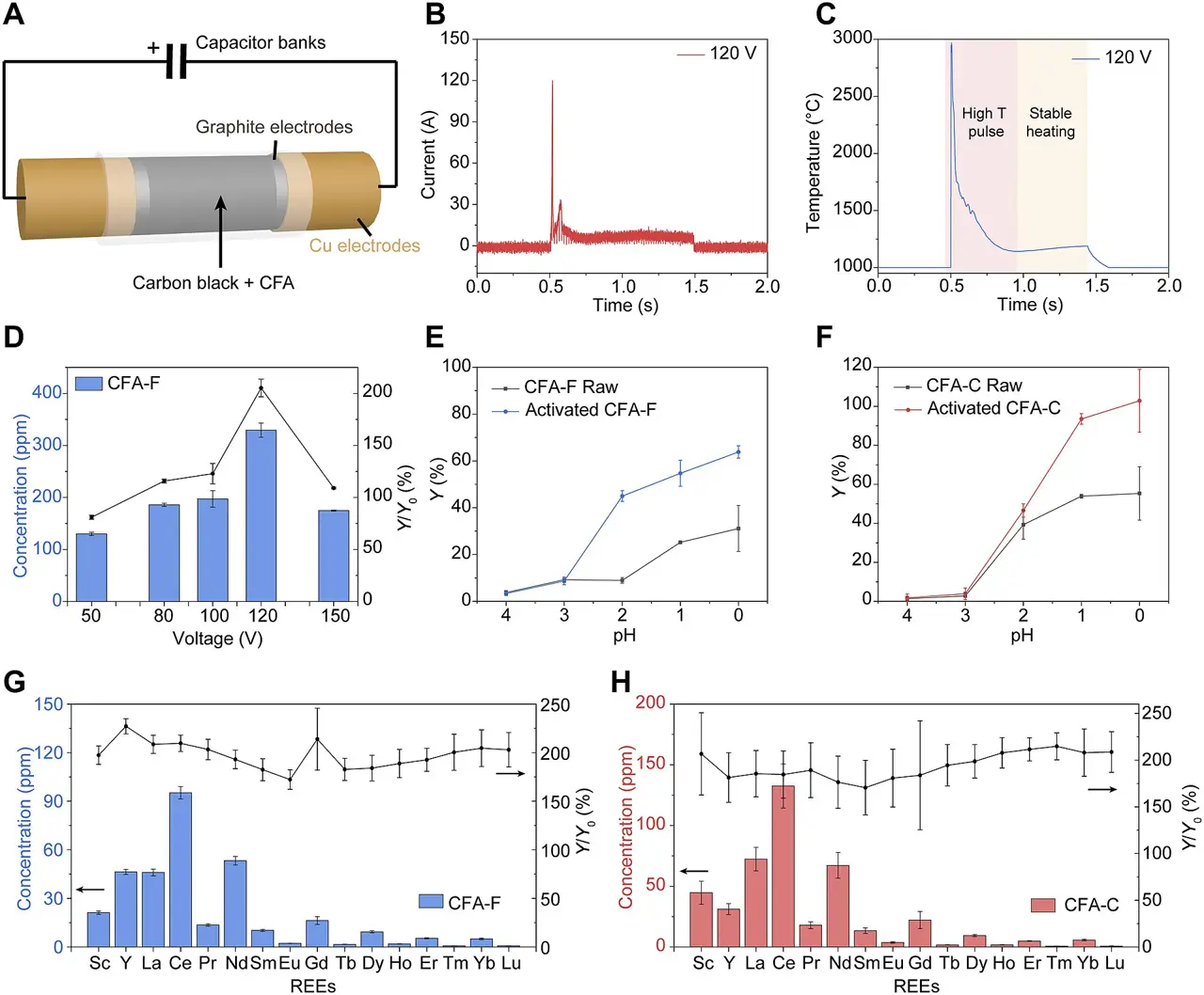
Flash Joule heating works by passing a short, high-voltage pulse through a conductive bed of material. The jolt heats the feed to thousands of degrees in a fraction of a second, breaking molecular bonds before the mass can burn. The technique has already been applied to waste plastics, coal fly ash and asphalt in prior lab work; the new reporting extends it to antimony recovery from e-waste polymers.
The appeal for processors is twofold. First, it accepts a mixed, contaminated plastic fraction that mechanical lines reject. Second, it targets antimony — a critical mineral used in flame retardants, lead-acid batteries and alloys, with supply concentrated in a handful of producing countries.
The takeaway: a single electrical step converts a hazardous plastic into a saleable metal stream.
Why antimony, and why now?
Antimony sits on critical-minerals lists in the United States and Europe, and buyers have spent the past two years watching export controls and price volatility squeeze availability. Any process that recovers the metal from a waste stream already collecting in shredder yards changes the supply math at the margin.
E-waste housings are a known antimony carrier. The oxide is added to brominated flame retardant formulations at loadings that make discarded electronics one of the richer urban sources of the metal available at scale. Globally, tens of millions of tonnes of electronic scrap are generated annually, and the plastic fraction of that volume has mostly been a cost center.
The takeaway: if the chemistry scales, shredder residue stops being a hazmat line item.
Built capacity versus lab claim
Here the desk splits the file. What exists today is a research result — a demonstrated conversion in a laboratory setting, reported through a science-news channel, not a permitted facility, an offtake agreement or a named commercial partner. No tonnage, no throughput figure and no plant capacity accompanies the claim in the reporting available.
That distinction is the whole game in recycling technology. Flash Joule heating has a track record of promising lab results with limited commercial deployment so far. Moving from gram-scale pulses to continuous, multi-tonne-per-day operation requires electrode durability, feed preparation, energy management at scale and a residue pathway that regulators will sign off on.
The takeaway: this is an announced capability, not built capacity — the kind of claim Circular Wire will track against deadlines, not applaud.
What decides what happens next
Watch three things: a peer-reviewed paper with recovery rates and energy balances, a pilot unit operating on real shredder residue rather than prepared feed, and a named partner in the e-waste processing chain putting money behind scale-up.
Until one of those lands, the milestone that matters is publication — the data that lets the trade judge whether antimony from e-waste plastic competes on cost with mined supply.
via Google News: Battery recycling and e-waste (Source)
More from Daniel Okafor
Show full bio
Correspondent covering companies, deals and strategy in Circular economy and the environmental industry at Circular Wire.
405 articles