Industrial Decarbonization
Mazda Captures 804g of CO2 in Fuji 24-Hour Race, Targets 2028 Road Trials
Mazda's onboard carbon capture system pulled 804g of CO2 at the Fuji 24-Hour Race, up nearly 10x from November 2025. Public road trials begin 2028, commercialization targets 2035.
Waypoints
Mazda captured 804 grams of CO2 at the Fuji 24-Hour Race in June 2026, up from 84 grams in November 2025.
Public road testing is scheduled for 2028, with commercial production readiness targeted for 2035.
The system captures 20-40% of tailpipe CO2, running on HVO renewable diesel made from used cooking oil.
Prototype hardware adds roughly 50 kg of vehicle mass and uses swappable CO2 canisters for five-minute exchanges.
Mazda's onboard mobile carbon capture system pulled 804 grams of CO2 from a single race car's exhaust during the Fuji 24-Hour Race in June 2026 — nearly ten times the 84 grams it managed in its November 2025 track debut. The Hiroshima-based automaker now plans to shift the technology from motorsport endurance racing to public road testing in 2028, with commercial production readiness targeted for 2035.
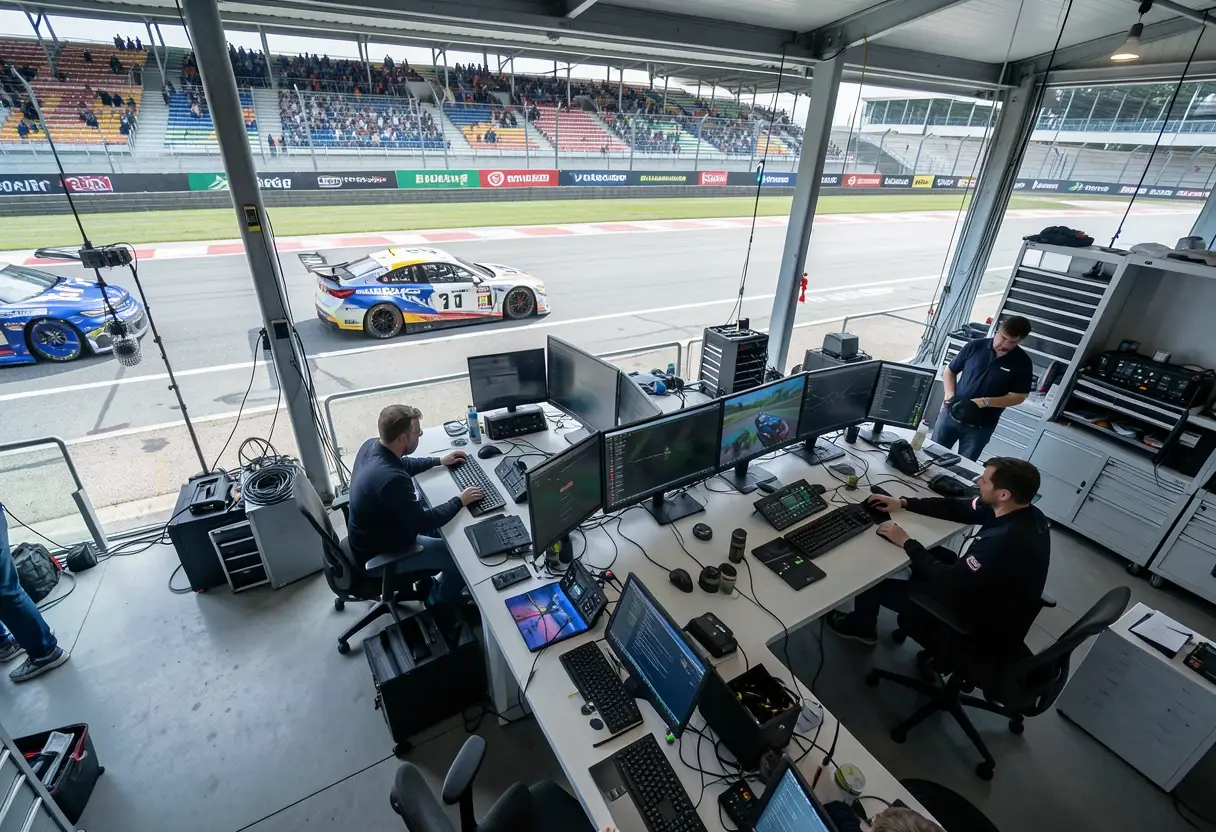
The June validation run took place during Round 3 of the 2026 ENEOS Super Taikyu Series at Fuji Speedway. The upgraded prototype integrates three components: an exhaust dehumidifier, an adsorption-desorption unit, and an onboard CO2 storage cylinder. Together they filter, desorb, and store carbon dioxide directly from the exhaust stream while the car is running.
That tenfold jump in captured carbon in roughly seven months is the clearest signal yet that the hardware can scale from lab bench toward road car packaging.
What does the 2028 road testing cover?
After continued endurance racing validation through 2027, the public road trials will test the three things a race circuit cannot: system durability, thermal management, and capture efficiency under variable everyday driving cycles.
Endurance racing offers sustained load and predictable conditions. Public roads do not. Mazda's own timeline treats 2028 as the gate where the system either proves itself outside the paddock or stays there.
How does the fuel fit in?
Mazda is not chasing full tailpipe abatement. The production-intent system is engineered to capture 20% to 40% of exhaust CO2, a deliberate bounding of onboard storage tank volume and weight.
The pairing with hydrotreated vegetable oil (HVO) is the core of the carbon math. HVO is a renewable diesel synthesized from used cooking oil that cuts lifecycle emissions by roughly 90% compared with conventional fossil diesel. Capture an additional 20% to 40% of what's left at the tailpipe, and the vehicle's net operational footprint moves into carbon-negative territory.
That makes the material stream explicit: waste cooking oil in, captured CO2 stored onboard, net-negative mobility out — provided the downstream infrastructure exists to close the loop.
What stands between the prototype and 2035?
The engineering and commercial barriers are substantial. Prototype hardware currently adds roughly 50 kilograms of vehicle mass — a real penalty for a passenger car powertrain.
The system also requires dedicated offloading infrastructure. Mazda has designed swappable CO2 canisters for five-minute exchanges, which implies a network of exchange points that does not yet exist at any scale.
Downstream, the captured CO2 needs utilization or sequestration supply chains to make mobile point-source capture economically viable at mass-market scale. A canister full of CO2 is only an environmental win if someone pays for, or permanently stores, its contents.
In short, the 2035 rollout depends as much on infrastructure buildout and offtake markets as on Mazda's own hardware.
The milestone to watch
The next hard checkpoint is the 2027 endurance racing season, which determines whether the 2028 public road testing proceeds on schedule. After that, the binding constraint becomes infrastructure: canister swap networks and CO2 offtake chains sized for the passenger fleet.
Mazda's roadmap puts mobile carbon capture on a dated, trackable commitment — and 2028 is the year it faces real traffic.
via mazda.com (Original)
More from Daniel Okafor
Show full bio
Correspondent covering companies, deals and strategy in Circular economy and the environmental industry at Circular Wire.
561 articles