Industrial Decarbonization
Peak Cluster Reroutes Pipeline for Cement and Lime CCS Project
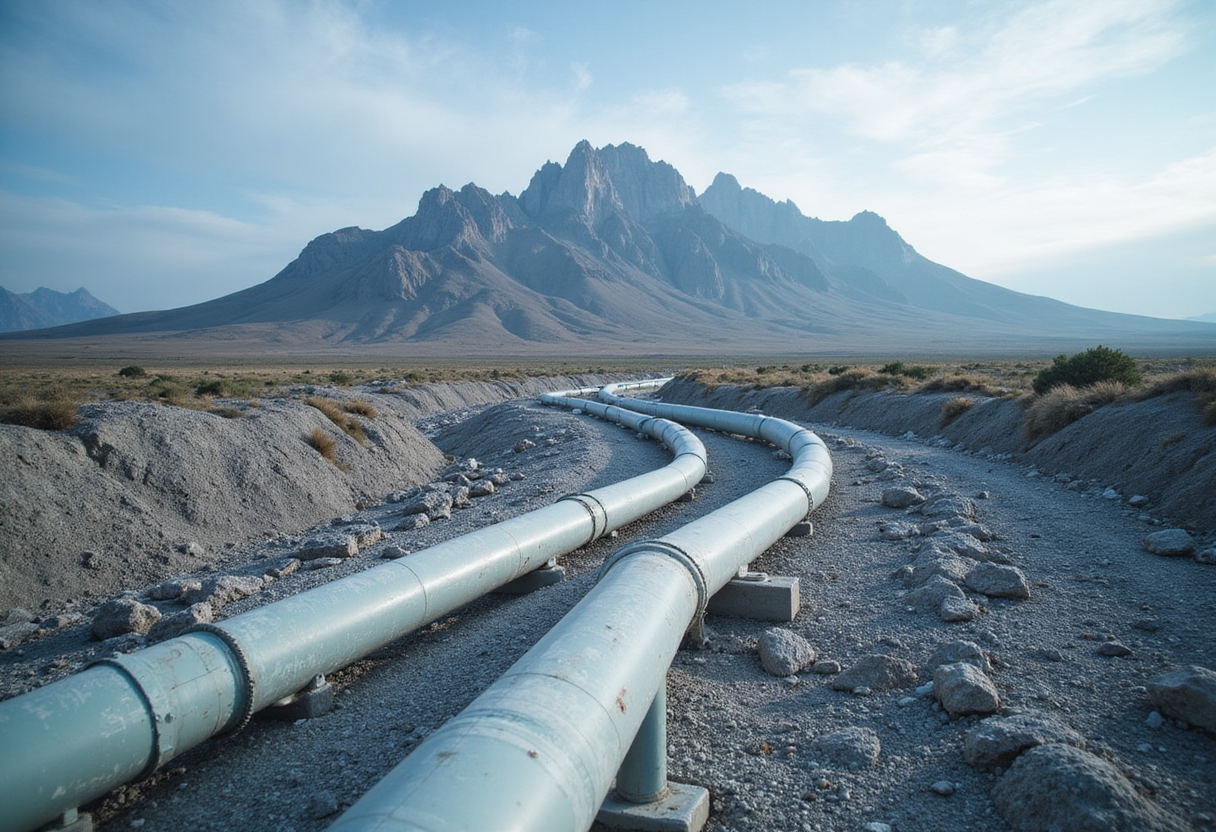
Peak Cluster has revised the pipeline route for its cement and lime CCS project, resetting part of the permitting clock for one of Europe's key industrial carbon transport corridors.
Waypoints
Peak Cluster has revised the route of the pipeline serving its cement and lime carbon capture and storage project.
The pipeline connects cement and lime producers — process-emission industries with few alternatives to CCS — to geological CO2 storage.
The route change resets portions of the permitting process and precedes final investment decisions by participating emitters.
Peak Cluster has revised the route of the pipeline at the center of its cement and lime carbon capture and storage (CCS) project, the company confirmed in a project update. The rerouting decision touches one of the most consequential pieces of hard-to-abate emissions infrastructure now in development, and it arrives at a stage where alignment between pipeline corridors, industrial offtakers and storage sites determines whether capture plants get built on schedule.
The Peak Cluster program targets carbon dioxide from cement and lime production — two process-emission-heavy industries that cannot decarbonize through electrification alone because CO2 is released chemically during calcination of limestone. For these plants, capture with transport to geological storage is the principal decarbonization route, and the pipeline linking emitters to storage is the load-bearing asset of the entire chain.
A route revision at this stage is a normal, if significant, part of infrastructure development. Pipeline corridors for CO2 must reconcile host industrial sites, land access, existing utilities, environmental constraints and consenting requirements across every jurisdiction crossed. Changes to the alignment typically reflect negotiations over right-of-way, feedback from consultation, or engineering optimization — and each revision resets parts of the permitting clock for the affected segments.
For the cement and lime producers that anchor the cluster, the material question is timing. Capture retrofits on kilns are capital-intensive, long-lead projects, and emitters need regulatory certainty on transport and storage before committing final investment decisions. A pipeline alignment that shifts creates a knock-on effect: emitter connection points, injection scheduling and storage intake agreements all depend on the transport corridor being fixed.
The revision also matters for the wider CCS market now forming around industrial clusters. CO2 transport networks are natural monopolies; once built, they set the terms of access for every capture project in the catchment. Route decisions made today determine which plants can connect economically tomorrow. A cluster serving cement and lime — rather than power or hydrogen — signals that hard-to-abate process emissions are moving from feasibility studies into engineered infrastructure.
Peak Cluster's project sits within a broader European push to decarbonize cement, where the Carbon Border Adjustment Mechanism and tightening ETS allowances are compressing the economics of clinker production. CCS-equipped plants are one of the few compliance pathways available to producers facing a shrinking free-allocation horizon. Every milestone on the transport side — including this rerouting — moves the cluster either closer to or further from the investment deadlines those producers face.
What happens next depends on the consenting process for the revised corridor. The alignment must clear the applicable pipeline permitting regime in each jurisdiction it crosses, and opponents or landowners along the new route can extend timelines. Once consent is secured, the cluster's backers will need to convert route certainty into signed transport and storage agreements with the cement and lime emitters.
The regulatory milestones to watch are the formal approval of the revised pipeline alignment and the subsequent final investment decisions from the participating industrial sites. Those decisions, not the route drawings, will determine whether the cluster's capture capacity gets built — and whether the cement and lime plants it serves can meet the decarbonization deadlines now written into European climate law.
via Google News: Industrial decarbonization (Source)
More from Daniel Okafor
Show full bio
Correspondent covering consumer brands and retail at Circular Wire.
133 articles