Compliance & Policy
Senate Permitting Bill Would Cut Eight Years Off Grid Projects — If It Survives
A Senate permitting bill promises to cut eight years off delayed transmission projects, but DOJ's move to reopen offshore wind permits has sponsors warning the bipartisan deal could collapse.
Waypoints
Columbia University finds delayed transmission projects take nearly 18 years to reach service; the Senate bill could cut up to eight years.
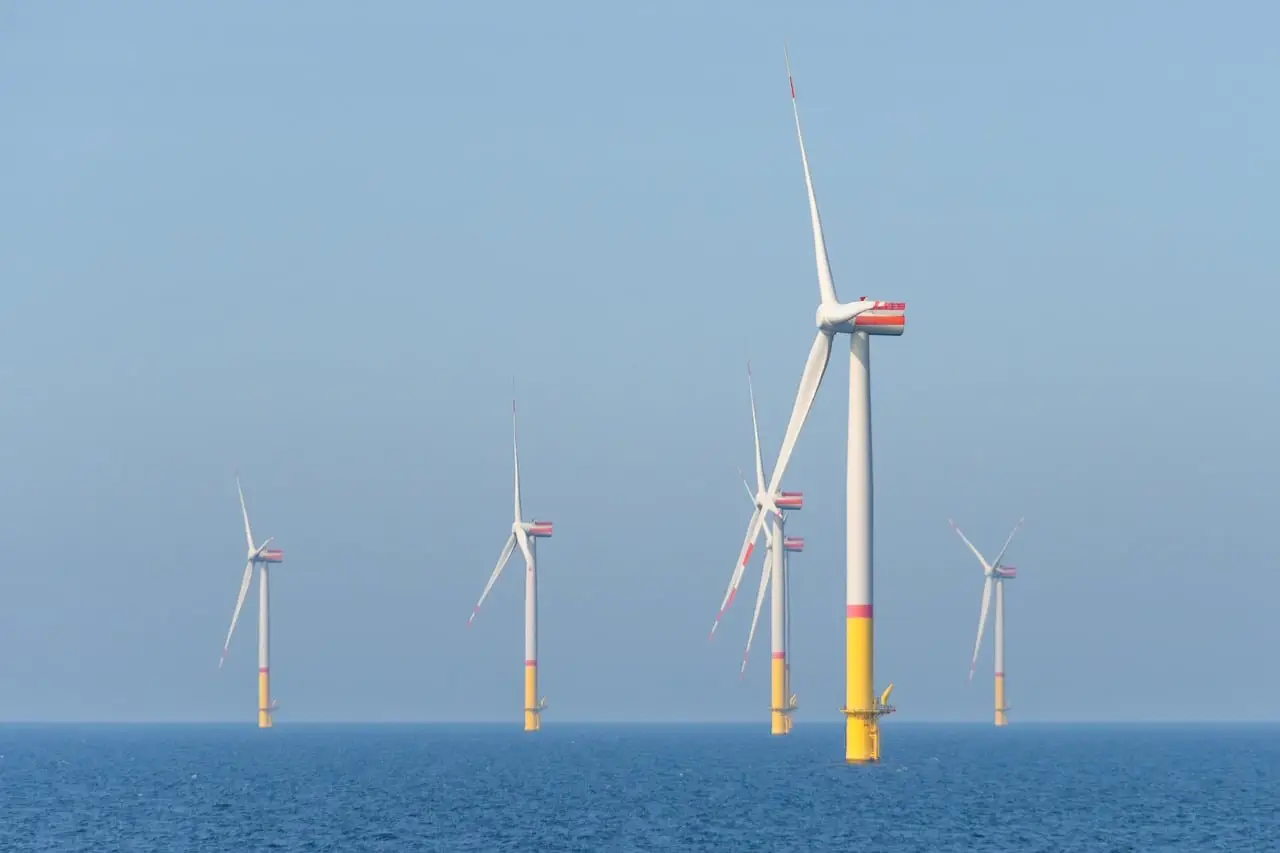
DOJ asked a court Tuesday to reconsider the permit for New England Wind, a 2 GW offshore project off Massachusetts.
The NextEra-Dominion merger is valued at $67 billion; Virginia SCC staff recommended rejecting it.
Ten states now allow plug-in balcony solar; sub-1 MW arrays generated nearly 93,000 GWh in 2025.
DOE will apply $42 million in Defense Production Act funding to revive the Constitution Pipeline.
A stalled transmission project now needs nearly 18 years to reach service in the U.S., and the bipartisan Senate permitting bill released three weeks ago claims to shave as much as eight years off that timeline. Whether it survives the Trump administration's renewed offshore wind crackdown is now the open question — and Sen. Sheldon Whitehouse (D-R.I.), one of the bill's sponsors, didn't mince words about the risk.
"This is how you blow up a permitting deal," Whitehouse told Politico after the Justice Department asked a court on Tuesday to let the federal government reconsider its permit for New England Wind, a 2-gigawatt development off Massachusetts.
What does the bill actually change?
The legislation's central mechanism matters for anyone building energy infrastructure: federal regulators could grant permits when states don't act quickly enough. That's the lever that would compress timelines for the projects that face delays and permit challenges — the ones Columbia University's Center on Global Energy Policy says take close to 18 years from proposal to in-service date.
The faster track isn't limited to wires:
- Solar, wind and geothermal projects get accelerated permitting
- Gas pipelines also speed through, per Columbia's analysis
- Tribal and environmental groups want revisions, partly over those pipelines
- Rep. Ro Khanna (D-Calif.) has flagged swifter data center construction as a concern
The industry isn't waiting for a perfect bill. This week, Advanced Energy United, the Solar Energy Industries Association and three other industry groups sent a letter to congressional leaders urging swift passage. A separate letter of support came from a coalition of former officials spanning the Trump, Biden, Obama, Clinton and both Bush administrations — an unusual breadth of endorsement for a permitting measure.
How real is the offshore wind threat?
The DOJ's New England Wind filing wasn't isolated. The administration also wants to reconsider a permit for Revolution Wind — a project already producing power — plus a few other offshore developments. For developers and offtakers watching the offshore pipeline, the message is that no issued permit is final under this White House.
There was a counter-move on Thursday morning: a White House official said the Defense Department would allow a handful of long-delayed onshore wind projects to proceed. Whitehouse told Punchbowl News that it would only be "a start" to getting negotiations back on track.
The Senate isn't scheduled to vote on the bill until after the midterm elections, so lobbying groups have weeks to reshape it — and the administration has shown it can upend the deal at a moment's notice.
Balcony solar moves on Capitol Hill
Rep. Rob Menendez (D-N.J.) introduced a bill Monday that would require states to consider rules letting Americans use plug-in solar and would create a program to help lower-income households access the technology, Alison F. Takemura reports. Congress likely won't take it up before adjourning for the year; a January reintroduction is possible.
The state-level base is growing fast: 10 states have passed laws allowing residents to plug solar panels into conventional 120-volt outlets, and nine of those laws landed this year alone. The distributed-generation numbers behind the push are real. The Energy Information Administration counts nearly 93,000 GWh of generation in 2025 from solar arrays under 1 MW — more than quadruple their combined capacity from a decade ago.
NextEra-Dominion merger hits resistance
The proposed $67 billion merger between Florida's NextEra Energy and Virginia's Dominion Energy took two hits this week. Staff at the Virginia State Corporation Commission officially recommended that regulators reject the deal as it stands, concluding it doesn't go far enough to protect customers from reliability and financial risks. Gov. Abigail Spanberger (D) voiced similar skepticism.
The Washington Post also revealed that NextEra donated $4 million to President Donald Trump's ballroom project last year. Consumer advocates called the timing "convenient" and "very problematic" — a detail that could cut both ways with White House-appointed federal regulators.
In brief
- Data center boom: Data centers have passed railroads to become the largest investment boom in U.S. history, a Columbia University report finds.
- Pipeline revival: The DOE will spend $42 million in Defense Production Act funding to revive the Constitution Pipeline from Pennsylvania to New York; the White House claims Gov. Kathy Hochul (D) allowed it in exchange for offshore wind permissions.
- Virtual power plants: Researchers are tasking roughly 200 California households with designing their own VPP to learn what motivates participation.
- Nuclear push: The Nuclear Co. proposes a 6.6 GW nuclear campus in Kentucky; Indiana's governor says his state plans another 6 GW.
- Geothermal leases: Ormat and Invenergy dominated a federal lease sale that brought in $4.5 million for Nevada parcels, including some plots slated for solar.
- Aluminum recycling: Tariffs and supply shortages are squeezing the U.S. aluminum market; better sorting technologies and state policies could keep more metal out of landfills and in the recycling stream.
- Floating wind: The floating offshore wind sector, with U.S. roots in Maine, continues research despite federal and financial headwinds.
Watch the post-midterm Senate calendar. If the permitting bill reaches a vote intact, transmission timelines shorten by years; if the offshore wind standoff escalates first, the deal Whitehouse built could be the casualty.
via energypolicy.columbia.edu (Original)
More from Elena Vasquez
Show full bio
Senior reporter covering technology and product news in Circular economy and the environmental industry at Circular Wire.
458 articles