E-Scrap & Battery Recycling
U.S. e-waste flows into Southeast Asia draw 'tsunami' warning
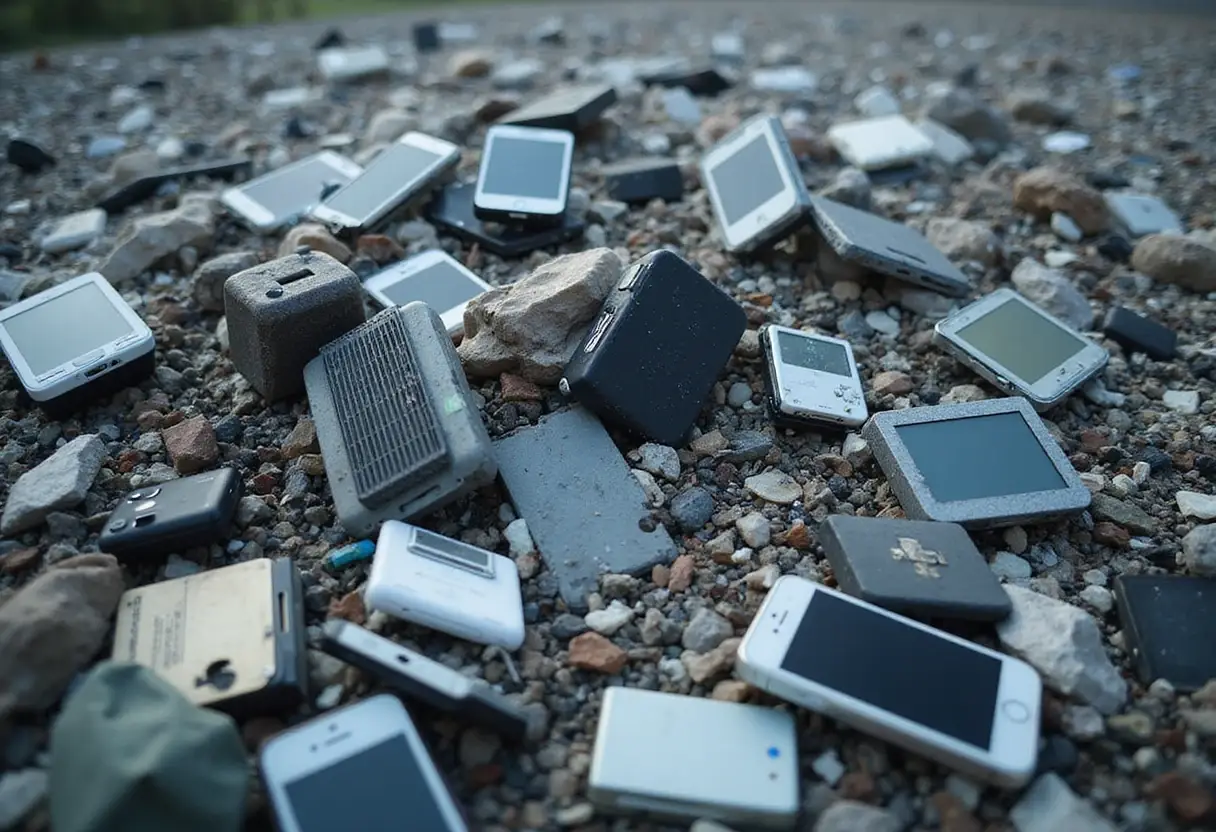
A watchdog has labeled U.S. e-waste shipments to Southeast Asia an 'e-waste tsunami.' The next milestone isn't new law — it's federal enforcement at the export dock.
Waypoints
An independent watchdog tracking transboundary e-waste shipments has labeled U.S. → Southeast Asia flows an 'e-waste tsunami,' per reporting now circulating through PBS.
The U.S. remains among the few major electronics producers outside the international framework restricting transboundary e-waste shipments that EU and Japanese exporters operate under.
Domestic U.S. e-scrap manifests follow a unit from generator to recycler; they do not follow a container onto a vessel.
The next milestone industry is tracking is a federal enforcement task force on mis-declared e-waste exports — modeled on INTERPOL's annual Operation Pangea approach.
An independent watchdog tracking transboundary e-waste shipments has invoked the phrase "e-waste tsunami" to characterize the volume of U.S. electronics reaching processors in Southeast Asia, in reporting now circulating through PBS.
The word choice matters for U.S. exporters, downstream buyers and federal compliance officers. Calling the flow a "tsunami" implies a systemic surge rather than a pattern of one-off shipments — terminology that tends to push the regulatory conversation upstream, from individual shippers to the export category itself. Trade-press language of this intensity typically surfaces inside a policy window: a Basel convention cycle, an EPA advisory committee meeting, or a Congressional e-waste hearing with named witnesses.
What the language signals
"Tsunami" puts the issue in the visual vocabulary of major trade-flow shocks, alongside the 2017 Chinese import ban and the subsequent displacement of material into receiving regions across Southeast Asia. The U.S. sits among the few major electronics producers that didn't formally opt into the international framework restricting transboundary e-waste shipments — a posture that gives American exporters legal latitude their EU and Japanese counterparts no longer enjoy.
For receiving jurisdictions across the region, the implication is straightforward. Flagged U.S. volumes continue to land alongside restricted flows that relocated into regional hubs over the past six years, and throughput has visibly outmatched informal processing capacity. Operators downstream describe intake pressure as a structural overload, not a cyclical blip — and that distinction is what tilts a "tsunami" headline from journalism into a compliance trigger.
The composition of the stream matters as much as the volume. Boxed shipments labeled "used electronics" typically contain a working hardware mix alongside dead cathode-ray units, broken flat-panels, and mixed-metal board scrap that doesn't pass functional testing at the export dock. Brokers in the middle of the lane rebrand non-working units as refurbished to clear customs documentation — a paperwork layer that turns every container into a paper artifact as much as a physical one.
What changes the math on the ground
The piece of the U.S. regulatory architecture that doesn't move is enforcement, not legislation. Domestic e-scrap manifests follow a unit from generator to U.S. recycler; they don't follow a container onto a vessel. Boxes shipping under the "used electronics" customs heading clear with end-destination documentation that agencies rarely audit after the fact, which is why load-counting at destination ports remains the only reliable external check on the trade.
The next milestone industry will watch is whether U.S. Customs and Border Protection, EPA or the Department of Justice opens a dedicated task force into mis-declared e-waste exports. The closest analog is what INTERPOL organizes annually under Operation Pangea for pharma counterfeits — a named, persistent enforcement body that audits paperwork across customs regimes and ships its findings back through national authorities. A federal equivalent for cathode-ray-laden containers would be the threshold that converts a watchdog warning into shipment volume change.
A second, narrower milestone sits at the U.S. Postal Service. Small-parcel international mail shipments of used electronics flow through a parallel customs regime with even less end-destination verification than ocean containers. Closing that pipeline would do more for downstream processors than another round of NGO reports.
Absent either move, the "tsunami" headline returns every reporting cycle, and the same chassis loads of consumer electronics find the same ports. What recyclers want to know is whether the language is a warning shot or a launch point — right now, the trajectory is launch point.
via Google News: Battery recycling and e-waste (Source)
More from Elena Vasquez
Show full bio
Senior reporter covering technology and product news in Circular economy and the environmental industry at Circular Wire.
393 articles