Compliance & Policy
USFWS proposes sea otter take permit for Seward dock rebuild
USFWS proposed a one-year Incidental Harassment Authorization for northern sea otters covering 114 meters of new dock at Seward, Alaska, with a 160 dB acoustic threshold and comment closing December 23, 2026.
Waypoints
USFWS proposed a one-year IHA on November 23, 2026 for sea otters at ARRC's Seward Marine Terminal; comments close December 23, 2026.
The project expands the Freight Dock by 114 meters with 425 sheet pile pairs, 60 template piles and 14 fender piles.
The Level B harassment threshold is 160 dB RMS; impact driving carries a 1,000-meter Level B distance and 310-meter shutdown zone.
The Southcentral Alaska sea otter stock numbers 21,617 individuals across Prince William Sound and the Kenai Peninsula.
Final IHA determination is expected before planned 2027 marine construction.
The U.S. Fish and Wildlife Service on November 23, 2026 proposed a one-year Incidental Harassment Authorization that would permit non-lethal takes of northern sea otters during pile driving at the Alaska Railroad Corporation's Seward Marine Terminal, with a Level B acoustic threshold set at 160 dB root-mean-square received sound pressure level. The proposal, published in the Federal Register at 91 FR 75539 (Docket No. FWS-R7-ES-2026-3037), covers the Southcentral Alaska stock of northern sea otters during dock modernization work in Resurrection Bay on the Kenai Peninsula. Public comment closes at 11:59 p.m. Eastern Time on December 23, 2026.
What does the authorization cover?
The proposed IHA under Section 101(a)(5)(D) of the Marine Mammal Protection Act of 1972, codified at 16 U.S. Code § 1371, authorizes incidental take by Level A and Level B harassment. Implementing regulations at 50 CFR Part 18 allow the Secretary of the Interior to issue such authorizations for up to one year upon findings of negligible impact on the stock and no unmitigable adverse impact on subsistence harvests.
The physical scope is a capital expansion of the existing Freight Dock by 114 meters (375 feet) using a steel sheet pile bulkhead backed by a rock revetment. The terminal sits at the head of Resurrection Bay and operates as an intermodal freight hub linking Southcentral Alaska rail lines to Pacific shipping routes. Associated work includes new mooring dolphins, a catwalk, sacrificial anodes, high-capacity bollards and widened uplands facilities. USFWS issued a draft Environmental Assessment under the National Environmental Policy Act alongside the draft authorization.
The pile schedule is detailed. In-water work includes:
- Removal of four existing 61-centimeter (24-inch) dolphin piles
- Installation and removal of 60 temporary 24-inch steel pipe template piles
- Installation of 425 sheet pile pairs
- Driving of 14 anchor H-piles
- Installation of 14 round 76.2-centimeter (30-inch) fender piles
- Driving of four 30-inch dolphin piles
Contractors will use vibratory hammers for extraction and initial seating, then impact hammers to reach final design depth on dolphin piles. Uplands work includes removal of an onshore bollard pile, 2,157 temporary vibrocompaction H-pile probe cycles over 100 days of ground improvement, and light pole foundations.
How did the agency set the acoustic numbers?
USFWS modeled underwater sound propagation across Resurrection Bay using a practical spreading loss model of 15 log R. For northern sea otters it set 160 dB root-mean-square received sound pressure level (re 1 μPa) across 125 Hz to 38 kHz as the Level B harassment threshold for both impulsive and nonimpulsive sources, concluding that otters tolerate industrial sounds up to 160 dB without sustained behavioral disruption.
Level A injury thresholds are 232 dB peak sound pressure level or 203 dB cumulative sound exposure level for impact driving, and 219 dB cumulative sound exposure level for vibratory driving. Airborne noise is modeled at a 100 dB Level B threshold.
The exposure distances vary sharply by pile class. Impact driving of the four 30-inch dolphin piles carries a Level A distance of 36.4 meters and a Level B distance of 1,000 meters, with a 310-meter shutdown zone and an allocation of 10 Level A and 40 Level B takes. Vibratory installation of the 60 template piles carries a 15.9-meter Level B distance, a 20-meter shutdown zone and 200 Level B takes. Bulkhead sheet piles, installed inside a cell enclosure, carry zero authorized takes. Fender piles carry 12 Level B takes. Uplands vibrocompaction and pile work account for 128 Level B in-air takes.
What protections are built in?
The proposed IHA mandates qualified Protected Species Observers at elevated observation points. PSOs must monitor shutdown zones for 30 minutes before pile driving begins, and operations cannot commence until zones remain clear for 15 minutes. PSOs hold autonomous stop-work authority to shut down equipment if otters approach exclusion boundaries. Monitoring follows a defined institutional standard operating procedure governing shift lengths, data logging and environmental tracking.
Project vessels must maintain a 500-meter standoff from rafts of 10 or more otters, stay 100 meters from individual animals, avoid dividing groups, and lower transit speeds in shallow nearshore channels. Any unauthorized take or monitoring failure constitutes an actionable protocol deviation requiring formal reporting to federal authorities within 48 hours. ARRC must submit a comprehensive draft monitoring report within 90 days of project completion.
On subsistence, USFWS evaluated potential interference with Alaska Native subsistence hunting in Resurrection Bay and found none. Harvest occurs primarily in outer bay passages and open Gulf waters, while the freight terminal is an active industrial harbor with heavy vessel traffic where hunting does not take place. The agency determined the project will not reduce otter availability or impede customary harvesting.
Why the stock matters
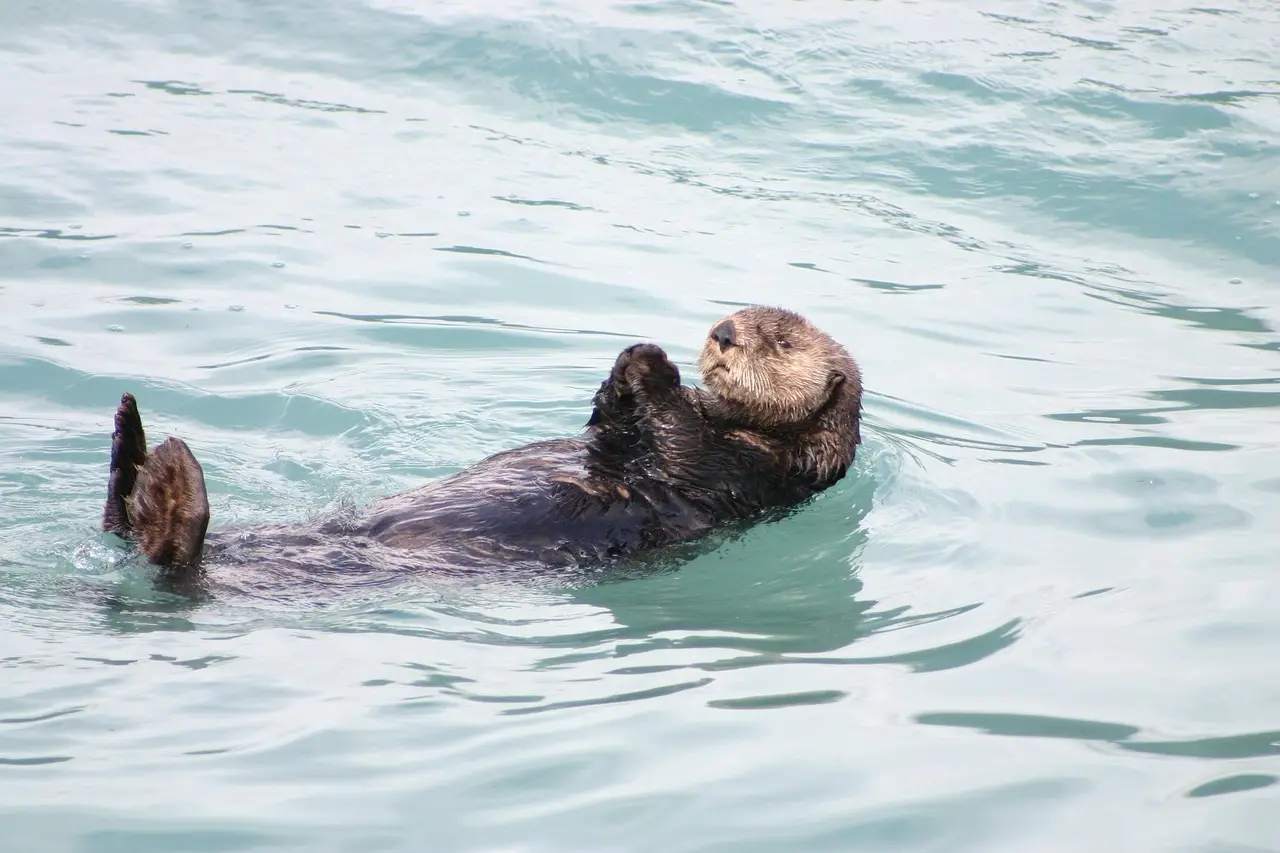
Northern sea otters are keystone predators that regulate benthic invertebrates and protect kelp ecosystems. USFWS species profiles and stock assessments estimate the Southcentral Alaska stock at 21,617 individuals across Prince William Sound and the Kenai Peninsula. Unlike blubber-insulated seals and whales, otters depend on dense fur and high metabolic rates for thermal balance, making acoustic disruptions to feeding and grooming energetically costly. The independent Marine Mammal Commission regularly oversees federal incidental take reviews across Alaska to ensure cumulative maritime noise does not destabilize regional populations.
The 160 dB RMS Level B benchmark gives ocean acoustics researchers concrete parameters for modeling coastal ambient soundscapes, tidal power arrays and marine construction noise. The Marine Mammal Commission oversight and the PSO framework apply to academic marine biology programs, which must coordinate field monitoring through an IACUC to reconcile project requirements with federal welfare standards.
Comments may be submitted through Regulations.gov under Docket No. FWS-R7-ES-2026-3037 or mailed to the USFWS Public Comments Processing division in Falls Church, Virginia. The decisive milestone is the final IHA determination, which USFWS expects to issue after public and tribal review and ahead of planned 2027 marine construction.
via casrai.org (Source)
Filed underIncidental Take AuthorizationMarine Mammal Protection ActNorthern Sea OttersAlaska RailroadUnderwater Pile Driving
More from Rebecca Stone
Show full bio
News editor covering companies, deals and strategy in Circular economy and the environmental industry at Circular Wire.
583 articles