Industrial Decarbonization
Yara Sluiskil captures 800,000 t/yr of CO2 in EU-funded CCS start-up
Yara's Sluiskil plant now captures 800,000 tonnes of CO2 a year for storage under the Norwegian seabed, in the largest commercial CCS project in Europe — funded by the EU and contested by campaigners.
Waypoints
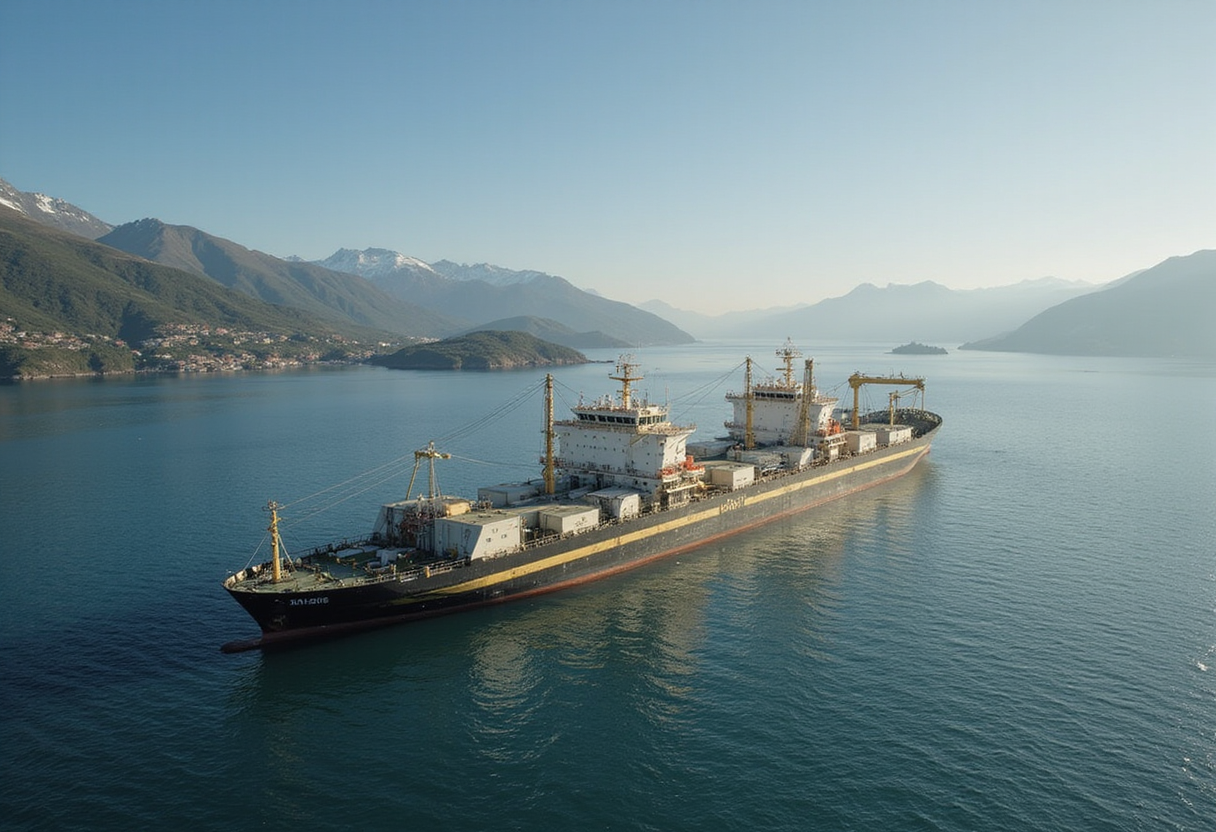
Yara's Sluiskil ammonia and fertiliser plant captures 800,000 tonnes of CO2 per year, liquefies it and ships it to Norway for sub-seabed storage — billed as Europe's largest commercial CCS project.
Worldwide, 75 operational CCS projects captured 62.5 MtCO2 in total as of February 2026, about 0.2 per cent of 2025 global emissions; three-quarters of captured CO2 in use serves enhanced oil recovery.
The European Commission funded the project and its Industrial Carbon Management Forum, successor to the CCUS Forum set up in 2021, feeds working-group output directly into EU policymaking.
An ammonia and fertiliser plant in Sluiskil, the Netherlands, has started capturing 800,000 tonnes of CO2 per year, in what its owner, Norwegian chemical company Yara, calls the largest commercial carbon capture and storage (CCS) project in Europe. The plant liquefies the captured gas and ships it to Norway for storage beneath the seabed.
The European Commission, which funded the project, classifies it as a strategic investment. European Commissioner for Climate, Net Zero and Clean Growth Wopke Hoekstra attended the inauguration on 7 September 2026 alongside the prime ministers of both countries. Campaigners read the project differently, calling it "risking billions in taxpayers' money to fund a dangerous distraction that delays climate action".
The operating numbers frame the debate. As of February 2026, 75 CCS projects were running worldwide, according to Carbon Brief, capturing a combined 62.5 million tonnes of CO2 per year — roughly 0.2 per cent of total global emissions in 2025. Almost all of those projects sit at fossil-fuel extraction and processing sites, according to the IEA's CCUS projects database, and three-quarters of captured CO2 in use today serves enhanced oil recovery, a technique dating to US and Canadian oil wells in the early 1970s that stores the gas while squeezing more oil from depleted wells.
Yara's chief executive, Svein Tore Holsether, defended the facility in a statement: "The carbon capture facility in Sluiskil proves that large-scale industrial decarbonisation is possible today."
The process at Sluiskil follows the standard route. A liquid solvent chemically strips CO2 from the production gas stream. The CO2 is compressed into a liquid-like state, transported — by pipeline in most projects, by ship in this case — and stored deep underground, or converted into products such as building materials and synthetic fuel under the CCUS label.
Cost and track record under scrutiny
The Institute for Energy Economics and Financial Analysis (IEEFA), a US non-profit, has conducted in-depth research into the technology's delivery record. "Despite the political and financial support that has been pointed to CCS over the past three to four years, it remains technically uncertain, very high cost, and reliant upon huge subsidies to move from feasibility to construction and operation," said Energy Finance Analyst Andrew Reid.
Rachel Kennerley, Senior International Carbon Capture Campaigner at the Center for International Environmental Law (CIEL), framed the structural objection: "All capture and storage projects suffer from the same problem: they distract attention and resources from cutting emissions at source and give polluting industries like fertiliser production a pass to keep on polluting."
How the EU arrived here
The EU's embrace of CCS has an institutional trail. Belén Balanyá, a researcher at Corporate Europe Observatory (CEO) who has tracked fossil fuel lobbying for 25 years, counted around 500 CCS lobbyists at COP29 in 2024. A year earlier, COP28's closing agreement endorsed "abatement and removal technologies" — a significant win for CCS proponents largely tied to fossil fuel industries.
Within Brussels, the Commission established the CCUS Forum in 2021, since renamed the Industrial Carbon Management (ICM) Forum. Its annual working groups feed directly into EU policymaking, and CEO found that every group has been co-chaired by the fossil fuel industry or associated organisations. "You look at what's on the agenda and it's always escape hatches to stay in business," Balanyá said of fossil fuel industries. "It's where they move when they've been forced to — when there's more knowledge and more acceptance about climate change and their role and that they have to decarbonise."
A report released in early September 2026 from the UN Environment Programme (UNEP) adds independent caution. It assessed carbon dioxide removal and found unresolved questions on whether the technology can scale sustainably given costs, land and energy use, whether stored CO2 stays out of the atmosphere permanently, and who carries liability for regulation and leaks.
Where CCS fits the material stream
Not all applications carry equal technical risk. Yara's project targets emissions from ammonia production, which "provides a relatively concentrated CO2 stream, making this one of the more straightforward industrial applications of carbon capture rather than an example of the very hardest emissions to abate," according to Domien Vangenechten, Programme Lead in Clean Economy at E3G. His conclusion sets the boundary of the argument: "The lesson should therefore not be that Europe needs CCS everywhere, but that we should pragmatically deploy it where it can cut substantial emissions today."
Sluiskil is built, operating and countable in tonnes. What happens next depends on how the Commission's Industrial Carbon Management Forum channels the project's results into EU carbon policy — and on whether subsequent deployments hit their capture targets without the subsidy dependence that IEEFA, UNEP and CEO all flag as the technology's decisive test.
via static.euronews.com (Original)