Waste Management Business
100,000 pounds recovered as hospitality food recovery scales
Food Recovery Network has recovered more than 100,000 pounds from the Gaylord Pacific and Gaylord National properties, while a Super Bowl tailgate effort diverted 14,000 pounds into 11,000 meals.
Waypoints
More than one-third of the U.S. food supply reaches landfills, according to USDA data cited by FRN.
Working-age household food insecurity rose from 19.9% in 2021 to 27.7% in 2025.
The Gaylord partnership has recovered more than 100,000 pounds of food to date.
FRN’s latest Super Bowl tailgate effort recovered 14,000+ pounds and produced 11,000+ meals.
Federal donation protections date to 1996, expanded in 2023, while eligible deductions can reach 15% of taxable income.
By Grace Kim
More than one-third of the U.S. food supply reaches landfills, according to USDA data cited by Food Recovery Network, while 27.7% of working-age Americans reported household food insecurity in 2025.
FRN’s guide reports that one in four American adults faces food insecurity. The guide says this means the average person knows someone experiencing hardship, even if unaware of it. The reported working-age rate rose from 19.9% in 2021 to 27.7% in 2025, according to the guide’s Urban Institute reference.
FRN ranks food waste as the third-highest contributor to greenhouse gases in the United States. Marriott’s commitment to net-zero emissions or carbon neutrality by 2030 gives hospitality operators a dated emissions target, while food recovery must complement recycling, composting, HVAC solutions and other sustainable processes.
Regina Harmon, FRN’s CEO and the guide’s author, frames the operating case: “A successful food recovery program leverages partnerships to move beyond waste reduction and directly support your business goals and the communities you serve.” For operators, the program can reinforce community leadership, brand loyalty and employee engagement while reducing the landfill-bound surplus stream.
What does food recovery change for hospitality operators?
Food recovery changes the endpoint for usable surplus, not every waste stream. Hotels, caterers and event venues can route prepared and safe surplus to hunger-relief partners, then record the donation for cost, community and environmental reporting.
It creates a route for operational savings: less organic material can reduce waste-hauling volume, support renegotiated hauling fees and expose overordering. Partner planning can contain transportation, fuel, staff-time and material costs. Recovery partners can also supply meals-supplied and greenhouse-gas-avoided metrics, giving management a broader return-on-investment record than a disposal receipt.
The operating model
-
Connect resources and identify surplus. National and local nonprofit partners can advise on collecting, transporting and distributing donated food safely and efficiently. Food Recovery Verified mobilizes a national network, develops food recovery plans, supports large-scale events and warehouse donations, and offers verification that signals a waste-reduction commitment to customers. FRN’s Resource Hub provides toolkits, guidance and local partners accepting donations.
Budget the program and logistics. Compare upfront costs with tax benefits, avoided hauling fees and offsets; sustainability or corporate social responsibility budgets can fund the work. Hosts Global offers food recovery as an add-on, giving it an edge when clients compare sustainability offerings. Ongoing programs need training, documentation, food-safety controls, storage, packaging, transport and refrigeration; single-event providers supply food-safety-trained staff.
Communicate purpose. Leadership must explain how each role supports the community, environment and organization. That clarity can build staff trust, preserve the value of food prepared for service and encourage teams to treat recovery as shared work rather than a disposal side task.
Embed recovery in daily work. Clear procedures let staff identify, label, package and record eligible donations during a shift, minimizing extra labor and establishing accountability for refrigeration and packaging. Inventory systems, digital documentation and consistent partner pickup schedules support the workflow.
Plan recovery into events. Budgeting during initial event planning avoids surprise costs. Small events can provide compostable containers so guests can take leftovers home; for more than 300 people, a recovery organization can collect ingredients, prepared meals and leftover uneaten meals for donation to local hunger-relief partners.
Track impact over time. Return on investment combines direct tax incentives with avoided waste-hauling fees, disposal tax and excess ordering costs. Recovery organizations count donated pounds for tax records, and their operational data can expose uneaten food to improve future purchasing. Hotels can also report meals supplied and estimated greenhouse gases avoided, turning the program into a measurable sustainability and community record.
Legal protection and cost recovery
The 1996 Bill Emerson Good Samaritan Law protects organizations from lawsuits when donated food met all applicable quality and safety regulations at the time of donation. The 2023 Food Donation Improvement Act expands those protections for direct-to-consumer and reduced-price donations.
Federal and state policies have encouraged food recovery for decades, providing a legal framework for prepared-food donations. FRN also cites general tax incentives and enhanced federal deductions of up to 15% of taxable income for eligible food donations to nonprofits, alongside avoided hauling and disposal costs.
Recurring pickups move beyond one-off rescues
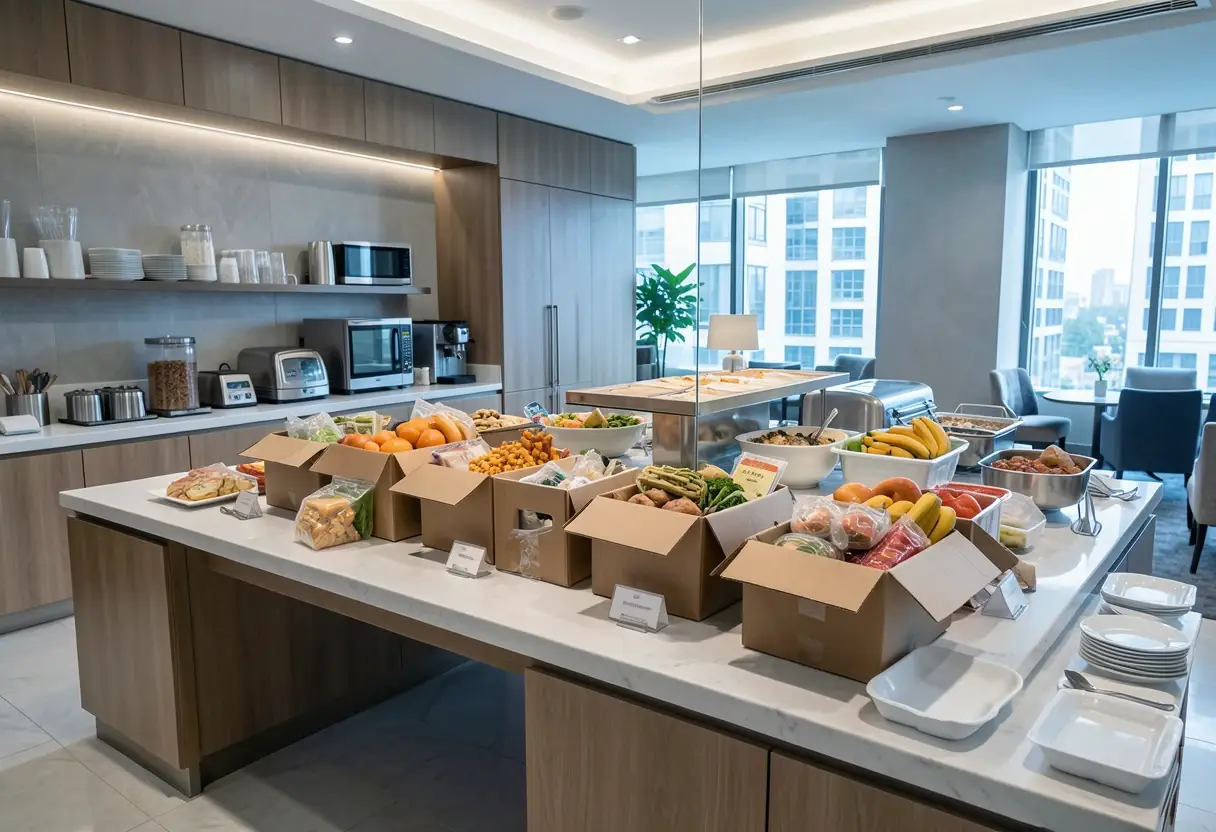
At the Gaylord Pacific and Gaylord National Resorts and Convention Center, FRN picks up frozen surplus food every two weeks. The cadence ensures hunger-relief partners have receiving and storage room when food arrives, and the partnership has recovered more than 100,000 pounds to date.
FRN has also worked with Super Bowl Sunday tailgates outside the stadium for six years. Last year, it partnered with Guy Fieri’s Flavortown and The Players Tailgate to rescue more than 14,000 pounds of food on game day, benefiting three key hunger-fighting partners in the community.
FRN volunteers packaged and transported unserved food in rented vans and trucks. The one-afternoon effort produced more than 11,000 meals for people experiencing hunger in the Bay Area.
A scaled recovery network
FRN describes itself as a student-led movement that has recovered and donated more than 25 million pounds over 10 years. Under Harmon, its network has united more than 8,000 college students, food suppliers, farmers and local businesses across the United States.
Harmon serves on Food Tank’s board and ReFED’s Advisory Council, and her work has drawn recognition from SELF and Food Tank. She says racial disparities in the food system require coordinated action because they disproportionately affect health and economic outcomes.
The 2030 accountability test
Marriott’s 2030 net-zero or carbon-neutrality commitment provides the nearest dated sector checkpoint. For hotels and venues, the deciding test is whether food recovery becomes auditable, recurring operations rather than a one-event donation, supported by pounds recovered, meals supplied, emissions avoided and cost savings. Federal liability protections already permit prepared-food donations; the market milestone arrives in 2030, when corporate emissions deadlines will test whether those operations have scaled.
via wasteadvantagemag.com (Source)
More from Grace Kim
Show full bio
Market editor covering money, funding and market shifts around Circular economy and the environmental industry at Circular Wire.
540 articles