Cleantech & Investment
Cloud height and humidity alter offshore wind farm output
University of Twente simulations show that cloud height, humidity and wind-farm wakes affect each other, adding a missing variable to offshore power forecasting in the North Sea.
Waypoints
University of Twente researchers published the first simulations of their kind in the Journal of Renewable and Sustainable Energy.
The modeling process moved from small atmospheric domains to full-scale offshore wind farm simulations.
The simulations found that interactions depended on weather conditions, particularly cloud height.
Wind farms pushed the atmospheric boundary layer upward in front and pulled it downward in the wake.
Future research requires more computing power, larger wind farms and broader meteorological conditions.
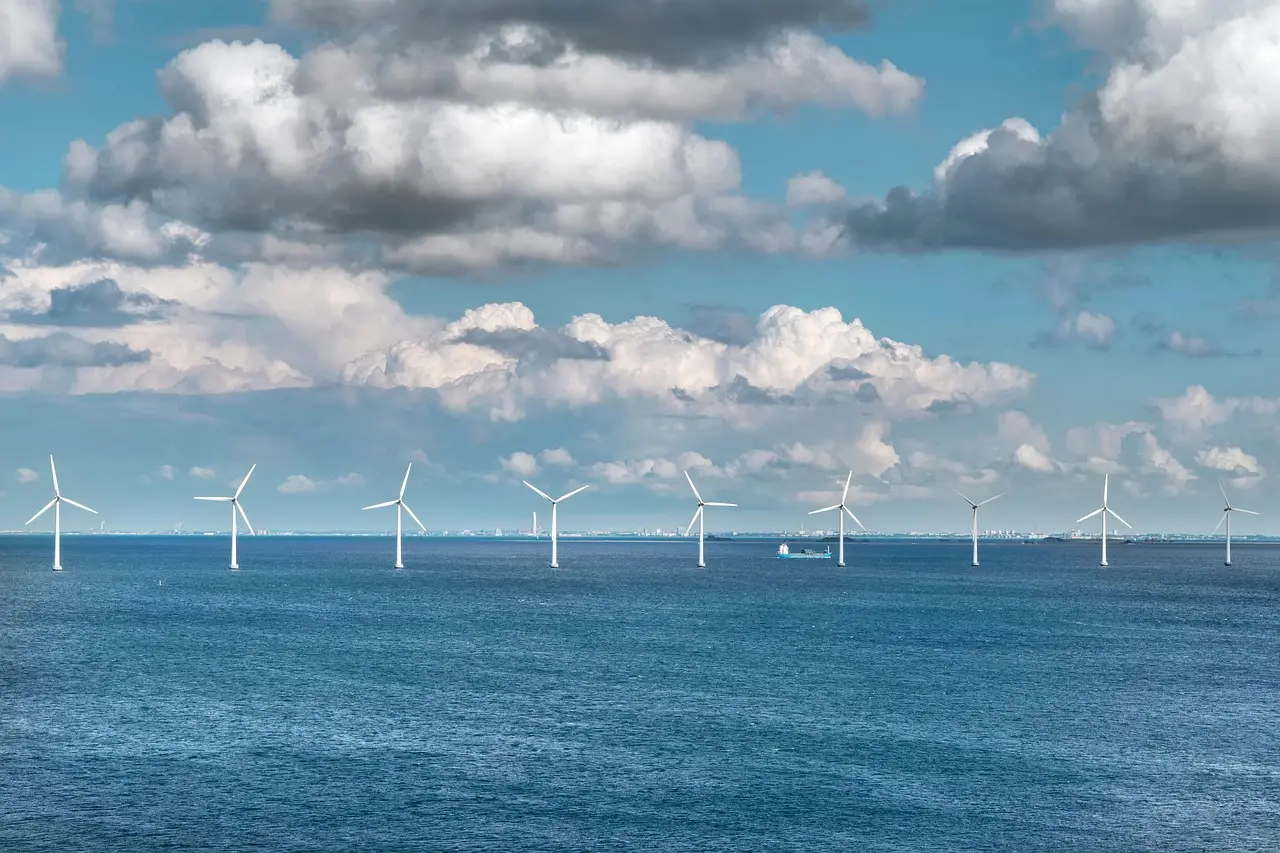
First-of-their-kind simulations show that cloud height and atmospheric humidity can alter offshore wind farm power production, while the farms themselves reshape the atmosphere around them.
Researchers at the University of Twente in the Netherlands, including authors Davide Selvatici, Richard J.A.M. Stevens and Thijs van den Ham, published their results in the Journal of Renewable and Sustainable Energy. The work concerns offshore wind farms in the Netherlands and northern Europe, where facilities stand in water and low-level clouds are common.
Selvatici described the regional conditions behind the research: “Clouds are extensive atmospheric phenomena that occur very frequently, especially in the North Sea. They are so common that they may influence wind farms and their energy production.”
What did the researchers model?
Researchers began with small simulations designed to reproduce different atmospheric conditions, then scaled those tests to full-scale wind farm simulations. They also used sets of smaller domains with different climates and simulated varied atmospheric conditions within the larger setup.
That structure allowed the team to examine a two-way relationship rather than treating the atmosphere as a fixed input. Their simulations showed that the interaction between wind farms and clouds depends on weather conditions, with cloud height acting as a central variable.
The researchers said the reciprocal effect surprised them. Clouds influence wind farm production, but the farms also alter the atmospheric boundary layer and the conditions around the turbines.
The authors noted that many factors affect wind farm generation, including the presence of other turbines. They focused on offshore farms to examine how atmospheric conditions around a turbine array can change its power production.
Richard J.A.M. Stevens said many earlier simulations considered only idealized conditions with clouds essentially absent. The new work added cloud and humidity effects that those simplified cases left out, according to the paper in the Journal of Renewable and Sustainable Energy.
What changes when clouds enter the model?
Clouds and atmospheric humidity affect power production through their radiative properties, particularly their impact on longwave radiation. The study identifies radiation as a pathway through which cloud conditions can alter the energy available to a wind farm even when the turbines and their arrangement remain unchanged.
The relationship also runs in the opposite direction. Wind farms push the atmospheric boundary layer upward in front of the array and pull it downward in the wake, changing local airflow around the turbines. The researchers therefore modeled clouds and wind farms as elements that can modify each other.
Thijs van den Ham said: “It is important to include clouds in wind farm simulations. They do play a role, and they do matter.” His comment sets the practical direction for the research: cloud representation cannot remain an optional detail in models intended to describe operating offshore farms.
The coupled effects make cloud height and broader weather conditions central to any comparison between modeled and actual farm output. The study does not treat humidity as a separate side issue; the researchers group it with clouds as part of the atmosphere that influences farms through radiation and boundary-layer changes.
How firm are the findings?
The authors describe the work as the first simulations of this kind. That status limits the breadth of the evidence but does not erase the mechanism they identified. The paper demonstrates the importance of clouds and calls for additional simulations across a wider range of meteorological conditions.
Future computational advances could let the team model larger wind farms, greater distances between relevant features and additional meteorological cases. Selvatici said realistic real-time conditions would then allow researchers to observe meteorological effects in greater detail than the present runs permit.
He cautioned that this work depends on more computational resources, which the researchers expect will become available only in the future. The study did not report a plant capacity, generation change or site-specific commercial forecast, so its present contribution is model methodology rather than a project-level performance estimate.
What decides the next step?
No regulatory deadline, procurement award, capacity target or power-price threshold appears in the study. For developers and forecasting teams, the milestone that decides whether the finding changes a project forecast is computational: enough resources to run realistic real-time conditions across larger farms and longer distances, with a broader set of weather scenarios.
Until then, the paper establishes clouds as a necessary simulation input and does not support revisions to a specific wind farm forecast or investment decision.
via azocleantech.com (Source)
More from Rebecca Stone
Show full bio
News editor covering companies, deals and strategy in Circular economy and the environmental industry at Circular Wire.
521 articles