Cleantech & Investment
GEA and Mastercard Foundation Target 17,000 Agrifood Jobs from Solar Greenhouses
GEA and the Mastercard Foundation aim to create 17,000 agrifood jobs via solar greenhouses, with Enugu's 150-unit pilot set to expand across 260 state farm estates.
Waypoints
EWAS programme targets 17,000 youth jobs, particularly young women, in Nigeria's agrifood sector
Enugu state pilot comprises 150 greenhouses and two cold box stores under lease-to-own terms
Enugu has passed policy extending the model to 260 farm estates of 200 hectares each, with 1% of land dedicated to clean-energy agriculture
A single greenhouse costs N10.5 million, beyond smallholder reach without financing
Scaling rests on a GEA–World Bank–SMAP Centre of Excellence supporting Mission 300's goal of electrifying 300 million people
A programme backed by the Global Energy Alliance for People and Planet (GEA) and the Mastercard Foundation aims to create and improve jobs and livelihoods for 17,000 young Nigerians, particularly young women, using solar-powered greenhouse clusters as the delivery vehicle.
The target sits inside a larger initiative called Energising Women and Youths in Agrifood Systems (EWAS), which also operates in Ethiopia. In Nigeria, GEA works with partners including RMI to support operators such as MANAMUS Electric, whose facility in Ugwuomu-Nike, Enugu East Local Government Area, hosted a site visit from GEA and Mastercard Foundation officials on Monday.
Chianda Njogu, GEA's Director for Powering Opportunity in Africa, framed the jobs figure as the programme's core metric rather than a side benefit.
"We've partnered the Mastercard Foundation to create and improve jobs and livelihoods for 17,000 youth, particularly young women," Njogu said. "The goal of our organisation is to bring an end to energy poverty."
What does the Enugu facility actually run?
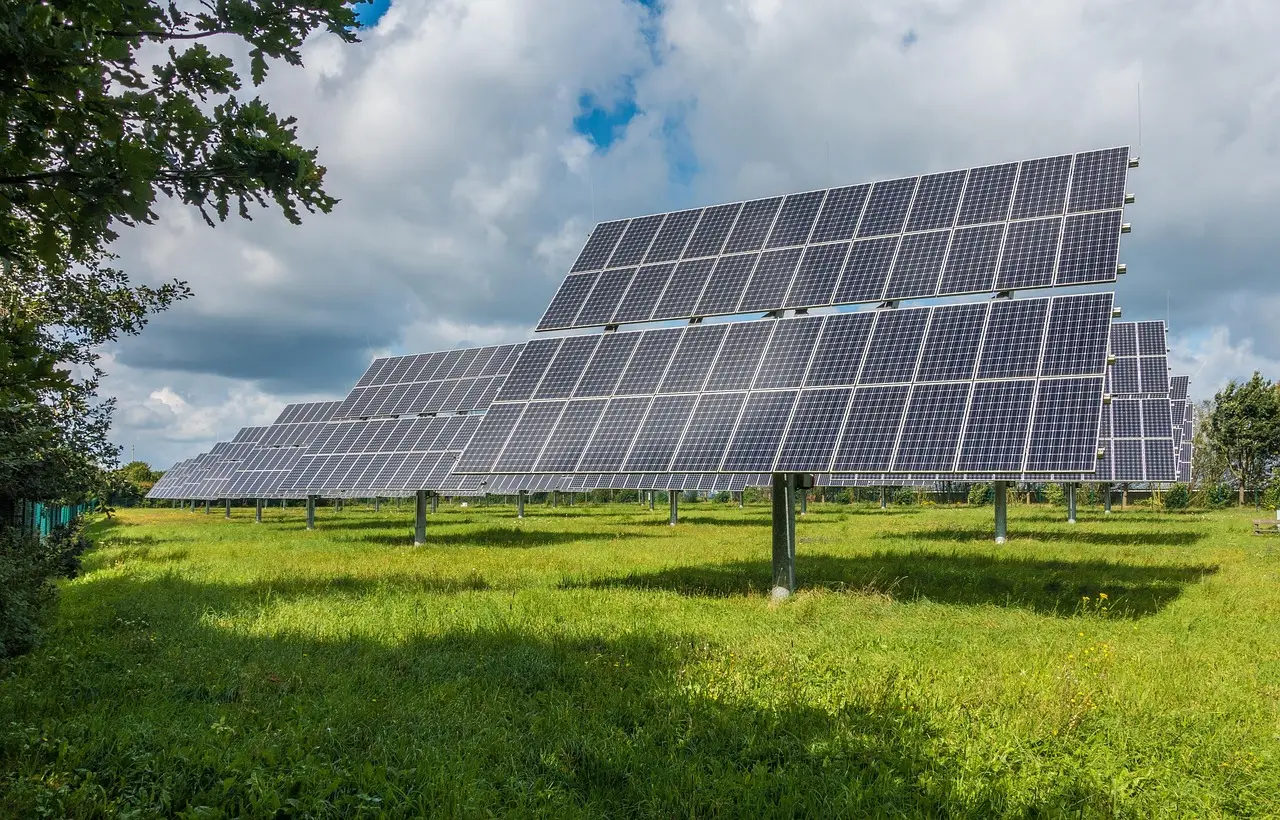
The Ugwuomu-Nike site pairs greenhouses with cold storage and a solar-powered water pump, all serving an off-grid community. Njogu called the operation "precision" agriculture after touring it, noting the greenhouses use biochar and rice husk instead of soil as growing media.
"The community is off-grid but there's nothing that's lacking here. There's power, there's greenhouses, there's water," Njogu said. "And then the most important element is the people."
For practitioners, the material story is the input substitution: soil replaced by biochar and rice husk, diesel-free cooling, and solar water pumping — a template GEA wants replicated across its partner network.
How does the scale-up work?
The Enugu operation is a state pilot with concrete commitments behind it. Charles Aliozo, co-founder and Innovation and Growth Officer at MANAMUS, laid out the agreement with the Enugu State government:
- The state pilot covers 150 greenhouses with two cold box stores.
- The state has passed a policy extending the project to its 260 planned farm estates.
- Each farm estate spans 200 hectares.
- One per cent of every estate's land is dedicated to productive use of clean energy in agriculture — integrated cold rooms, micro solar grids and greenhouses.
- The rollout is youth-focused.
That one-per cent carve-out, applied across 260 estates of 200 hectares each, gives the state a built-in land allocation for clean-energy agriculture infrastructure — 520 hectares in total if the policy is fully executed.
Why lease-to-own?
Aliozo said MANAMUS adopted a lease-to-own model because smallholder farmers cannot afford the N10.5 million cost of a single greenhouse. That is roughly the price of a new car in Nigeria — far beyond the reach of the smallholders the programme targets. Lease-to-own spreads the capital burden and lets farmers build equity in the asset over time.
Who is already producing?
Participants at the facility are moving toward first revenue. Mrs. Nkoli Igbokwe, President of Donum Dei Cello Cooperative, said her cooperative expects its first bell pepper harvest by the end of November.
Mrs. Onyia Salomon, an apiculturist at the site, said the greenhouse infrastructure serves her operation directly: "Being an apiculturist, we need greenhouse for the bees to get their nectars and then give us what we want. So this is very big opportunity for me."
The EWAS programme is supported by GEA, the Mastercard Foundation and MANAMUS Electric.
What happens next?
Njogu was clear that philanthropic money alone will not carry the 17,000-jobs target. "Scaling up will require private sector funding, investments as well as government funding," he said.
To that end, GEA has started a Centre of Excellence for Productive Use of Energy together with the World Bank and SMAP, designed to support Mission 300 — the initiative aiming to electrify 300 million people. The milestones to track now are the completion of Enugu's 150-greenhouse pilot with its two cold box stores, the first bell pepper harvest due end of November, and whether the 260-estate policy translates into signed allocations and private capital on the ground.
via punchng.com (Source)
More from Elena Vasquez
Show full bio
Senior reporter covering technology and product news in Circular economy and the environmental industry at Circular Wire.
511 articles