Cleantech & Investment
NALDA Bets on Electric Tractors and Solar Irrigation to Earn Carbon Credits
NALDA is piloting a zero-emission farm estate with electric bulldozers, tractors and solar irrigation, targeting carbon credit revenue as unpredictable rainfall hits Nigerian planting seasons.
Waypoints
NALDA is piloting a fully zero-emission farm estate using electric bulldozers, electric tractors and solar irrigation, aiming to earn carbon credits.
CEO Cornelius Adebayo announced the plan at the 2026 UN Climate Change Conference in Antalya, Türkiye.
The Green Hope Project planted roughly 5,000 trees across 50 hectares with 400+ volunteers at five Nigerian sites.
Farmers will pay for solar irrigation per hectare cultivated; the Bank of Industry is expected to help finance higher equipment costs.
NALDA was established in 1992 and reactivated in 2020.
Nigeria's National Agricultural Land Development Authority is piloting a farm estate where land clearing runs on electric bulldozers, tilling on electric tractors, and irrigation on solar power — all in pursuit of carbon credit revenue.
NALDA's Executive Secretary and CEO, Cornelius Adebayo, disclosed the plan at a session on green industrialisation, critical minerals and energy security at the 2026 United Nations Climate Change Conference in Antalya, Türkiye.
"Our hope as an agency is to earn carbon credits from such farm estates and farm locations," Adebayo said.
What does the pilot actually involve?
The estate is designed as a zero-emission production site. Every machine and system inside its perimeter runs clean, or is meant to.
- Electric bulldozers for land clearing
- Electric tractors for field operations
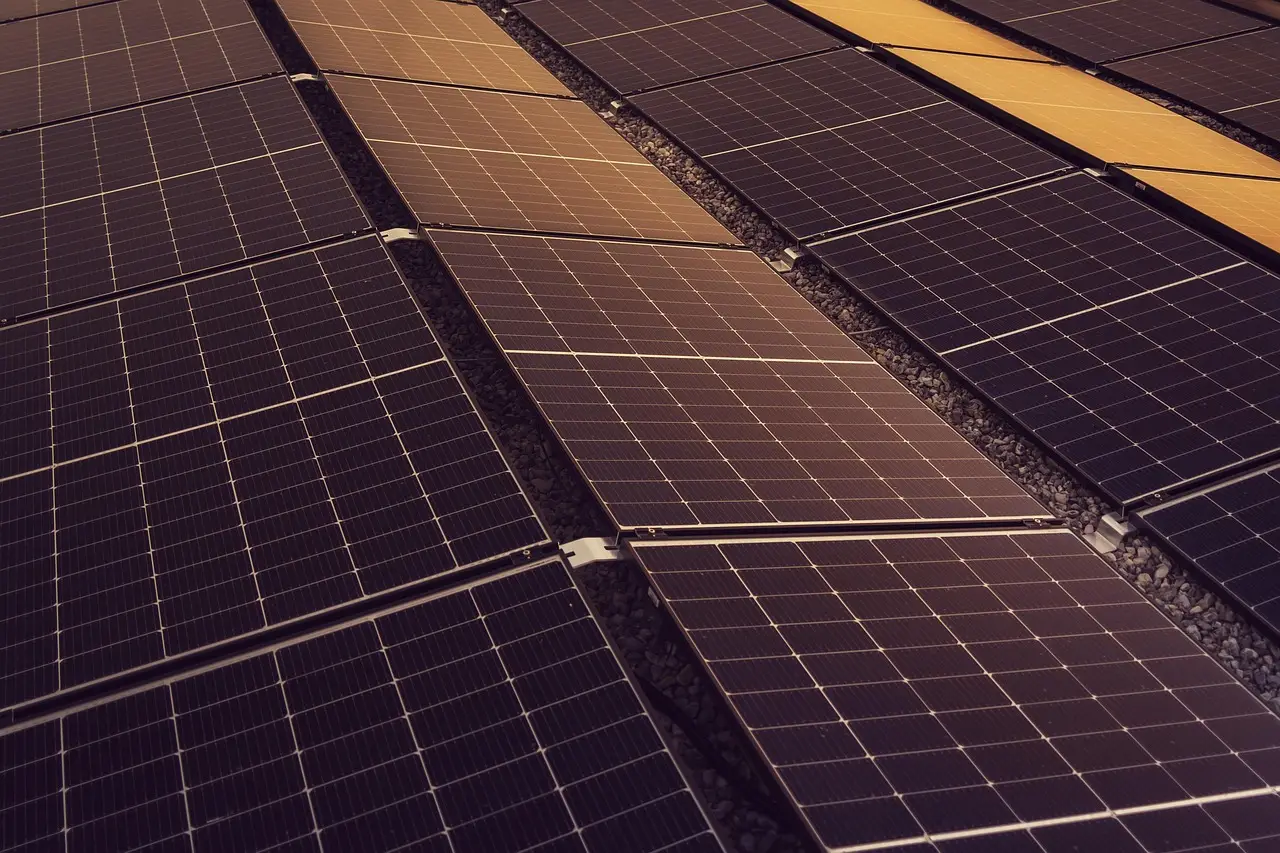
- Solar-powered irrigation covering the full scheme
"We use zero-emission areas. We're introducing electric bulldozers; we're introducing electric tractors in that particular location. And we are introducing solar power irrigation for full irrigation of the scheme. Everything, every single thing within that facility is climate conscious. Every single thing. And that is our first location that is supposed to be a fully clean location," Adebayo said.
The climate rationale is blunt. Nigerian farmers faced rainfall this planting season that nobody predicted. Adebayo said the farmers who hadn't yet planted were the lucky ones; those who had were "quite unlucky this year." In his words, it shows Nigeria needs to move "from rain-fed to climate-smart to irrigation-based farming. And this is one direction that Nigeria is going in headway."
How will the financing work?
NALDA is working with investors to install solar irrigation facilities, with farmers paying per hectare cultivated. That pay-per-use structure, Adebayo argued, makes it easier to extend the infrastructure to more farming communities.
The cost gap is real, and he didn't pretend otherwise. Electric machinery and clean-energy systems cost more than conventional equipment. The Bank of Industry and other development finance institutions, he said, are critical to bridging that gap with capital at lower interest rates.
Alongside the equipment play, NALDA is pushing an anchor-based farming arrangement. Under the model, an anchor investor supplies land, training, extension services, seeds, fertiliser and other inputs, arranges mechanisation, and buys the harvest — deducting the cost of services and inputs supplied.
"The person that is taking the risk for that expansion is the anchor, not the smallholder. So it's just making everything easier for that smallholder farmer to scale up. If the crop fails, it's really the anchor that takes the hit," Adebayo said. Agricultural insurance and risk-sharing institutions would add protection, though the anchor still carries the largest share of production risk.
The agency is also tying farm development to rural security: farmers working in organised clusters are easier to protect than those on scattered plots. NALDA plans to use drones to monitor farm boundaries and detect threats around its estates, while security agencies can be deployed more effectively to concentrated communities. The settlements are also meant to draw young people, with housing, solar electricity, clean water and recreational facilities on site.
NALDA was established in 1992 by an Act of Parliament and reactivated in 2020 after years of inactivity, with integrated farm estates among its flagship programmes.
What has already gone in the ground?
Separately, at the Nigerian Pavilion, NALDA presented its Green Hope Project: roughly 5,000 trees across 50 hectares, planted by more than 400 volunteers across five sites in Ogun, Plateau, Kwara states and the Federal Capital Territory.
- Odogbolu, Ogun State: 1,000 trees on 10 hectares, 80 volunteers
- Barkin Ladi, Plateau State: 500 trees on 5 hectares, 40 volunteers
- Oke Onigbin, Kwara State: 1,500 trees on 20 hectares, 120 volunteers
- Iporin, Kwara State: 1,000 trees on 5 hectares, 80 volunteers
- University of Abuja, FCT: 1,000 trees on 10 hectares, 80 volunteers
The species — mango, avocado and coconut — were chosen to serve environmental restoration and future food production at once, giving households fruit for consumption and sale as the trees mature. The agency framed the project as making restoration part of production rather than a stand-alone exercise, with perimeter fencing and post-planting management built in to keep the trees alive.
The project drew support from the Agricultural Research and Training Institute, the National Council on Climate Change and the National Horticultural Research Institute. The CEO's Special Adviser on Projects, Al-Mustapha Ibrahim, presented the figures.
What decides what happens next is whether NALDA's zero-emission estate actually clears verification for carbon credits — and whether development finance arrives at rates that make electric machinery pencil out against diesel.
via punchng.com (Source)
More from Elena Vasquez
Show full bio
Senior reporter covering technology and product news in Circular economy and the environmental industry at Circular Wire.
511 articles