Waste Management Business
Nieheim digester processes 56,000 tonnes at 126 Nm³ per tonne
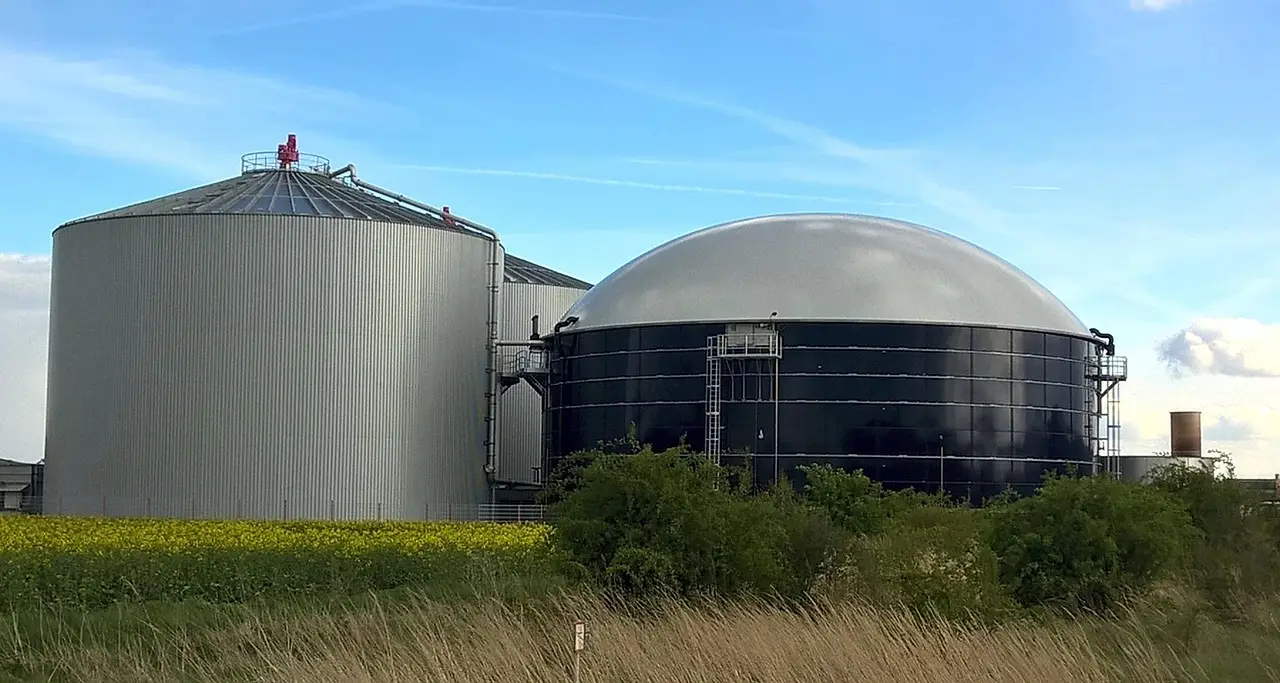
Nieheim’s 56,000-tonne-a-year biowaste plant is running at 126 Nm³ per tonne, pairing continuous digestion with grid biomethane, on-site renewables and recovered inputs.
Waypoints
Nieheim design capacity: 56,000 tonnes of biowaste per year.
First four months: 126 Nm³/t biogas, equal to 110% of the delivered feedstock’s potential.
Digester: 56 metres and seven agitators; stable in peak-load testing at 115% capacity.
Solar peak output: 3.4 MWp, up from 0.794 MWp.
Wind turbine: 166-metre hub height, 160-metre diameter and output of up to 5.56 MWh.
By Elena Vasquez
The Nieheim biowaste plant has a design capacity of 56,000 tonnes a year and produced 126 normal cubic metres of biogas per tonne during its first four months of normal operation.
What changes at Eggersmann’s Nieheim project?
Eggersmann Gruppe GmbH & Co. KG’s Nieheim project tests a wider role for a waste contractor: supplying energy as well as managing organic residues. The site is the first to use BEKON GmbH’s new digestion process, which follows the continuous plug-flow principle, and BEKON’s first continuous digester developed in-house.
BEKON, founded in 1992, has more than 50 references worldwide and is described as a leading expert in anaerobic digestion using dry fermentation. Its established system uses discontinuous batch fermentation in digester tunnels. The continuous design aims to raise gas yields significantly and automate operations from feed through digestion and composting.
“The plant is in normal operation,” BEKON Managing Director Dr Rolf Liebeneiner said. “Its performance has exceeded our expectations.”
How is the continuous digester performing?
The 56-metre-long digester uses seven agitators. Peak-load testing kept the unit stable at 115% of capacity. The agitators also underwent peak-load tests with digestate discharge at 31% dry matter content; Liebeneiner said they remained well short of their performance limit.
Gas performance has been equally encouraging. Liebeneiner reported a 126 Nm³/t yield over four months, particularly for biowaste from a rural area. Regular laboratory sampling put that result at 110% of the delivered biowaste’s biogas potential, or 10% above the measured potential of the feedstock.
Automation begins when material enters the pre-shredder. From there, the system feeds the digester and runs composting automatically, while a fully automated crane and logistics hall move material to the digester. Liebeneiner said the combination meets requirements for biogas production at the largest possible scale.
How does the plant supply the public grid?
Nieheim now produces natural-gas-quality biomethane for the public grid under an integrated concept that Eggersmann says remains unique so far. The plant prefers to upgrade biogas when on-site renewables can supply enough electricity; otherwise, it stores the biogas temporarily until power is available.
Liebeneiner said many composting plants once generated only enough electricity for their own requirements. More operators now upgrade biogas to grid-quality biomethane, he said, because higher biomethane output makes investment in upgrading and infrastructure more worthwhile.
How much of the plant’s energy comes from on-site renewables?
Eggersmann renewed and expanded the photovoltaic systems across the site. Their maximum output rose from 0.794 MWp to 3.4 MWp. The company also installed a wind turbine with a 166-metre hub height and a 160-metre total diameter, which can generate up to 5.56 MWh.
Together, the solar and wind mix leaves the plant almost self-sufficient. Eggersmann has developed an AI-based energy management system to support efficient operation. A battery storage system remains a planned component, rather than part of the completed configuration; Eggersmann says it will complete the concept.
What happens to the material that does not become gas?
During gas upgrading, the plant separates biogenic CO₂ and converts it on-site into high-purity dry ice. Industrial and logistics users can use the dry ice to cool temperature-sensitive products or as a blasting medium for surface cleaning.
The digestate splits into solid and liquid fractions. The solid stream moves through composting tunnels, where intensive rotting is followed by fine treatment using star screens and an arch-belt separator designed for compost. The finished compost carries RAL quality-standard certification.
Liquid digestate goes to agriculture as liquid fertiliser, returning the biowaste to the natural cycle. Eggersmann also separates woody material before digestion because it cannot be digested and is difficult to compost; a biomass heating system uses it to heat the digester.
The combined concept seeks a renewable substitute for natural gas. Under ideal conditions, it produces that gas in a closed loop powered only by renewables while extracting the maximum economic value from every output.
What does the project mean for waste contractors?
Nieheim serves as Eggersmann’s flagship and deliberate “showroom” or “model site.” The group brought the project’s specialist companies under one roof:
- BEKON, alongside the machinery and plant manufacturers;
- the plant operator;
- the construction company;
- the precast concrete plant; and
- the electrical engineering firm.
Eggersmann Anlagenbau GmbH also acted as general contractor. Liebeneiner described Eggersmann as a full-service provider of recycling solutions, from individual mobile machines to entire plants. Through KOMPOTEC Kompostierungsanlagen GmbH, the group also operates as a regional plant operator in its own right, with more than 30 years of experience.
He said Nieheim marks Eggersmann’s next step as a waste management contractor and that the industry’s future lies in renewable energy generation. Industry interest is already visible through regular visitor tours.
“There is considerable interest from industry professionals, so we regularly take visitors around the plant. This unique concept is not meant to remain unique – it is intended to become the new standard,” Liebeneiner said.
The next market test is whether other waste operators adopt the integrated model. For now, the battery remains planned and broader replication remains an ambition; Nieheim is BEKON’s first operating site for the continuous process.
via waste-management-world.com (Source)
More from Elena Vasquez
Show full bio
Senior reporter covering technology and product news in Circular economy and the environmental industry at Circular Wire.
473 articles