Compliance & Policy
Norway Court Voids Three North Sea Permits as Cop31 Talks Turn to Fossil Fuel Wording
Norway's top court voids three North Sea permits on climate grounds as Cop31 negotiators await a cover decision draft and a 35%-by-2035 electrification target worth 4bn tonnes of CO2e a year.
Waypoints
Norway's supreme court invalidated three North Sea oil and gas permits for failing to account for combustion harms
Climate Trace: 35% electrification of final energy by 2035 would cut ~4bn tonnes CO2e/year, or 7% of global emissions
IEA expects ~12,000GW of new electricity capacity in the next decade, vs 5,000GW added in the last
Cop31 cover decision first draft could arrive as early as this weekend or Monday
China has ruled out hosting Cop33 in 2028; Uzbekistan, Thailand, Korea and Indonesia are potential bidders
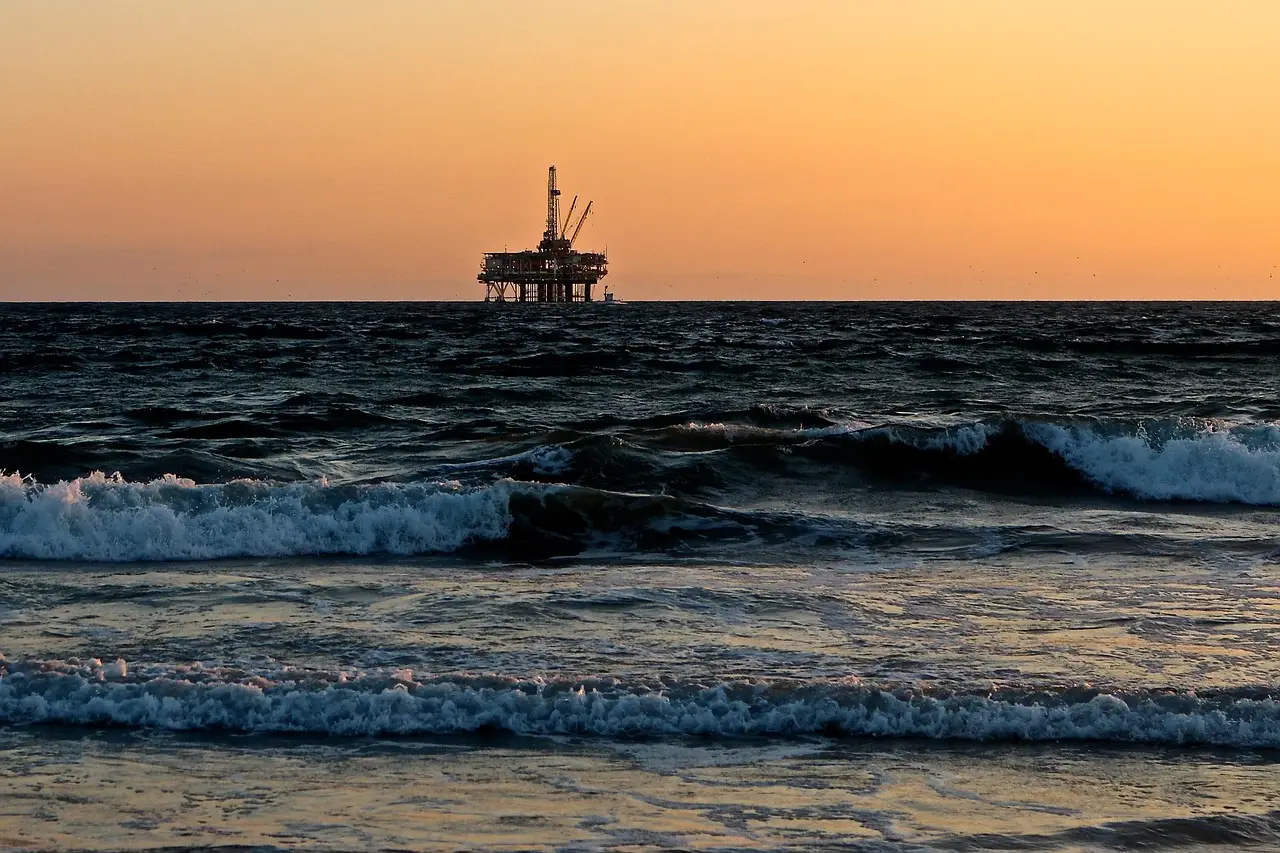
Norway's supreme court has invalidated three North Sea oil and gas permits on climate grounds — a ruling that forces the government to weigh the global harm from burning fuels before awarding licences, and lands mid-way through week one of Cop31 in Antalya.
The decision doesn't revoke the permits or shut in the fields. What it changes is process: downstream combustion impacts now have to sit inside Norway's licensing calculus. Campaigners claimed it as a win, and Tessa Khan, executive director of Uplift — which led the legal challenges against the UK's Jackdaw and Rosebank fields — called it a "historical ruling" that decision-makers worldwide will note.
"Today's decision affirms what scientists and campaigners have been saying for years: burning more oil and gas is incompatible with a healthy and secure planet," Khan said. "As Europe's largest petrostate is forced to account for its climate harms, and with El Niño looming large, it is a timely reminder to all governments that their obligation to protect the public from climate harms is not up for political discussion. It is a legal requirement."
What about Norway's substitution argument?
Oslo has long argued its barrels are cleaner than most and that cutting its output simply shifts demand to dirtier suppliers — studies estimate that for every 10 barrels Norway stops producing, other producers add six to nine. Campaigners dismiss that as "the drug dealer's defence": every exporter wants to be the last one pumping.
The timing stings. The ruling came two days after Norwegian PM Jonas Gahr Stør told Cop31 leaders "Norway will do its part" — in a speech that never mentioned the country's ongoing oil and gas expansion.
How big is the electrification prize on the table?
With more than 90 world leaders now departed from Antalya, negotiators from 185 countries get down to the actual text. A first draft of the cover decision could land as soon as today, with the weekend or Monday more likely. Watch the wording on 1.5C "overshoot", climate science, the fossil fuel transition, the electrification target and finance.
New Climate Trace analysis — the non-profit backed by Al Gore — puts numbers on the 35%-of-final-energy-from-electricity-by-2035 resolution. Hit it, and you cut roughly 4bn tonnes of CO2-equivalent a year, about 7% of global emissions, even without fully renewable generation. With clean power, that doubles to about 8bn tonnes, or 14% — one of the cheapest routes to net zero the data shows.
"You could double the emissions reductions at a fraction of the cost, if they simply do it in the right way," Gore told the Guardian, pointing beyond EVs to buildings: "If we electrify cooking and heating and use heat pumps, we can have a very large reduction in emissions."
Can waste and landfill methane move the dial?
For the materials stream, the relevant pledge is the Turkish co-presidency's voluntary action agenda goal: halving the growth in global solid waste generation by 2035. Gore said there's headroom well beyond that.
"The solid waste goal is an excellent goal but if we add to that the better management of existing landfills [we could achieve more]," he said. "The emissions from uncovered landfills are greater than all of the datacentres, AI and others, in the world. And it's not a hi-tech challenge to manage these landfills. It's shovel-ready — you just need sand or clay, to stop the methane."
Halving methane — 80 times more potent than CO2, emitted from oil and gas, livestock and waste — could trim projected warming by about 0.3C. Greenpeace reinforced the point with a 6-metre Trojan horse by Danish artist Thomas Dambo in Antalya, plastic spilling from its belly under the sign "Stop Plastic. Big Oil's Trojan horse."
Who said what on day five?
IEA chief Fatih Birol declared the world firmly in the "age of electricity": 5,000GW added globally in the past decade, with a conservative 12,000GW expected in the next. EV sales outside China rose 60% in nine months. "We will still use oil and gas, but the dominant source of energy is becoming electricity," he said.
Senator Sheldon Whitehouse — the lone US senator present, with no official Trump delegation for a second year — pushed a carbon price, warned of a "full meltdown" in real estate and insurance markets, and named his target: "They are the climate denial fraud operation of the fossil fuel industry and the dark money corruption operation of the fossil fuel industry... This wasn't something that happened. This was something that was done."
Meanwhile, the UK has still not published its suppressed climate-security report — which links ecosystem collapse to food shortages, migration and nuclear conflict — even while handing its author, ex-JIC head Madeleine Alessandri, a new climate security adviser role. And China has ruled out hosting Cop33 in 2028, leaving Uzbekistan, Thailand, Korea and Indonesia as possible Asian bidders under UNFCCC rotation rules.
The milestone that matters now: the cover decision draft. Its fossil fuel transition language decides whether Antalya produces text — or a wishlist.
via theguardian.com (Source)
More from Elena Vasquez
Show full bio
Senior reporter covering technology and product news in Circular economy and the environmental industry at Circular Wire.
513 articles