Compliance & Policy
NRC Clears Environmental Hurdle for Nine Mile Point Unit 1's Run to 2049
The NRC's November 27, 2026 FONSI clears environmental review for Constellation's 613-MW Nine Mile Point Unit 1 to run to 2049, using an EA instead of a supplemental EIS under EO 14300's one-year deadline. Final decision is due by April 2027.
Waypoints
NRC issued a Finding of No Significant Impact on November 27, 2026 for Nine Mile Point Unit 1's subsequent license renewal to 2049.
The 613-MW boiling-water reactor, operating since December 1969, is the oldest commercial reactor in the United States; its current license expires August 8, 2029.
NRC granted exemptions from supplemental EIS requirements under 10 CFR 51.6 and EO 14300, cutting up to three months from the environmental review.
The staff reviewed 80 environmental issues across 59 Category 1 and 20 Category 2 items against NUREG-1437 Revision 2.
A final license renewal decision is targeted for April 2027.
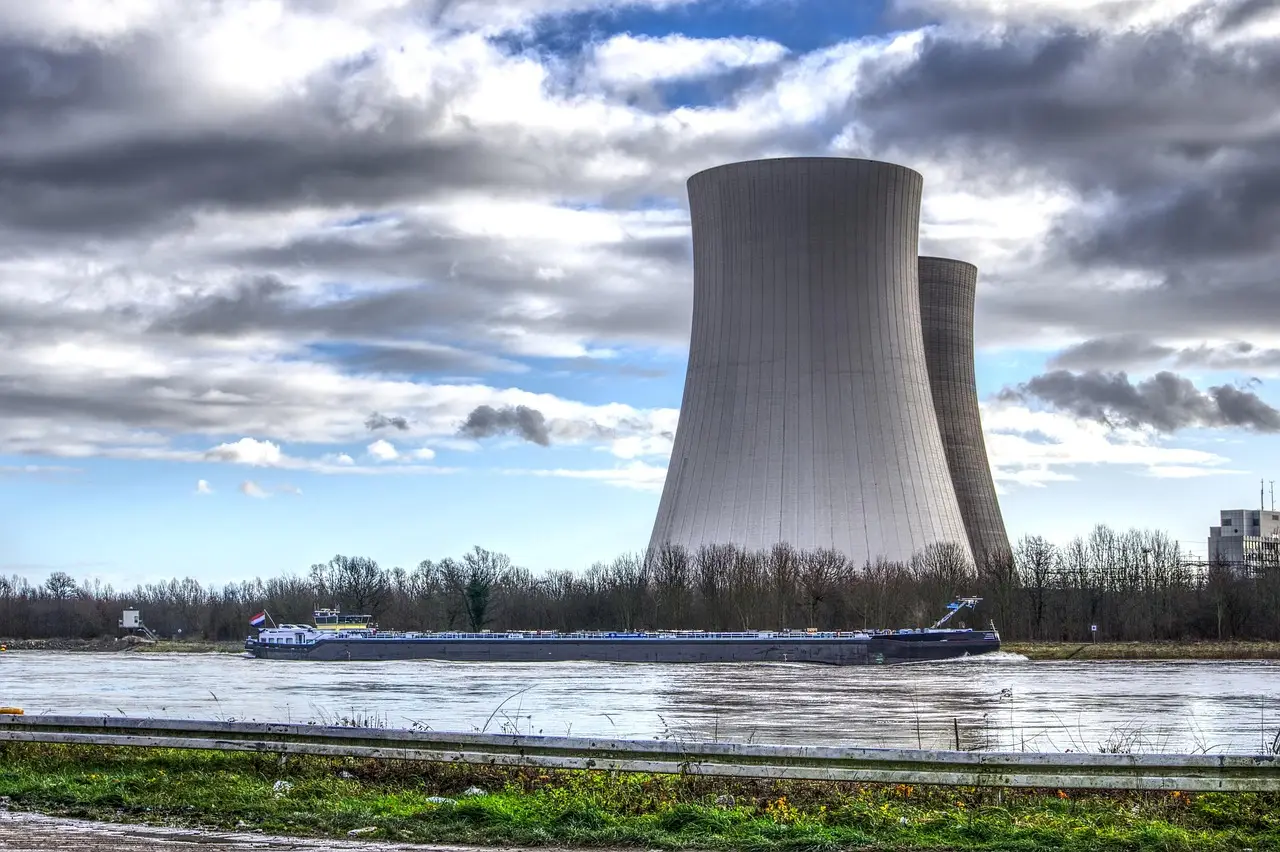
The U.S. Nuclear Regulatory Commission issued a Finding of No Significant Impact on November 27, 2026, for the subsequent license renewal of Nine Mile Point Unit 1, clearing the environmental review for extending the oldest operating commercial reactor in the United States to 80 years. The 613-megawatt boiling-water reactor in Oswego County, New York, would run through August 2049 under the license Constellation Energy Generation requested on March 25, 2026. The decision, signed by Stephen Koenick, Chief of the License Renewal Environmental Branch in the Office of Nuclear Reactor Regulation, formalizes the agency's environmental findings under Docket No. 50-220 and NRC-2021-0082.
Nine Mile Point Unit 1 entered commercial service in December 1969. The General Electric boiling-water reactor, rated at 1,850 megawatts-thermal, sits on the southeastern shore of Lake Ontario roughly five miles northeast of Oswego. Its initial renewed 20-year license expires at midnight on August 8, 2029, which makes the April 2027 target for a final renewal decision the milestone that decides whether the unit retires or runs two more decades.
What did the NRC actually review?
The staff measured site-specific environmental data against NUREG-1437, Revision 2, the Generic Environmental Impact Statement for License Renewal of Nuclear Plants published in August 2024. The evaluation covered 80 distinct environmental issues: 59 generic Category 1 issues, 20 plant-specific Category 2 issues, and one uncategorized item. For every applicable Category 1 issue, the staff concluded that no new and significant information altered the generic determinations. The Category 2 plant-specific reviews, spanning aquatic ecology, surface water hydrology, and radiological effluent controls, confirmed that environmental effects would remain minor.
The agency also granted site-specific exemptions from 10 CFR 51.20(b)(2), 10 CFR 51.25, and 10 CFR 51.95(c). Ordinary renewal procedures would have required a supplemental Environmental Impact Statement. Invoking 10 CFR 51.6 and amended National Environmental Policy Act procedures codified by the Fiscal Responsibility Act of 2023, the staff determined that an Environmental Assessment and FONSI were legally authorized and in the public interest.
How fast is this path?
The expedited route responds directly to Executive Order 14300, "Ordering the Reform of the Nuclear Regulatory Commission," issued May 23, 2025. Section 5(a) directs the agency to set fixed review deadlines of no more than one year for decisions on existing reactor license renewal applications. The NRC calculated that preparing an EA and FONSI instead of a supplemental EIS shortened the environmental review by up to three months, freeing technical staff for concurrent reviews while satisfying statutory mandates on the previously disturbed, industrial utility parcel.
What does an 80-year horizon demand of the plant's materials?
Second-round renewal concentrates on passive, long-lived components. The primary technical constraints include neutron radiation embrittlement of reactor pressure vessel beltline welds, fatigue degradation of primary coolant piping, stress corrosion cracking of internal stainless steel components, and thermal aging of electrical cable insulation. Constellation developed specialized aging management programs under 10 CFR Part 54 to substantiate operation from 60 to 80 years.
Those programs build on experimental datasets from the Department of Energy's Light Water Reactor Sustainability Program, headquartered at Idaho National Laboratory with Oak Ridge National Laboratory and university nuclear engineering consortia. The LWRS materials pathway investigates harvesting irradiated steel samples from decommissioned facilities, testing extended concrete durability at elevated temperatures, and evaluating advanced non-destructive examination sensors. Operators running these surveillance routines rely on validated Standard Operating Procedure documentation and curated Data Management Plan protocols to keep auditable quality records across decades.
Who objected, and on what grounds?
Consultations proceeded with the New York State Department of Environmental Conservation, the U.S. Fish and Wildlife Service, and regional Tribal Nations through the Regulations.gov docket. Constellation framed the extension as firm, carbon-free baseload power supporting New York State clean energy mandates and regional grid reliability. Environmental organizations and local community groups raised concerns about long-term thermal plume discharges into Lake Ontario and indefinite on-site dry cask storage of spent fuel.
The staff also analyzed a no-action alternative, which would force Unit 1 to shut down by August 2029, and evaluated replacement portfolios including combined-cycle natural gas, solar photovoltaic arrays, and terrestrial wind. The comparative analysis determined that building replacement generation would produce substantially greater localized land-use, air-quality, and ecological disturbance than continued operation of the existing industrial site.
What happens next?
The NRC's Division of New and Renewed Licenses is finalizing the Safety Evaluation Report, with safety audits covering reactor vessel integrity, containment liner margins, and electrical cable qualification. Under the Executive Order 14300 timeline, the agency targets a final decision by April 2027. The public record sits in the NRC's Agencywide Documents Access and Management System: the Final Environmental Assessment (ML26306A164), Constellation's SLR application package (ML26084A179), the Applicant's Environmental Report (ML26084A185), and NUREG-1437 Revision 2 (ML24087A133). Whether the April 2027 date holds, and whether the safety review sustains the environmental finding, now determines the shape of the renewal cohort behind it.
via casrai.org (Source)
Filed underNuclear License RenewalEnvironmental ReviewNine Mile Point Unit 1Nuclear Regulatory Compliance
More from Grace Kim
Show full bio
Market editor covering money, funding and market shifts around Circular economy and the environmental industry at Circular Wire.
619 articles