Industrial Decarbonization
Rotterdam liquid CO2 terminal completes FEED for 5.4 Mtpa
CO2next and Sener completed FEED for a Rotterdam liquid CO2 terminal designed for 5.4 Mtpa, two jetties and four tanks, with expansion to 10 Mtpa pending FID.
Waypoints
CO2next and Sener completed FEED for the Maasvlakte liquid CO2 terminal in the Port of Rotterdam.
The first-phase design targets a continuous 5.4 Mtpa flow into the Aramis offshore pipeline network.
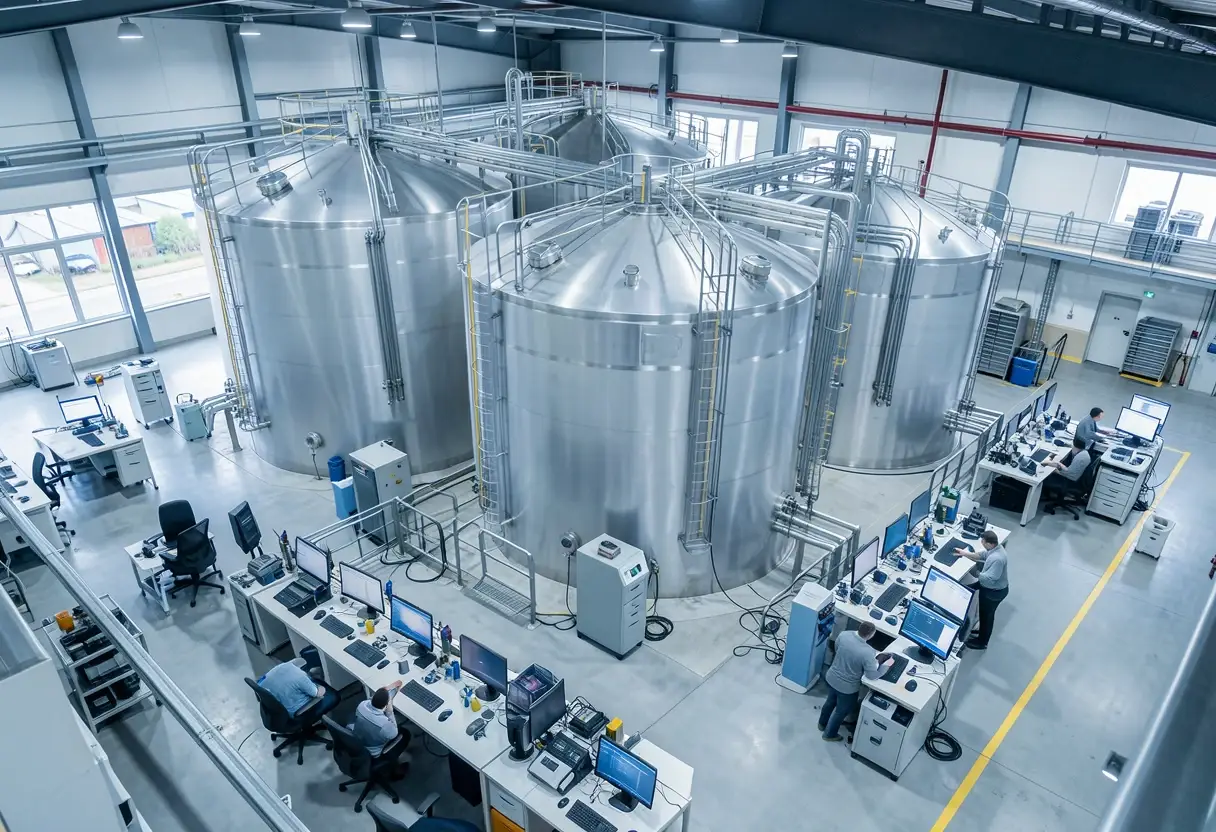
The initial layout includes two jetties, six marine loading arms and four intermediate storage tanks.
Reserved expansion space supports a third jetty, ship reloading and a potential 10 Mtpa throughput.
Procurement tendering and a Final Investment Decision remain ahead, with no dates announced.
By Daniel Okafor
CO2next plans a first-phase liquid carbon dioxide terminal at the Port of Rotterdam with a continuous design throughput of 5.4 million tonnes per year into the Aramis offshore pipeline network, after completing front-end engineering design with Sener Ingeniería y Sistemas S.A.
The open-access venture — a partnership comprising Gasunie, Royal Vopak, Shell and TotalEnergies — is developing the hub at Maasvlakte. Its FEED phase with Sener has established a validated engineering baseline, but the announcement concerns a planned facility rather than current terminal operations.
What has the FEED work settled?
CO2next and Sener have finalized technical specifications, operational safety systems and quantitative risk assessments for the liquid CO2 reception and export hub. The work covers the first development phase and advances the project toward procurement tendering and a Final Investment Decision (FID).
The completed FEED package covers:
- Technical design: specifications for receiving liquefied CO2 and exporting it through the Aramis network.
- Safety: operational safety systems for the reception and export hub.
- Risk: quantitative risk assessments covering the first-phase terminal design.
The three outputs establish a common engineering baseline for procurement tendering. Neither the tender nor FID has been completed. In practical terms, the project has finished FEED, not construction.
How will liquid CO2 reach Aramis?
The first-phase configuration includes:
- Two marine jetties for berthing specialized transport vessels carrying liquefied CO2.
- Six marine loading arms, with three on each jetty, to offload the cargo.
- Four intermediate storage tanks that provide buffer capacity.
- A multi-stage pumping system handling low- and high-pressure transfer.
The four tanks act as an operational buffer because offshore trunk pipelines and geological reservoirs need steady injection profiles. They smooth intermittent marine cargo arrivals into a continuous, pressurized export stream feeding the Aramis offshore transport infrastructure.
That stream supplies CO2 for permanent sequestration in depleted North Sea gas fields. In short, the tanks bridge irregular ship deliveries to steady offshore injection.
How does 5.4 Mtpa become 10 Mtpa?
To accommodate growing European industrial capture volumes, the site plan reserves physical space for:
- A third jetty.
- Additional storage tanks.
- Ship reloading capabilities.
- Potential rail reception infrastructure.
Initial throughput capacity is 5.4 Mtpa. The reserved layout would allow the facility to scale to 10 Mtpa in subsequent expansion phases.
CO2next has also launched a market call for rail CO2 delivery to the Rotterdam terminal, confirming that the potential rail option is being developed; no rail volume, contract timetable or delivery date appears in the announcement. Until expansion, 5.4 Mtpa remains the relevant first-phase figure and 10 Mtpa is reserved capacity.
What could change before FID?
To limit scope 1 and 2 facility emissions, the project includes electrically driven construction machinery and onshore power connections for moored CO2 carriers. The shore-power arrangement allows a vessel to shut down auxiliary engines while alongside.
“The terminal is designed to deliver what is needed today while leaving room for future growth. This allows us to work as cost-effectively as possible while creating a robust foundation for the further development of CO2 infrastructure,” said Fulco van Geuns, project director at CO2next.
The next market gate is procurement tendering, followed by FID. The announcement provides no tender deadline, construction start, commissioning date or investment decision schedule. The 5.4 Mtpa first-phase figure and 10 Mtpa expansion figure therefore remain design capacities, not operating throughput.
Until FID, CO2next has a validated design and a route to tendering, not an operating terminal.
via co2next.nl (Original)
More from Daniel Okafor
Show full bio
Correspondent covering companies, deals and strategy in Circular economy and the environmental industry at Circular Wire.
561 articles